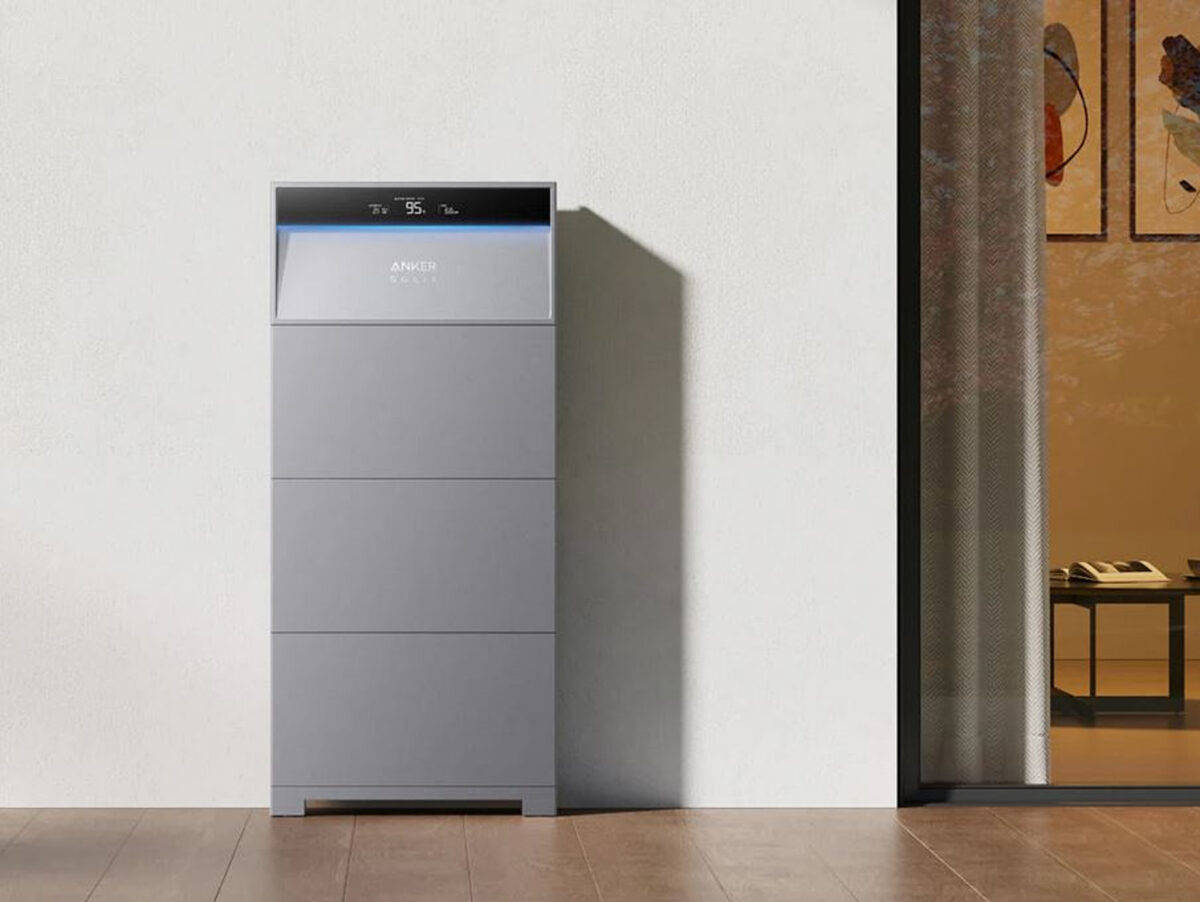





The Australian government has confirmed more than 400,000 batteries representing a combined 11.2 GWh of storage capacity have been installed in just over 10 months under its Cheaper Home Batteries program.
Federal Energy Minister Chris Bowen confirmed the milestone at the weekend, saying it shows Australians are embracing practical upgrades that make better use of rooftop solar, and help build a cleaner, more reliable energy system.
“Yesterday we surpassed 400,000 Cheaper Home Batteries,” he said. “400,000 Australian households reducing their bills very dramatically but also helping the grid and helping all Australians reduce their bills.”
The pace of the rollout is staggering with Australians deploying an average of 1,250 systems per day since the Cheaper Home Battery subsidy initiative was formally launched on 1 July 2025.
Bowen said the “remarkably successful policy” has delivered the same amount of storage capacity in just over 10 months as the entire commercial utility sector managed in a year.
A combined 11.2 GWh of extra storage has been registered under the Cheaper Home Battery policy since its launch while 11.219 GWh of grid-scale batteries have been introduced in the 12 months to 31 March 2026.
It is anticipated the Cheaper Home Battery Program will support the deployment of more than 2 million batteries by 2030, delivering about 40 GWh of capacity,
The $7.2 billion (USD 5.14 billion) now offers property owners an up to 30% discount on the cost of installing battery energy storage systems, based on battery size. Under the tiered scheme, implemented from 1 May, the small-scale technology certificates (STC) Factor now tapers according to the amount of capacity installed.
Batteries up to and including 14 kWh are still eligible for the full subsidy while the STC Factor is applied at 60% for every kWh greater than 14 and up to 28 kWh. This reduces to 15% for batteries ranging from 28 kWh to 50 kWh.
Staggering support in line with battery size would encourage more households to get the “right-sized” battery, Bowen said, and will enable more Australians to install batteries in their homes.
This content is protected by copyright and may not be reused. If you want to cooperate with us and would like to reuse some of our content, please contact: editors@pv-magazine.com.




By submitting this form you agree to pv magazine using your data for the purposes of publishing your comment.
Your personal data will only be disclosed or otherwise transmitted to third parties for the purposes of spam filtering or if this is necessary for technical maintenance of the website. Any other transfer to third parties will not take place unless this is justified on the basis of applicable data protection regulations or if pv magazine is legally obliged to do so.
You may revoke this consent at any time with effect for the future, in which case your personal data will be deleted immediately. Otherwise, your data will be deleted if pv magazine has processed your request or the purpose of data storage is fulfilled.
Further information on data privacy can be found in our Data Protection Policy.