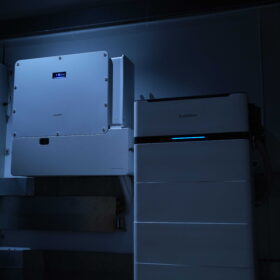
Sungrow launches CEC-approved PowerKeeper Series in Australia
Chinese solar inverter and storage solutions company Sungrow has launched its CEC-approved PowerKeeper Series in Australia for commercial and industrial applications.
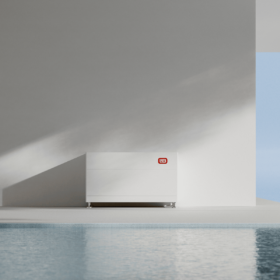
EnergyLIB launches in Australia, bringing home battery system designed for the home
China-headquartered residential battery company EnergyLIB has debuted its first home battery system in Australia: the EnergyLIB HomeStack and the EnergyLIB Inverter.
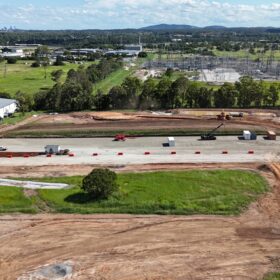
Trina withdraws battery application following state government intervention
Queensland’s large battery projects approval mechanisms are under scrutiny after Trina Solar withdrew its 200 MW / 800 MWh Pleystowe battery project, while state ministers stepped into two other contested projects proposed by Potentia Energy and Iberdrola.
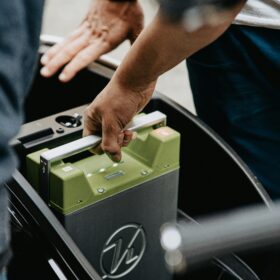
Modelling points to used batteries powering $6.9 billion industry
Australia’s battery materials recovery sector could contribute $6.9 billion to the national economy by 2050 as end-of-life lithium ion batteries surge from electric vehicles and energy storage, according to a new national industry profile.
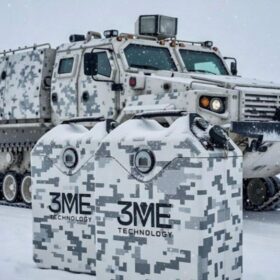
Australian-US collaboration targets battery system for Arctic applications
Australian battery and electric vehicle tech company 3ME Technology has teamed with United States-based South 8 Technologies to develop lithium-ion battery solutions utilising liquefied gas electrolyte-enabled cells for extreme cold weather and Arctic applications.
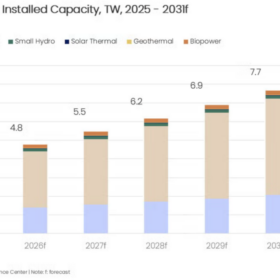
Global solar capacity to reach 6 TW by 2031, says GlobalData
UK consultancy GlobalData says global renewable capacity will more than double to 8.4 TW by 2031, with PV reaching nearly 6 TW, a 13% compound annual growth rate from 2025 levels of 4.1 TW.
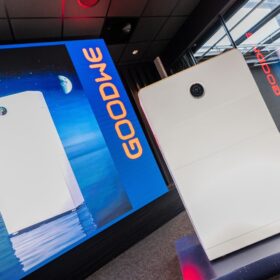
GoodWe introduces low-noise all-in-one storage system for rooftop solar
The three phase energy storage system encompasses the inverter, battery and energy management into a single system, suited for residential customers and scalable to the small-scale commercial and industrial market.
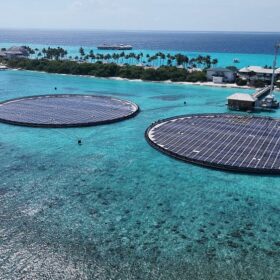
Floating solar to cut diesel dependence for remote Asia-Pacific islands
An international collaboration plans to set up floating solar microgrids in remote Asia-Pacific locations to charge high-tech electric hydrofoil ferries and help island communities break diesel fuel dependence.
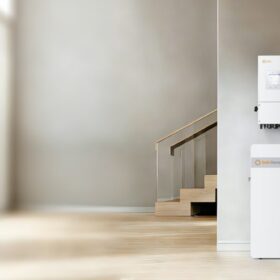
Solis launches new residential storage system portfolio
The Chinese manufacturer said its new three residential battery lines support a depth of discharge of 90% and deliver over 6,000 cycles.
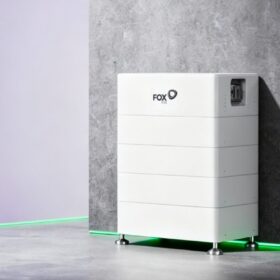
Energy Storage Inspection 2026: Fox ESS, SMA, SAX Power, Kostal and BYD impress with high efficiency
The energy storage efficiency of 12 solar storage systems with capacities of 5 kW or 10 kW has been put to the test, including several new products, all of which achieved efficiency class A. The latest interation of the annual study also examined efficiency losses when storing electricity from the grid and took a closer look at the warranty conditions of the devices.