Australia to invest $2 billion in hydrogen
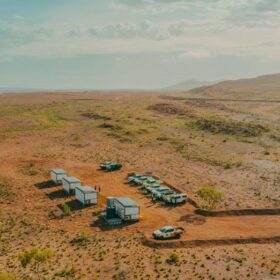
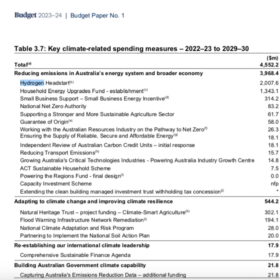
The Australian government has presented its 2023-2024 budget, with $2 billion (USD 1.35 billion) to be invested in hydrogen, while Austria, Germany, and Italy said they have started moving forward on a southern hydrogen corridor from North Africa to Northern Europe.
Influx of new companies and products enter Australia’s battery market
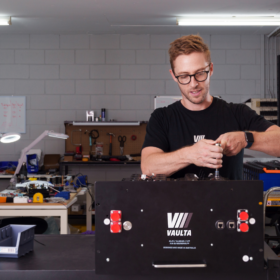
Battery companies hoping to get a foothold in Australia’s rapidly growing storage market were the main exhibitors at the Smart Energy Conference held in Sydney last week, outnumbering solar companies almost two-to-one. Pv magazine Australia looked at what is on offer and who the new hopefuls in the battery space are.
New entrants to Australia’s utility-scale and commercial battery market
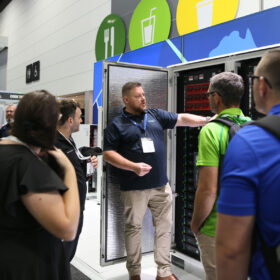
While Australia’s home battery market seems to have attracted most of the interest from newcomers, there has been some significant new developments in the commercial and utility-scale space. Pv magazine Australia examined the new products and companies in the commercial and utility battery storage space on display at the Smart Energy Conference.
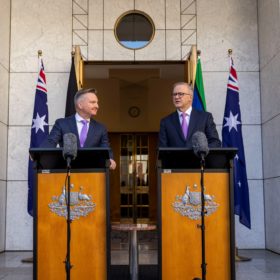
Clean energy takes centre stage in federal budget, industry reactions
The Albanese Labor government has delivered its 2023 – 2024 budget, placing energy front and centre. The budget takes the government’s total spend on making Australia a renewable superpower to $40 billion (USD 27 billion). While many in the industry have applauded the budget, there are some glaring contradictions.
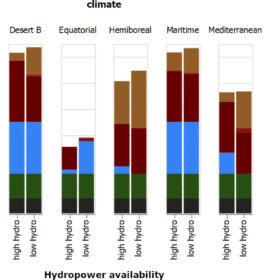
Electrolysis cost-efficient in all climates, says Finnish team
Researchers at the VTT Technical Research Centre of Finland said that chemical energy storages were needed for short and long-term balancing in every climate region, especially in the northern climates. Meanwhile, companies are moving forward with their plans to produce hydrogen in Namibia and Morocco.
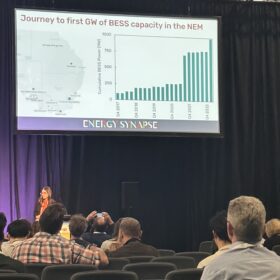
Key takeaways as big batteries in Australia hit 1 GW
Australia recently hit it first gigawatt of big battery storage, with another 40 GW in the projected pipeline. During the Smart Energy Conference, Marija Petkovic, founder and managing director of Energy Synapse, looked at what we’ve learned so far.
Swiss team sets record solar-to-hydrogen rate
Researchers from Switzerland’s École Polytechnique Fédérale de Lausanne have unveiled a new solar dish plant design, while Plug Power has delivered its first electrolyser system to Europe.
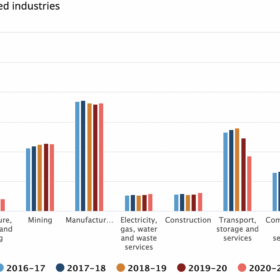
Failure to cut energy consumption stymies Australia’s net zero progress, ABS statistics show
Data from the Australian Bureau of Statistics has shown that while renewable generation in Australia has increased significantly year on year, the country’s progress towards net zero is stymied by the failure to reduce consumption.
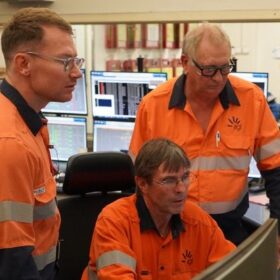
Going, going, gone: AGL completes shutdown of Liddell
Today marks a historic moment in Australia’s energy transition with AGL Energy completing the shutdown of its coal-fired Liddell power station in New South Wales with the last operating turbine having been switched off for the final time.
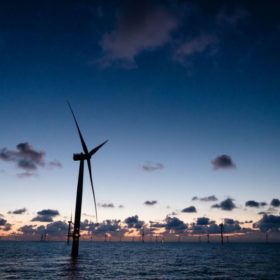
‘Implausible assumptions’ in Australia’s decarbonisation modelling leads investors to develop 1.5°C pathway
Australia needs to inspire a $421 billion (USD 282 billion) investment, accelerate coal closures and significantly speed up our renewable rollout to realise 1.5°C Paris agreement climate targets, according to modelling from an investor group.