CEC says rooftop solar on track to eclipse 2030 target
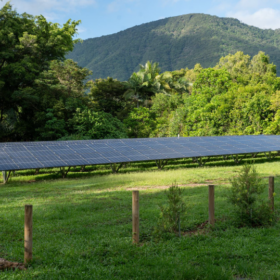
Australia is on track to exceed its 2030 rooftop solar targets with a combined 1.1 GW of new capacity installed across 115,584 households and businesses in the first half of 2025.
Survey shows battery boom extends to C&I sector
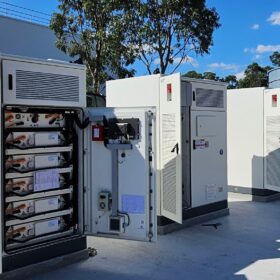
Early results from a survey of Australia’s commercial and industrial solar industry reveal surging demand for battery energy storage systems and increasing service expectations.
Research reveals rates and types of rooftop PV connector failures
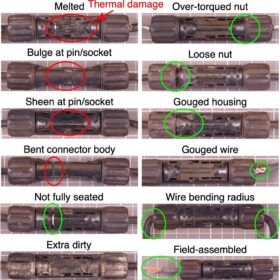
Analysis of more than 6,000 rooftop PV connectors shows that tight wire bending radius, extra dirty connectors, and loose nuts are the most common failure causes.
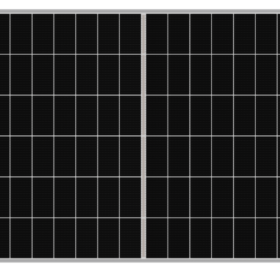
Canadian Solar presents 660 W ‘low-carbon’ heterojunction module with 24.4% efficiency
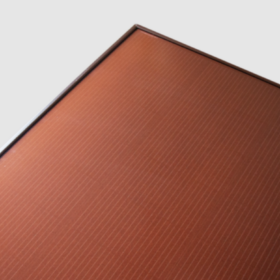
The new products are available in nine versions with power output ranging from 620 W to 660 W and power conversion efficiency spanning from 23.0% to 24.4%. Canadian Solar said the panels have a carbon footprint of 285 kg CO₂eq/kW, which is reportedly one of the lowest among all silicon-based solar modules worldwide.
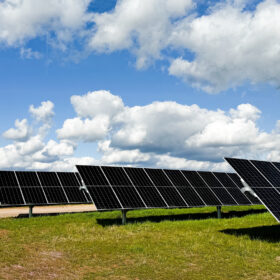
Wollemi Capital pumps $100 million into distributed solar, battery strategy
Climate-focused venture capital firm Wollemi Capital has committed to investing more than $100 million to expand renewables developer MPower’s pipeline of mid-scale solar and battery energy storage projects after finalising its acquisition of the company.
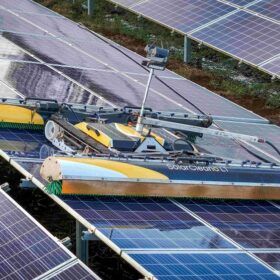
Solarcleano launches panel cleaning robot for large PV installations, trackers
The Luxembourg startup’s newest product is a portable, dry and wet cleaning system with 2.45 m wide brushes, designed to be operated by a single person.
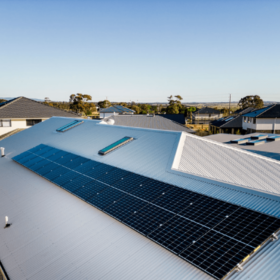
Renewables share hits record high in NEM
The share of renewables in Australia’s main electricity grid has reached a new high with rooftop and utility-scale solar, wind and hydro combining to deliver 76.4% of electricity demand on Monday.
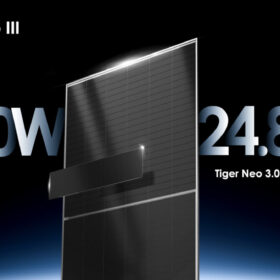
JinkoSolar launches 670 W TOPCon solar module with 24.8% efficiency
The Tiger Neo 3.0 panel features an 85% bifacility factor that translates into 553-570 W of rear side power output, according to the Chinese manufactuer. The new product is claimed to be the “world’s most powerful solar module.”

Researchers find flames spread 46% faster on degraded module backsheets
Singapore researchers accelerated PV backsheet weathering to investigate flame spread behavior finding after six weeks, flame spread was 46% faster than on unweathered PV backsheets, saying current safety standards fail to account for long-term degradation.

$150 million round 2 Solar Sunshot targets solar supply chain technologies
The Australian Renewable Energy Agency has launched the second funding round of the $1 billion Solar Sunshot program, releasing $150 million dollars to stimulate the commercial domestic manufacture of critical segments of the solar supply chain.