First Nations groups encouraged to work with utilities to achieve solar on every household
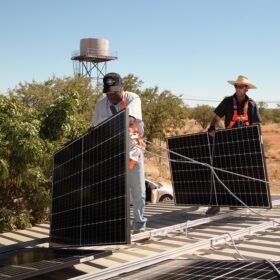
First Nations Point Pearce Aboriginal Community in South Australia has negotiated with AGL Energy to have rooftop solar installed on every residents’ home, in a template First Nations Clean Energy Network encourages other communities to follow.
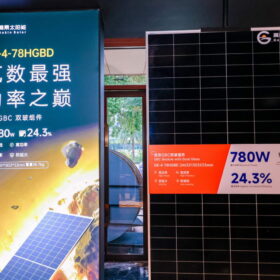
Gokin Solar launches new back-contact solar module series
Gokin has launched back-contact solar modules ranging from 480 W to 780 W for residential, commercial, industrial, and utility-scale projects. The series supports 1,500 V systems and reaches efficiencies of up to 24.8%.
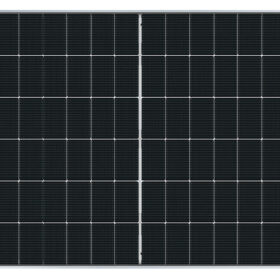
Astronergy launches 750 W anti-dust TOPCon solar module
The Chinese manufacturer said its new Astro 7 TOPCon module features an innovative self-cleaning frame and a power conversion efficiency of 23.2%.
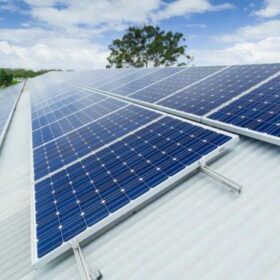
Queensland rooftop solar rebates throw cost of living lifeline to renters
The Queensland government has launched its Supercharged Solar for Renters program which provides eligible landlords with rebates of up to $3,500 to install solar systems on their rental properties anywhere in the state.
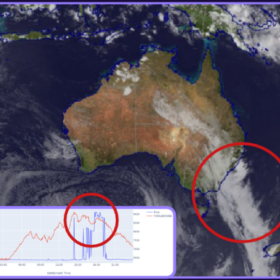
Bad weather forecasts cost Australian solar energy sector $100 million: report
Solar energy forecasting company Solstice AI research has found a 10% improvement in weather / solar forecasting accuracy would generate an extra $38 million per year in profit for Australia’s utility solar, and worldwide, $9.5 billion.

Post-COP30: Why distributed solar is becoming the world’s fastest-scaling power technology
Post-COP30 analysis has centred on the contentious debate over fossil-fuel phase-out wording. Yet the most significant development for the solar sector was not part of the negotiating text at all.
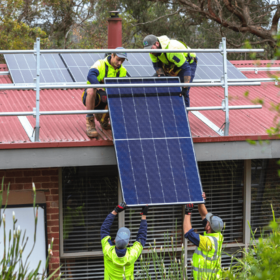
Household solar electricity generation in the Australian national accounts
The Australian electricity industry has transformed over the past two decades, driven by the rise of household solar and other renewable energy sources. Since 2010, supported by government incentives and improving technology, rooftop solar installations have surged.
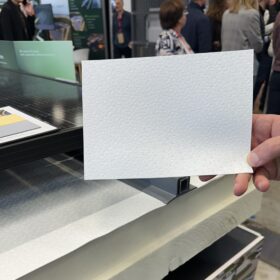
Renolit showcases reflecting cool roof membrane for bifacial rooftop PV
Renolit France has introduced the Alkor Bright reflective membrane for bifacial rooftop PV systems, offering high solar reflectivity and durability for flat or pitched roofs. The membrane helps keep buildings cooler while boosting the energy output of bifacial solar modules.
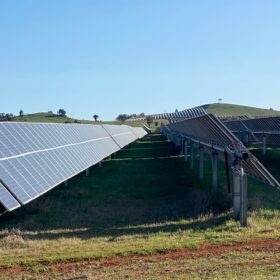
Renewables on rise as AEMO lays out roadmap for energy transition
A draft blueprint for Australia’s energy market calls for 120 GW of grid-scale solar and wind, 87 GW of rooftop PV, 55 GW of dispatchable storage and 6,000 kilometres of new transmission infrastructure by 2050 to replace retiring coal plants, meet a near doubling of electricity demand, and deliver on government emissions and renewable energy targets.
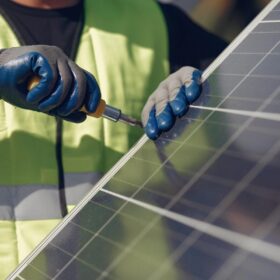
Distributed PV employment globally outpaces utility-scale solar, says IEA
The latest edition of the International Energy Agency’s (IEA) World Energy Employment report found employment in the PV sector surpassed 5 million in 2024, with distributed solar accounting for two-thirds of all solar employment globally, despite representing only 43% of installed capacity.