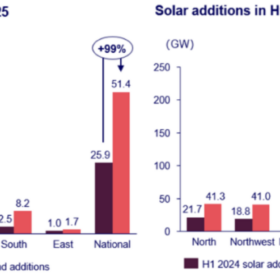
China’s new auction system drives steep solar price declines
Wood Mackenzie says first provincial auctions under China’s new pricing rules pushed solar bids up to 32% below settlement, signaling tighter margins and a shift to slower, more sustainable growth.
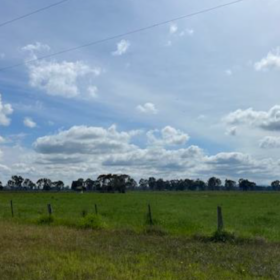
Hybrid Meadow Creek solar and 1 GWh BESS project approved despite protests
The hybrid 322 MW / 1 GWh Meadow Creek Solar Farm and utility battery has secured planning and environmental approvals from the Victorian government despite community opposition from the Rural City of Wangaratta.
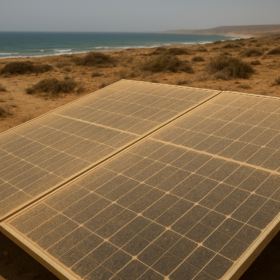
The impact of dust on PV systems in arid coastal environments
A Saudi–Egyptian research team investigated the effects of four types of dust on photovoltaic panels in arid coastal environments, finding that power losses can reach up to 48%.
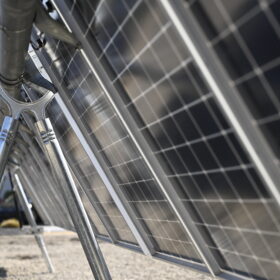
Nextracker’s Earth Truss tackles tough terrain to unlock land for solar projects
United States-headquartered solar technology platform provider Nextracker has launched the NX Earth Truss foundation solution, that tackles tough terrain to unlock land for solar projects.
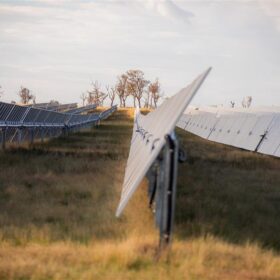
Acen commits to recycling Stubbo project’s one million solar panels
Acen Australia has committed to recycling one million solar panels from its Stubbo Solar Project in New South Wales after meeting independent standards that recognise the developer’s management of materials as valuable resources rather than waste.
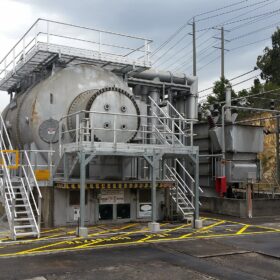
Transgrid uses synchronous condensers for network stabilisation
The high-voltage grid transmission operator said the condensers will be deployed at five strategic sites across New South Wales.
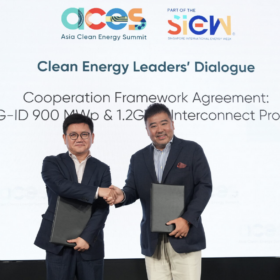
Singapore, China to supply solar-plus-storage power from Indonesia
Singapore’s Equator Renewables Asia (ERA) and China’s CRE International Co. Ltd (CREI) will jointly develop a 900 MW solar and 1.2 GWh battery project in Indonesia, with 400 MW (AC) slated for export to Singapore.
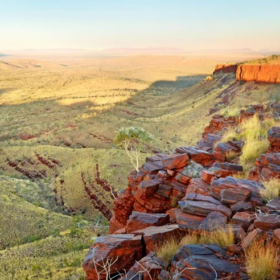
Significant benefits from clean energy project investment with First Nations
A new First Nations Clean Energy Network in collaboration with Ernst and Young report recommends investors in clean energy projects in Australia accelerate and enjoy the value add-ons and economic benefits that partnering with First Nations groups can bring.
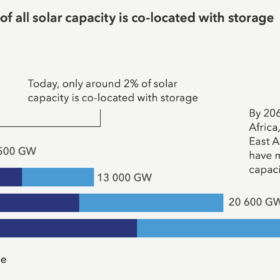
Nearly half of solar capacity will be co-located with storage by 2060: DNV report
Norwegian risk managment company DNV’s Energy Transition Outlook 2025 report also predicts that distributed generation solar should begin outpacing utility-scale installations in some parts of the world by 2060.
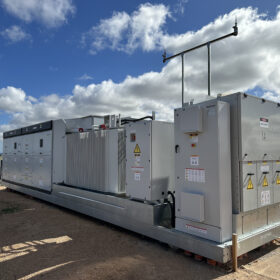
Ingeteam named inverter supplier for Victorian Winton North hybrid project
Clean energy technology company Ingeteam will supply inverters for the 227 GWh European Energy Australia Winton North hybrid project currently under construction in Victoria.