Trina targeting Australian-made solar modules by 2027
Chinese manufacturing giant Trinasolar says it could be making panels in Australia as soon as 2027 as part of its joint-venture plans with Sydney-based PV innovator SunDrive Solar.
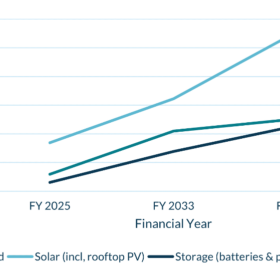
Cornwall tips 150 GW renewables boost for NEM within two decades
Australia’s main electricity grid is predicted to increase its solar, wind, and energy storage capacity by more than 150 GW by 2043 according to new projections published by energy market consultancy and research group Cornwall Insight.
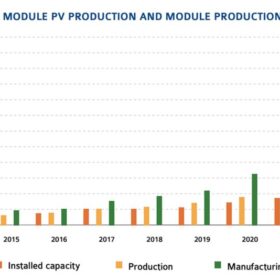
Solar manufacturing facing substantial pressures, says IEA-PVPS
The International Energy Agency Photovoltaic Power Systems Programme says in its latest report that 2023 was a record-breaking but tumultuous year for solar development. It says the manufacturing industry faces pressure from supply-demand imbalances, with overcapacity causing prices to collapse.
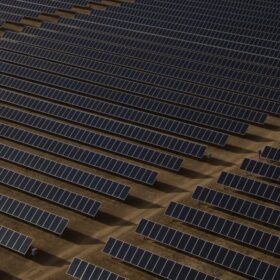
Utility-scale solar additions hit 46.8 GW since start of 2023, says Wiki-Solar
PV data consultancy Wiki-Solar says the world’s top solar developers have added nearly 50 GW of new solar capacity since early 2023, raising their cumulative capacity to 146.7 GW – more than one-fifth of the global total.
On the small side: module power output distortion on rise
A study by German research institute Fraunhofer ISE has revealed a troubling trend. Data shows that modules are increasingly attributed higher power ratings than they actually have. Though the percentages are incremental, it all
adds up.
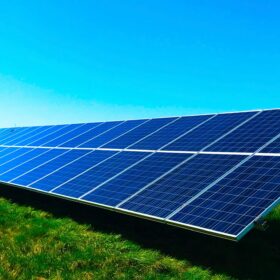
UK investment firm commissions two solar battery projects in NSW
London-headquartered investment firm VH Global Sustainable Energy Opportunities has completed the construction and commissioning of two solar and storage hybrid systems in New South Wales.
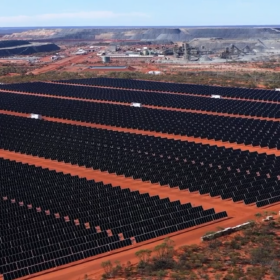
24 MW solar farm and 13 MW BESS powers up Western Australia gold mine
Remote energy development specialist Pacific Energy has commissioned a 24 MW solar farm, which is producing power, and 13 MW battery energy storage system at the Tropicana gold mine, 330 kilometres northeast of Kalgoorlie in remote Western Australia.
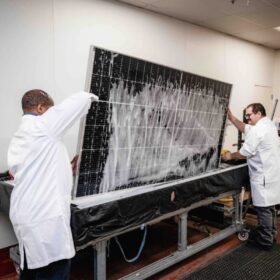
PVEL scorecard shows ‘relevant risks’ for TOPCon technology
The results of this year’s Kiwa PVEL scorecard have shown that TOPCon technology is more vulnerable than PERC, and the failure rate at bill of materials has increased to 41%, the highest in history, according to the testing lab.
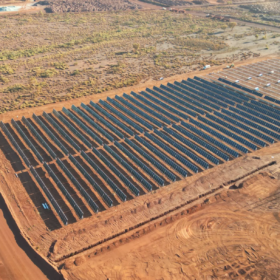
Pacific Energy delivers 3.8 MW solar farm and BESS to Pilbara iron ore mine site
Remote power specialist Pacific Energy has delivered a 3.8 MW solar array and two battery energy storage systems to mining company Mineral Resources Ken’s Bore mine site in the Pilbara region, 1,300 kilometres north of Perth.
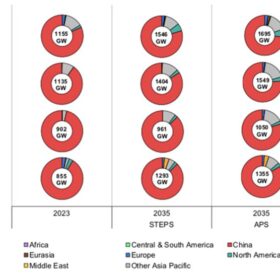
Solar module manufacturing capacity could exceed 1.5 TW by 2035, says IEA
The International Energy Agency’s latest report, which maps out the future evolution of clean energy manufacturing, says the combined global market for PV, wind turbines, electric cars, batteries, electrolysers, and heat pumps will rise from $1 trillion in 2023 to more than $3 trillion by 2035.