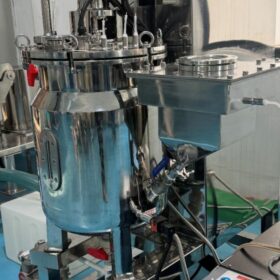
Manganese demonstration processing plant awarded $2 million ARENA grant
Western Australian Firebird Metals has been awarded $2 million through ARENA and the Battery Breakthrough Initiative to develop a demonstration-scale facility that processes manganese concentrate into cathode materials for batteries.
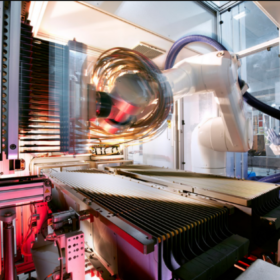
Trina Solar, JA Solar, JinkoSolar launch China’s first PV patent pool for TOPCon technologies
China’s solar industry has launched its first TOPCon-focused patent pool, led by Trina Solar, JA Solar, and JinkoSolar, to streamline licensing, reduce disputes, and strengthen IP coordination at home and abroad.
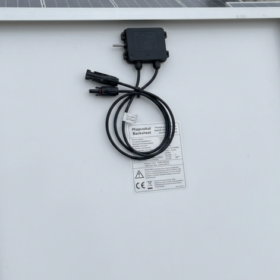
No evidence of PFAS leaching from solar panels, study finds
Researchers in the United States reviewed claims about PFAS in solar panels and found that while fluoropolymers may be used in limited components like backsheets or coatings, there is no confirmed evidence of PFAS leaching from commercially deployed modules.
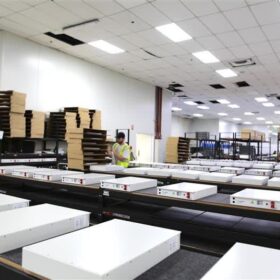
PowerPlus to triple battery production capability with ARENA grant
Australian battery designer and manufacturer PowerPlus Energy has secured $2.3 million in federal government funding that will support its plans to triple annual battery module production capacity to 150 MWh over the next two years.
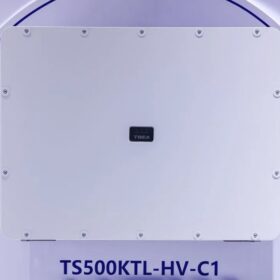
TBEA launches 500 kW string inverter
The new inverter is designed around standardised 5 MW and 5.5 MW PV sub-arrays with the aim to reduce balance-of-system costs. It features a maximum efficiency of 99.0% and a high-voltage architecture of up to 1,600 Vdc and 1,000 Vac.
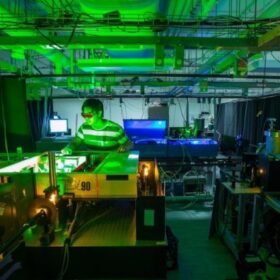
UNSW turns to AI to accelerate semiconductor materials discovery
Researchers at the University of New South Wales have developed an AI-driven system aimed at accelerating the identification of two-dimensional semiconductor materials that can be used in solar cells.
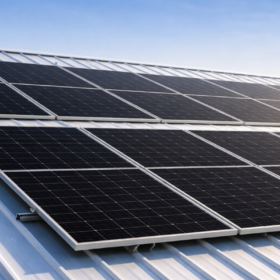
JinkoSolar debuts rooftop PV module weighing 7 kg/m2
The Chinese manufacturer said its lightweight Light Diamond TOPCon module delivers 560 W at 24.94% efficiency.
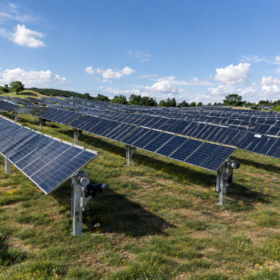
Scientists identify new loss factor in tracker-based PV plants on slightly undulating terrain
Researchers have identified a new source of underperformance in utility-scale PV plants caused by “suboptimal backtracking” on slightly uneven terrain. The study shows that real tracker control systems deviate from ideal flat-terrain assumptions, reducing irradiance capture and causing measurable energy losses compared with simulations.
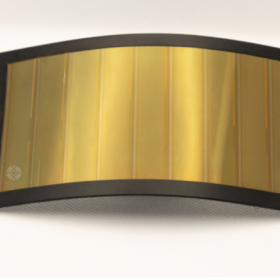
Halocell Energy, Sofab Inks advance perovskite collaboration
An ongoing collaboration between New South Wales-based Halocell Energy and Sofab Inks finds that perovskite modules incorporating Sofab’s Tinfab electron transport layer maintain approximately 100% of their normalised efficiency after 1,300 hours under accelerated combined light and damp-heat testing.
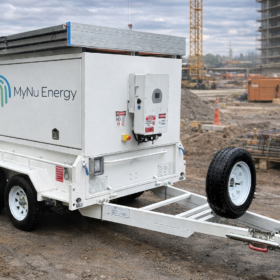
MyNu Energy launches mobile solar and battery energy storage system
MyNu Energy has launched a mobile solar generation and battery energy storage system designed to reduce reliance on diesel as the Middle East crisis continues to cause concerns about fuel shortages and uncertain energy costs.