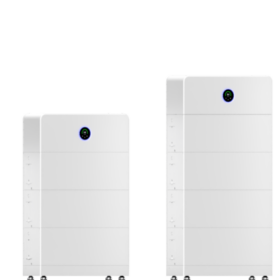
GoodWe releases new residential all-in-one storage solution
The Chinese company says that its new ESA series is available with a hybrid inverter ranging from 3 kW to 10 kW and storage capacities of 5 kWh to 48 kWh. The IP66-rated product supports an MPPT current of up to 20 A on the PV side and allows 200% PV oversizing, according to the manufacturer.

NSW energy distributors de-risk transition with new, unified system plan
Three New South Wales energy distributors have collaborated on the state’s first distribution system plan, which they say can sustain five years of energy transition momentum, while waiting for critical transmission infrastructure to be built.

$1 million raise charges up AVESS vanadium flow battery deployment
Australian energy storage technology company AVESS Energy has completed a $1 million capital raise enabling the progression of projects including vanadium flow battery deployment at the Windimurra Vanadium Project.
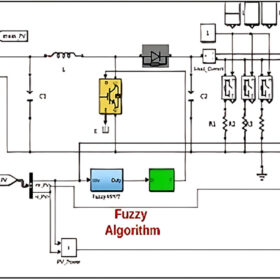
Optimising PV system tilt angle, MPPT using fuzzy logic controller
Researchers in the Middle East have developed a fuzzy logic controller that simultaneously optimises the tilt angle of PV systems and performs maximum power point tracking. Year-long simulations indicate that the proposed approach increases power generation by approximately 20%.

Iberdrola wins bid to develop VNI West transmission project
Spanish energy company Iberdrola, which has a total installed capacity in Australia of 2.3 GW, has been selected to develop the Victoria to New South Wales Interconnector West, or VNI West transmission line.

Outdoor testing identifies factors contributing to perovskite solar cell degradation
Tests conducted by a research team in outdoor environments in Spain and Poland have demonstrated a strong correlation between perovskite solar cell degradation and the combined effects of climatic and operating conditions. The scientists found that open-circuit operation accelerates degradation, whereas operation at the maximum power point and under short-circuit conditions has a lower impact.
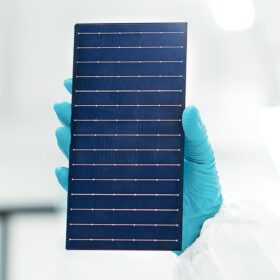
$25.3 million finance to advance SunDrive copper solar cell technology
The Australian Renewable Energy Agency has committed $25.3 million to SunDrive to support its copper metallisation technology from development at its South Sydney facility to a 300 MW commercial-scale production tool.

Chinese PV Industry Brief: Major solar manufacturers report steep Q3 losses
Longi Green Energy, JinkoSolar, and JA Solar each posted significant third-quarter losses amid continued price declines and high inventory levels, raising concerns among analysts about oversupply and margin pressure across the PV supply chain.
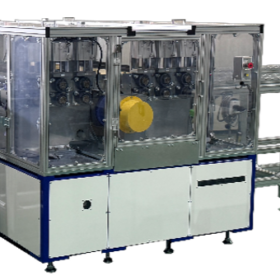
Japanese companies partner to establish solar glass recycling scheme
Two Japanese companies have announced a partnership to advance the recycling of solar panel cover glass for application in architectural flat glass production.
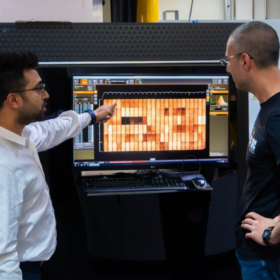
Solar cell inspection tool evolution set to slash manufacturing costs by billions
Researchers at the University of New South Wales in Sydney are working with the institution’s spinout company BT Imaging to accelerate the commercialisation of solar cell defect detection technology, thanks to a $1.4 million commercialisation project.