Massive lithium takeover deal collapses following Rinehart intervention
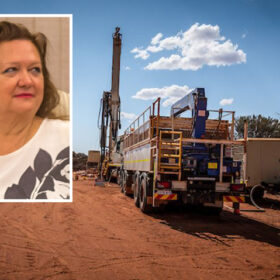
US giant Albemarle Corp. has withdrawn its $6.6 billion takeover bid for Australian lithium developer Liontown Resources after Gina Rinehart, via her company Hancock Prospecting, reportedly spent $1.3 billion raising its stake in Liontown to a commanding 19.9%.
Registrations open for 600 MW storage underwriting scheme in SA and Victoria
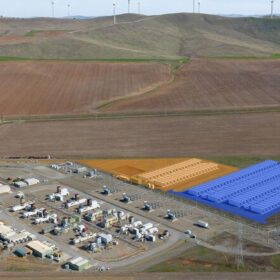
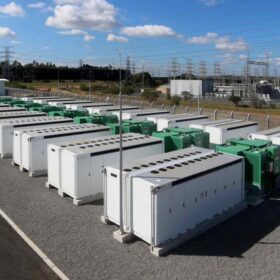
Registrations for the South Australia and Victorian Capacity Investment Scheme, Australia’s new zero-emissions storage underwriting program, have opened today.

‘Australia’s largest battery’: Equis’ 2.4 GWh battery in Melbourne secures federal approval
One of the world’s largest batteries at 1.2 GW / 2.4 GWh has been approved by Australia’s federal government for a site in Melbourne’s northwest.
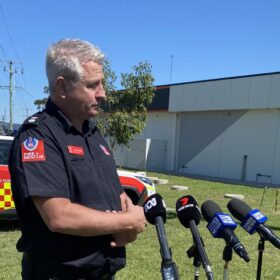
‘Haven’t seen anything like this’: fire crews called to thermal energy storage pilot plant
Thermal energy storage startup MGA Thermal had fire crews called to its demonstration plant in Tomargo, north of Sydney after the company’s pilot unit overheated. “We haven’t seen anything like this before,” Scott Dodson from Fire and Rescue NSW said.
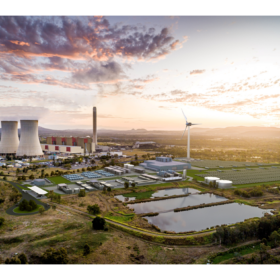
Stanwell partners with Queensland manufacturer on ‘world’s largest’ iron flow battery
Electricity generator Stanwell Corporation has supersized its plans to develop grid-scale iron flow battery storage systems in collaboration with Queensland-based battery manufacturer Energy Storage Industries – Asia Pacific, announcing a binding agreement that could deliver a 150 MW commercial battery by as early as 2029.
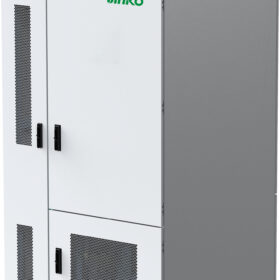
JinkoSolar introduces all-in-one battery solution for C&I solar
JinkoSolar has launched an all-in-one battery solution for commercial and industrial (C&I) solar applications. It includes a new outdoor cabinet that integrates battery packs, a management system, a power conversion system, and firefighting equipment. The system offers 215 kWh of battery capacity and up to 100 KW of rated power output.
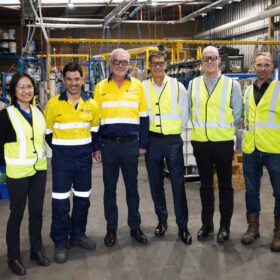
Renewable Metals to scale up battery recycling ambitions
Australian battery recycling startup Renewable Metals intends to scale and commercialise its lithium-ion battery recycling technology that converts battery waste into high-value battery metals after closing an $8 million (USD 5.08 million) investment round.
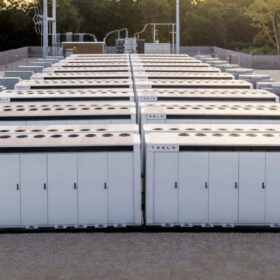
Octopus Australia acquires Queensland’s largest battery proposal, the 1 GWh Blackstone battery
Renewables player Octopus Investments Australia, a subsidiary of UK-based Octopus Group, has purchased Queensland’s largest battery project, the 500 MW / 1 GWh Blackstone project just outside of Brisbane.
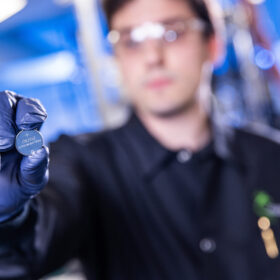
Lithium hydroxide from recycled batteries used to make Dragonfly’s cells
Dragonfly Energy is using lithium hydroxide recovered from recycled batteries to manufacture battery cells, with Aqua Metals leading the way in recycling solutions for materials in the supply chains for energy storage and electric vehicles.
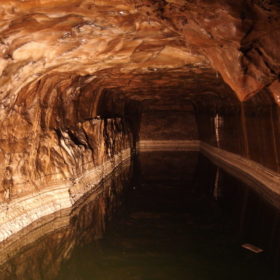
Researchers developing cheap hydrogen storage
Oxford Institute for Energy Studies researchers have developed a cost-effective material to absorb hydrogen at non-cryogenic temperatures, which they consider optimal for fuel cell storage systems.