Tasmanian shipbuilder lands contract for electric ferries
Australian shipbuilder Incat Tasmania has inked a contract to design and build two 100% battery-electric ferries for Molslinjen, Denmark’s largest passenger ferry company.
NEM connections pipeline grows to 53 GW
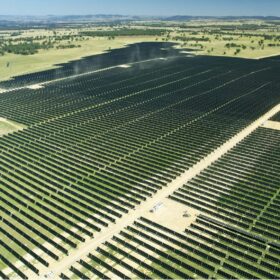
Australia’s energy transition is gaining “real measurable momentum” with the market operator reporting a record wave of new solar, wind, and energy storage projects are progressing through the grid connection process, at a larger scale than ever before.
Consumer energy resources get top priority in AEMO’s FY2026 plan
AEMO will prioritise consumer energy resources integration over the coming financial year, and is part of 29 actions being prioritised for the energy transition as outlined in its Engineering Roadmap FY2026 Priority Actions report.
Envision Energy unlocks 1.5 GWh energy storage potential with new partnership
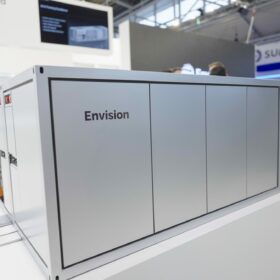
Envision Energy and FERA Australia have signed an agreement to collaborate on the delivery of large-scale hybrid renewable energy projects across Australia’s national electricity market (NEM), with the potential to deliver up to 1.5 GWh of battery energy storage.
Photovoltaic inventions increase seventeen-fold in three decades
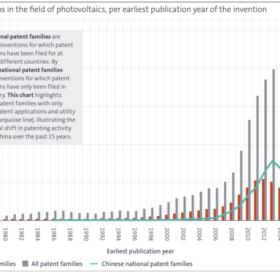
The European Patent Office says China has overtaken other countries in photovoltaic patent filings over the past 15 years, while European startups and universities retain a lead in agrivoltaics and niche solar applications.
Grid-forming batteries and multiple SynCon to underpin NSW transition
Transgrid has chosen grid-forming batteries and synchronous condensors as its preferred system strength technologies, as coal generators retire over the next decade and renewable energy supplies the state.
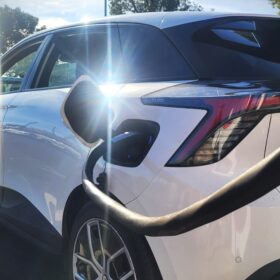
Wireless electric vehicle charging tests improve efficiency by 88%
Scientists in India have simulated and tested a prototype wireless charging system for electric vehicles, with a three-port DC–DC converter at its core and have found it achieved an improved efficiency of 88%.

ClearVue BIPV solution achieves 2.6-year payback in Hong Kong trial
ClearVue Technologies says its solar facade solutions, that combine the company’s solar glazing units into a fully integrated energy generating building envelope, have achieved a payback period of less than three years in a Hong Kong government trial.
Kardinia lands state funding to progress printed solar production facility
Printed solar technology startup Kardinia Energy, photoluminescence imaging specialist BT Imaging, and modular solar array manufacturer 5B are among 13 companies awarded more than $26 million in funding by the New South Wales government to support the commercial development of their clean energy tech.
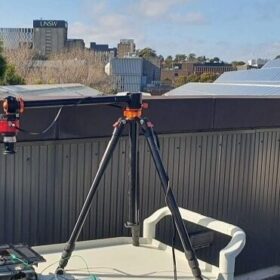
Using photoluminescence, implied open-circuit voltage imaging for perovskite solar cell field testing
To evaluate the outdoor performance and stability of perovskite solar cells using contactless and noninvasive methods, an Australian and Chinese research team found a way to use photoluminescence imaging as well as demonstrating a proof of concept for implied open-circuit voltage imaging. Their research relied on cost-effective equipment that operates under direct sunlight.