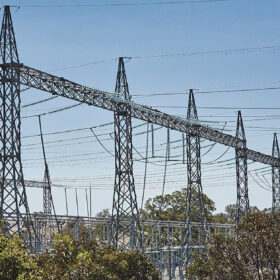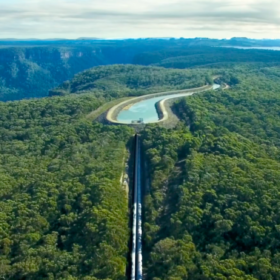
China set for 40 GW of pumped hydro storage next year
The showpiece 3.6 GW Fengning county project which will offer grid services and back-up power at the 2022 Winter Olympics is part of a 31.15 GW construction pipeline of projects, many of which are set to come into service next year.
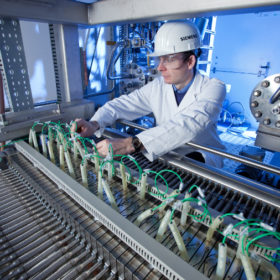
Finkel’s CCS persistence spreads us too thin
Australia’s chief scientist Dr Alan Finkel continues to voice his support for some modicum of Carbon Capture and Storage (CCS) in Australia’s hydrogen future, providing a lifeline to fossil fuel producers. While Finkel’s argument holds some water, it holds nowhere near enough water to produce a hydrogen economy.
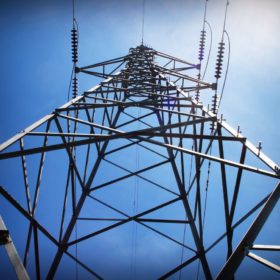
Rooftop solar penetration reaches tipping point as grid undergoes major transformation
Rooftop solar penetration has reached the point where a choice needs to be made between distribution networks spending billions on new substations, poles and wires to cope – or start delivering the grid of the future so consumers are not landed with unnecessary costs, says the Australian Energy Market Commission.
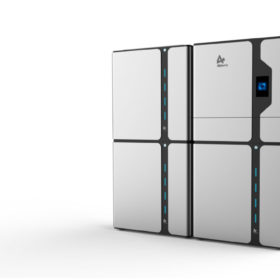
Alpha-ESS ramps up battery production in South Australia and partners in new VPP
The China-headquartered battery manufacturer has opened a new assembly facility at Lonsdale, as part of its commitment to the South Australian Government’s Home Battery Scheme. Alpha-ESS batteries will form part of a new virtual power plant launched into the market this week by ShineHub and energy retailer Powershop.
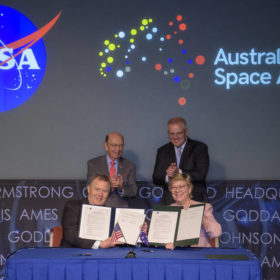
Australia joins solar powered space race
The Australian Space Agency (ASA) has joined the next generation, or rather this generation, space race, between the U.S. and China. A $150 million investment from the Morrison Government into the ASA will see Australia partner with NASA on its next sustainable exploratory missions.
South Australia government releases Hydrogen Action Plan
South Australia is looking to leverage its wind, sun, land, infrastructure and skills to be a world-class renewable hydrogen supplier.
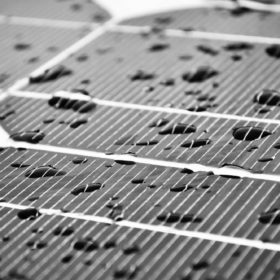
We can make roof tiles with built-in solar cells – now the challenge is to make them cheaper
Despite being such a sunkissed country, Australia is still lagging behind in the race to embrace solar power. While solar panels adorn hundreds of thousands of rooftops throughout the nation, we have not yet seen the logical next step: buildings with solar photovoltaic cells as an integral part of their structure.
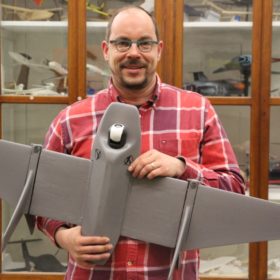
As EVs build momentum, why is electric aviation still grounded?
Why is electric aviation still up in the air? Or rather, why isn’t it up in the air? We have Teslas on our roads, Melbourne’s trams are powered by solar, and trains are connected to the grid already, but why is electric aviation lagging behind?
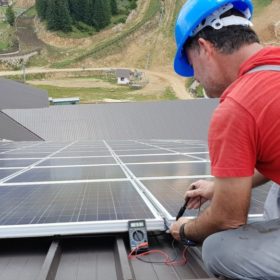
Live fast, die young: MIT study proposes use of 10-year panels
Research has found even short-lived, 10 to 15-year solar panels could provide enough return for bankable projects. The researchers believe panel costs, coupled with an industry mindset now fixed on the final solar energy price rather than costs per kilowatt installed, may open opportunities for PV products currently snubbed because of a short lifecycle.
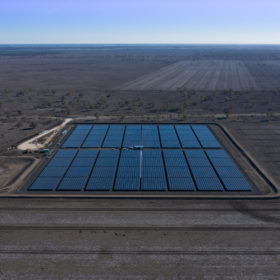
“Smart” solar farm switches on in northern NSW
While short of impressive in terms of size, the 9 MW project located near Moree is touted as one of Australia’s smartest solar farms. The project features both DC optimisers and DC coupled battery for central inverters.