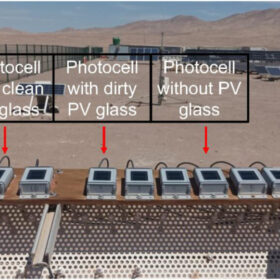
Researchers study coal-fired power plant emission effects on solar panels
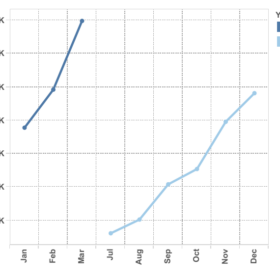
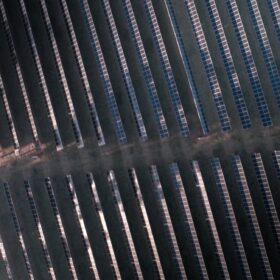
An international research team studied the solar PV impact of emissions from a coal-fired power plant in the Atacama Desert, Chile finding that after five months of exposure, the deposited dust on co-located PV panels reached a maximum of 1.63 mg/cm2 with a 23 % reduction in photocurrent. The accumulation at the co-located plant was 3 times greater than nearby PV sites with similar coastal climate conditions.

Battery subsidy schemes proposed to cut bills and boost manufacturing
Battery subsidies are absent from the 2025-26 Federal Budget, but industry organisations are committed to pushing government forward to support the rollout of household batteries backed by local manufacturing.
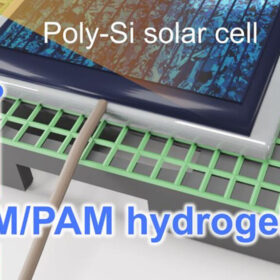
New passive solar module cooling tech based on lightweight hydrogel
Researchers at Thailand’s Vidyasirimedhi Institute of Science and Technology demonstrated a novel hydrogel that has high cooling effect on silicon PV panels.
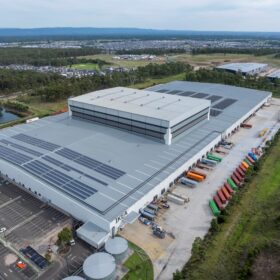
IKEA Australia Sydney warehouse furnished with hybrid solar and battery system
IKEA Australia has partnered with Smart Commercial Solar to install a $2.9 million, 2,034 kW rooftop solar and battery energy storage system on a western Sydney distribution centre.
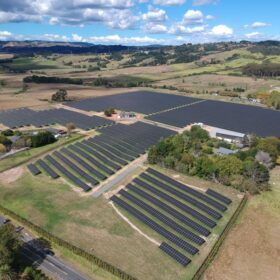
New 13 MW New Zealand-based solar farm goes live near south Auckland
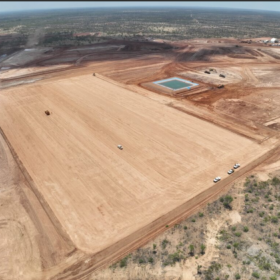
Aotearoa New Zealand utility-scale solar developer Kiwi Solar has announced its 13 MW Ardmore Solar Farm near South Auckland is now live, after a 5.5 month construction period.
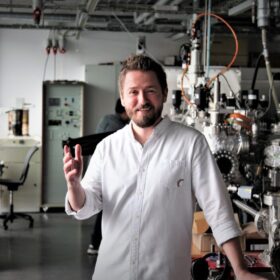
Transparent tandem solar cell hits record 12.3% efficiency
A global research team has developed a tandem solar cell with 30% transparency by combining perovskite and organic layers, achieving a record 12.3% efficiency for transparent solar cells.
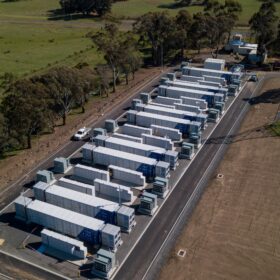
Battery state of health impacts revenue, safety and operations
A new paper from renewable energy technology company 3E lays out strategies to manage battery degradation, saying inaccurate state of health measurements of battery energy storage systems can negatively impact their safety, impede accurate asset evaluation and result in financial losses.
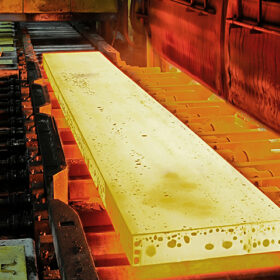
$70 million fund opens to innovate heavy industry decarbonisation
Only innovators need apply: ARENA opens second round of industrial transformation stream funding offering $70 million to support technology development to help industry decarbonise.
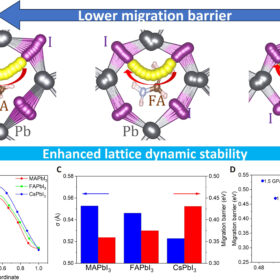
Sydney researchers advance halide perovskite cell stabilisation
University of Sydney researchers have suppressed ion migration in halide perovskites specifically at the B-site, paving a way for cell stabilisation by minimising energy loss and improving performance reliability.
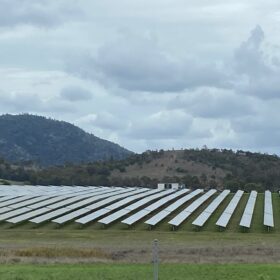
Renewables are cheap. So why isn’t your power bill falling?
Power prices are set to go up again even though renewables now account for 40% of the electricity in Australia’s main grid – close to quadruple the clean power we had just 15 years ago. How can that be, given renewables are the cheapest form of newly built power generation?