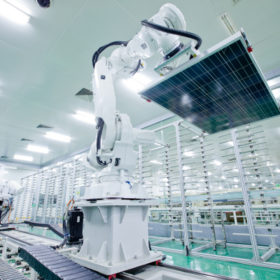
Jinko claims 24.79% efficiency for n-type monocrystalline cell
The Chinese manufacturer has claimed a world record for a large-size, contact-passivated solar cell. The result, certified by Germany’s Institute for Solar Energy Research in Hamelin, betters the company’s previous record by almost 0.6%.
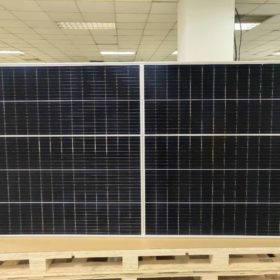
Trina reveals 600 W module
The Chinese giant has leapt ahead of rivals who recently announced their intent to work towards the next generation of mega panels by pledging to have its 600 W Vertex product on sale by the end of March.
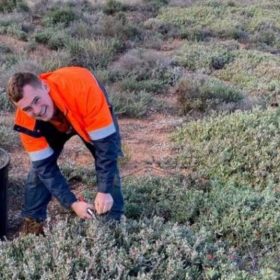
SA Water large-scale solar and native revegetation symbiosis
SA Water’s highly ambitious $300 million solar uptake is proving a golden goose as a partnership with Succession Ecology to revegetate almost a tonne of native seedlings under large-scale solar arrays proves a win-win. The ground-mounted modules mean native vegetation can return to formerly agricultural land, and the native scrub itself protects PV panels from soiling.
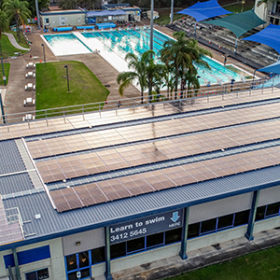
Logan City Council hits 1 MW solar mark
Logan City Council has passed the 1 MW milestone of solar capacity on Council-owned buildings after the completion of a 100 kW install atop Logan North Aquatic Centre. The Council has plans to more than double that mark in the next year alone, however, some planned installations may fall victim to Covid-19 inspired cutbacks.
7 major players shortlisted for ARENA hydrogen funding round
Commercialisation of hydrogen production is a Government priority. Today seven applicants for ARENA funding of large-scale hydrogen proposals made it through to the next round, in which they will submit full applications for projects that will be expected to commence construction in 2022.
COVID-19 vs Renewables: How the pandemic is impacting Australia’s solar curve
With Australians spending more time at home during the day as a result of COVID-induced restrictions, many are questioning the impact of shifting energy demand patterns on the solar curve. Byron Serjeantson, Regional Manager at Flow Power considers the potential outcomes of these changes.
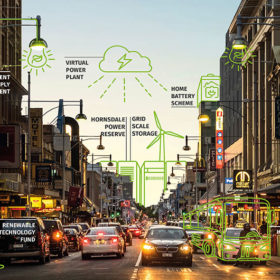
5 trends influencing Australian solar farm design
Digital technologies are enabling integration of vast volumes of data, to provide sophisticated modelling of projects, arriving at highest yield and lowest levelised cost of energy. An Australian leader in the field, Aurecon has been recognised for the innovation of its siteLab software in bringing far-flung stakeholders and disparate sources of information into the one virtual reality.
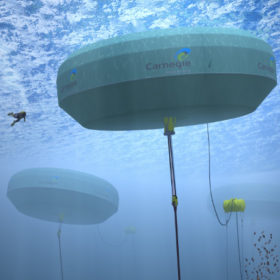
The new standards that underpin our renewable future
As new forms of renewable energy mature, strong standards governing safety, storage, transport and more help to build confidence in each industry sector. Here Daniel Chidgey, Head of Stakeholder Engagement at Standards Australia outlines the latest guidance for hydrogen, energy storage and ocean energy.
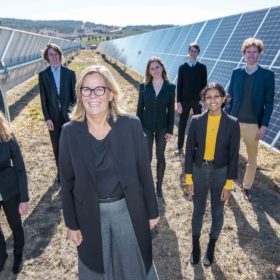
64 MW of PV-powered knowledge sharing begins at UQ’s Warwick Solar Farm
The University of Queensland-owned and developed utility-scale Warwick Solar Farm is complete, bringing together the University’s ambitions to not only become 100% renewably powered, but to provide hands-on learning, research and development opportunities for generations of students seeking fulfilling employment that contributes to a greener future.
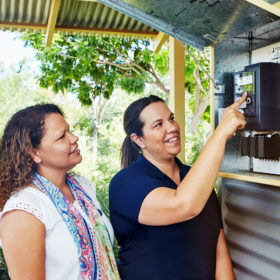
The weekend interview: Empowering reconciliation
Western Australia’s Horizon Power is relatively unique among electric utilities – it supplies small cities, big and small agricultural and mining operations, and some of the most remote indigenous communities in the world. It has been a genuine pioneer in delivering cheaper, cleaner power through a combination of renewables and energy storage. It’s also awake to the opportunities for solar and storage to empower the Aboriginal and Torres-Strait Islander communities it serves, explains Horizon’s Roanna Edwards.