Polysilicon price reaches new high at $66/kg, government takes action
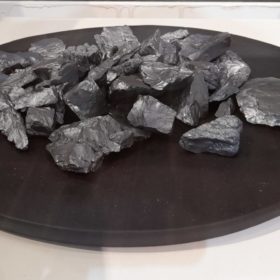
Average polysilicon prices hit CNY 312 (AU$65.8)/kg this week, according to an industry association in China. The nation’s Ministry of Industry and Information Technology, the State Administration for Market Regulation, and the National Energy Administration have also asked regional authorities to take action to deal with the price increase.
Weekend read: Strong case for energy storage, despite rising costs
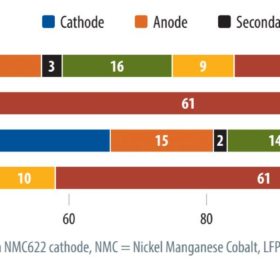
Unprecedented volatility in global commodity markets, disruption to logistics and supply chains, and unrelenting growth has driven up the cost of Li-ion batteries since the middle of 2021. Sam Wilkinson and Oliver Forsyth of IHS Markit expect to see rapid manufacturing expansion that will still struggle to keep up with demand, and ultimately lead to the establishment of a smaller group of battery-makers specialized in supplying stationary energy storage systems.

EV shipping is set to blow internal combustion engines out of the water
Modelling 5 to 10 GWh electrified containerships, researchers find that 40% of routes today could be electrified in an economically viable manner, before considering environmental costs.
Long-term, heat-based energy storage in aluminium
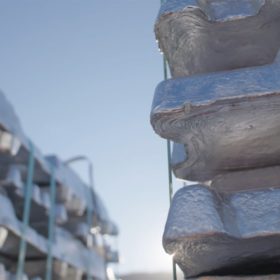
Nine partners from seven European countries are involved in the €3.6 million (AU$5.25 million) “Reveal” research project, which says buildings could be heated in the future by storing energy from PV, wind and water in aluminium.

Weekend read: Hype and hope for solid-state batteries
Hype and hope for solid-state batteries (SSBs) continues to grow as industries from automotive to storage bet big on the technology. Leading battery manufacturers and a roll call of start-ups are jostling to get from lab to fab. The reality of SSBs is in question though. As Marija Maisch reports, the window of opportunity for the decades-old technology to make the next big step toward commercialisation is now.
Results of long-term study of module degradation released
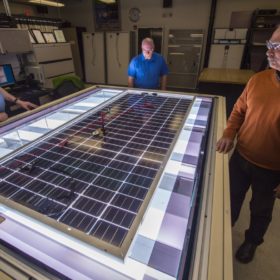
In a study that began in 2016, scientists in the United States purchased 834 PV modules, representing seven manufacturers and 13 module types, and installed them in various climate conditions to observe their performance over time. The results show that, while plenty of opportunities still exist to extend module lifetimes and reduce performance loss in the field, reductions in the manufacturing cost of PV have not come with an increase in their degradation rate.
Optical microscopy technique to study prevention of battery failure
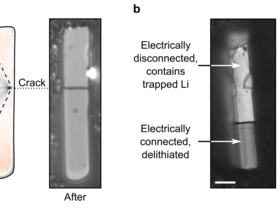
Researchers at the University of Cambridge have examined one of the fastest-charging anode materials by using a low-cost, lab-based optical microscopy technique. Their findings showed that particle fracture, which can reduce the storage capacity of a battery, is more common with higher rates of delithiation and in longer particles.

Record solar investment keeping Chinese economy afloat
Investments in renewables are hitting new highs in China, as recurrent Covid-19 outbreaks and a crisis-stricken housing market threaten the world’s second-biggest economy, according to BloombergNEF.
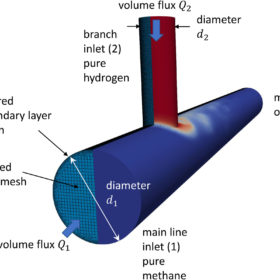
Traditional hydrogen blending could damage gas pipelines, say researchers
UK researchers have revealed that gaseous hydrogen could cause problems in natural gas pipelines, while electrolyser manufacturer Nel has announced plans to build a second production line in Norway.

Growing consensus on 100% renewables
An international group of researchers from 15 universities has said that there is growing consensus among scientists that an energy system based on 100% renewables could be achieved cost effectively by 2050.