




Perth-based manganese developer and producer Firebird Metals has been awarded $2 million (USD 1.4 million) through the Australian Renewable Energy Agency (ARENA) Battery Breakthrough Initiative (BBI).
Established under the Future Made in Australia policy agenda, BBI aims to build local capability across the battery supply chain.
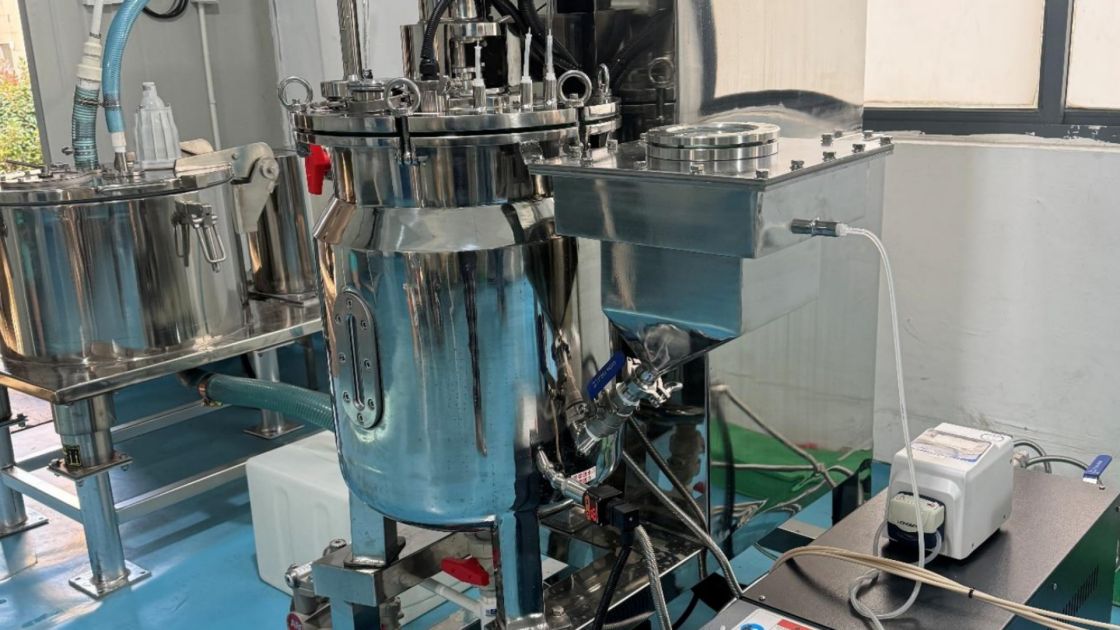
The grant will support the Firebird Metals to develop a fully integrated demonstration facility designed to process manganese ore directly to cathode active materials (CAM) for the electric vehicle (EV) and energy storage systems (ESS) markets.
A company statement said the plant will demonstrate the conversion of manganese ore directly into high-purity manganese sulphate monohydrate (HPMSM), precursor cathode active material (p-CAM), and finished cathode active material (CAM) within a single facility and process line.
“This integrated approach removes conventional intermediate processing steps, delivering significant energy, capital and operating cost advantages,” the statement said.
Firebird Metals Chief Executive Officer Ron Mitchell said the grant is a defining moment for the company.
“Lithium manganese iron phosphate (LMFP) is rapidly emerging as the cathode chemistry of choice for a significant portion of the global EV and energy storage market, yet virtually all the world’s LMFP cathode material is currently produced in China,” Mitchell said.
“Firebird is building the technology and the facility to change that and this ARENA grant accelerates our pathway to demonstrating that capability right here in Australia, specifically, WA. This is the kind of sovereign manufacturing capability that Australia, and the broader Western battery supply chain, urgently needs.”
ARENA Chief Executive Officer Darren Miller said batteries are critical to delivering reliable, affordable and low-emissions energy and battery manufacturing is a key part of Australia’s energy transition and economic future.
“Firebird Metals’ Perth demonstration-scale facility is an important step toward building domestic capability to convert Australian manganese into battery cathode materials, strengthening supply chain resilience and supporting the growth of next-generation battery manufacturing,” Miller said.
Federal Minister for Climate Change and Energy Chris Bowen said the government wants Australia to do more than dig up the minerals the world needs.
“We want to make more of the products the world needs right here as well,” Bowen said.
“That means backing Australian innovation, backing Australian manufacturing and backing the next generation of battery technology.”
PowerPlus Energy
Victoria headquartered battery manufacturer PowerPlus Energy also received a $2.3 million ARENA grant, to contribute to a $6.7 million project, which is forecast to triple annual battery module manufacturing to 150 MWh over the next two years.
PowerPlus Energy Executive Chairman Ben Spincer said the grant will help the company accelerate further investment in its manufacturing and testing capabilities.
“This investment is not just about our facility in Melbourne, but also about the thousands of customers across the country, ensuring we can continue to supply Australian-manufactured, accredited and supported products in a market increasingly dominated by low-cost imports.
This content is protected by copyright and may not be reused. If you want to cooperate with us and would like to reuse some of our content, please contact: editors@pv-magazine.com.


By submitting this form you agree to pv magazine using your data for the purposes of publishing your comment.
Your personal data will only be disclosed or otherwise transmitted to third parties for the purposes of spam filtering or if this is necessary for technical maintenance of the website. Any other transfer to third parties will not take place unless this is justified on the basis of applicable data protection regulations or if pv magazine is legally obliged to do so.
You may revoke this consent at any time with effect for the future, in which case your personal data will be deleted immediately. Otherwise, your data will be deleted if pv magazine has processed your request or the purpose of data storage is fulfilled.
Further information on data privacy can be found in our Data Protection Policy.