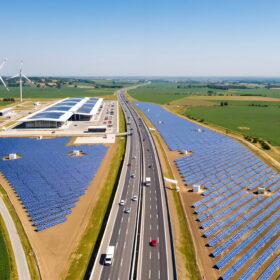
China expands highway solar as provinces race to decarbonise transport
China is rapidly installing PV along highways, combining slopes, tunnels, and service areas to generate renewable electricity and cut transport-sector emissions.
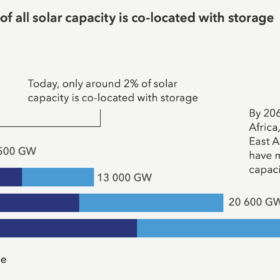
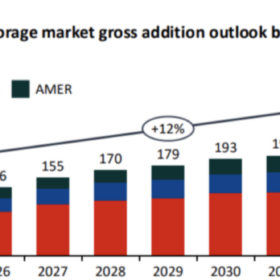
Nearly half of solar capacity will be co-located with storage by 2060: DNV report
Norwegian risk managment company DNV’s Energy Transition Outlook 2025 report also predicts that distributed generation solar should begin outpacing utility-scale installations in some parts of the world by 2060.
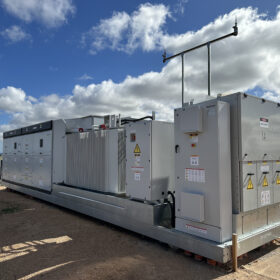
Ingeteam named inverter supplier for Victorian Winton North hybrid project
Clean energy technology company Ingeteam will supply inverters for the 227 GWh European Energy Australia Winton North hybrid project currently under construction in Victoria.
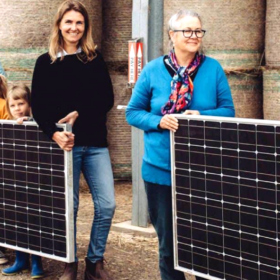
Community solar and battery projects empowered by new incubator program
The Community Power Agency has launched a two-year pilot program to support communities with tailored training, mentoring and starter funding to move mid-scale solar and battery projects from early feasibility to investment readiness.
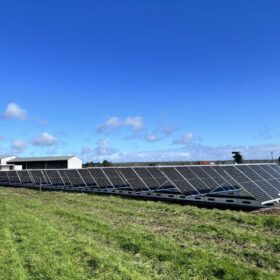
Victorian manufacturer launches solar microgrid system in US
Victoria-based microgrid manufacturer PHNXX has broken into the United States market, teaming with microgrid system and software manufacturer Paired Power to launch a portable solar-powered stand-alone power system that can be installed and generating electricity within a single day.

New Zealand fast tracks 200 MWh solar-plus-storage project
A 179 MW solar farm and 100 MW / 200 MWh battery energy storage project planned for the North Island of New Zealand has won approval from an independent panel, with a commercial decision now able to take place if the project remains viable in light of conditions applied to the build and operation.
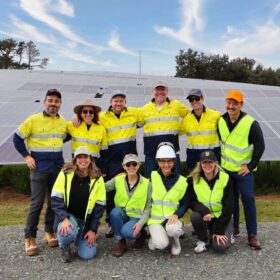
Aquila, FNSF energise Far North solar farm
Another PV power plant has commenced operations in New Zealand with development partners Aquila Clean Energy APAC and Far North Solar Farm officially launching the 20.8 MWp Pukenui Solar Farm in the country’s far north.

Australian solar pioneer wins top UK engineering prize
Pioneering solar researcher Martin Green has received arguably one of the world’s top awards for engineers and scientists in recognition of his achievements in photovoltaics and driving the global shift to renewables.

Solar tracker repowering emerges as key to sustaining older arrays
Aging utility-scale solar projects are driving interest in tracker repowering, while asset owners weigh costs against gains in performance and longevity.
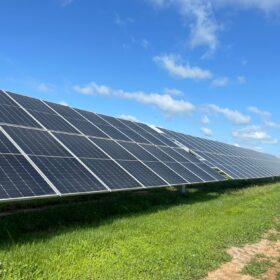
GPG seeks green tick for Queensland solar and battery project
Renewables developer Global Power Generation Australia is seeking federal government approval to develop a 290 MW solar farm and 180 MW / 360 MWh battery energy storage system in Queensland’s Fraser Coast region.