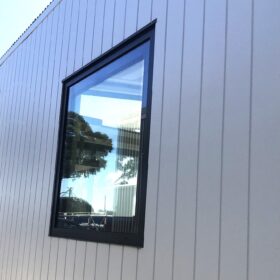
ClearVue says next-gen solar glass delivers 66% more energy
Building-integrated PV specialist ClearVue Technology says the latest iteration of its solar vision glass delivers more than 66% additional energy output per square metre than its predecessor, while significantly reducing production complexity and costs.

Canadian Solar presents 660 W ‘low-carbon’ heterojunction module with 24.4% efficiency
The new products are available in nine versions with power output ranging from 620 W to 660 W and power conversion efficiency spanning from 23.0% to 24.4%. Canadian Solar said the panels have a carbon footprint of 285 kg CO₂eq/kW, which is reportedly one of the lowest among all silicon-based solar modules worldwide.
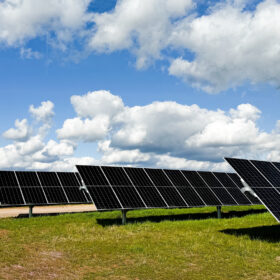
Wollemi Capital pumps $100 million into distributed solar, battery strategy
Climate-focused venture capital firm Wollemi Capital has committed to investing more than $100 million to expand renewables developer MPower’s pipeline of mid-scale solar and battery energy storage projects after finalising its acquisition of the company.
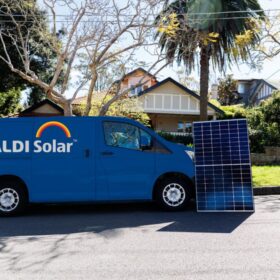
Supermarket giant expands rooftop solar and battery offer
Budget supermarket chain Aldi is expanding its residential solar business, opening up sales of its rooftop PV and battery energy storage packages to customers in Australia’s eastern states after a trial in Victoria.
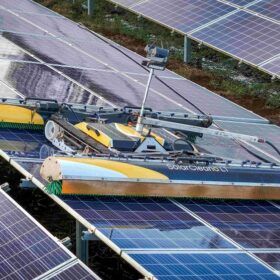
Solarcleano launches panel cleaning robot for large PV installations, trackers
The Luxembourg startup’s newest product is a portable, dry and wet cleaning system with 2.45 m wide brushes, designed to be operated by a single person.
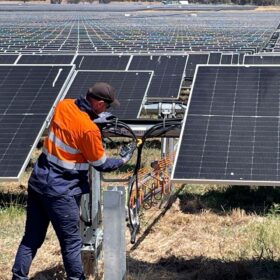
Pacific goes public with 700 MW solar and 1.6 GWh battery plans
The developers behind a proposed a 700 MW solar farm and a 400 MW / 1,600 MWh battery energy storage system planned for central west New South Wales have reached a new milestone with the environmental impact statement now open for public comment.
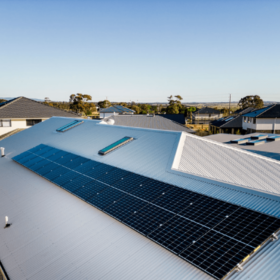
Renewables share hits record high in NEM
The share of renewables in Australia’s main electricity grid has reached a new high with rooftop and utility-scale solar, wind and hydro combining to deliver 76.4% of electricity demand on Monday.
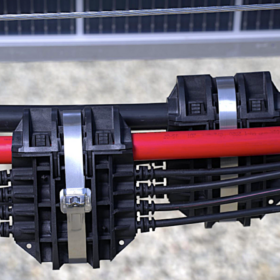
Nextracker unveils NX PowerMerge trunk eBOS for utility-scale solar
Nextracker has introduced NX PowerMerge, a 2 kV trunk connector-based eBOS solution for utility-scale solar projects, designed to cut connection points, simplify layouts, and lower project costs.
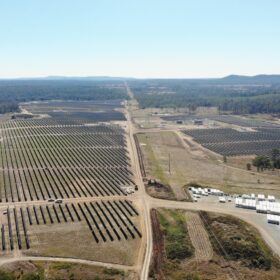
Metlen moves towards full operation with 120 MW solar farm
Fifteen months after construction of the Munna Creek Solar Farm in southeast Queensland began, the 120 MW PV power plant has entered the market operator’s grid management system and can now work its way through the testing and commissioning process.
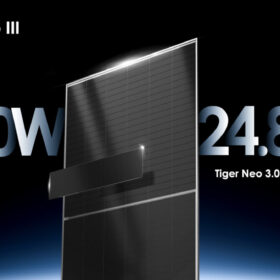
JinkoSolar launches 670 W TOPCon solar module with 24.8% efficiency
The Tiger Neo 3.0 panel features an 85% bifacility factor that translates into 553-570 W of rear side power output, according to the Chinese manufactuer. The new product is claimed to be the “world’s most powerful solar module.”