Malaysian giant teams with Tasmanian landowners on 1.2 GW portfolio
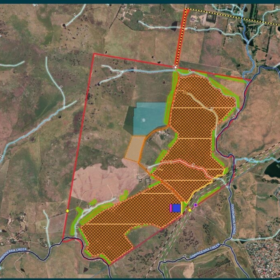
Malaysian infrastructure giant Gamuda is taking the next step in its Australian growth plans, partnering with landowners in central Tasmania to co-develop a 1.2 GW portfolio of large-scale renewable energy generation and storage projects.
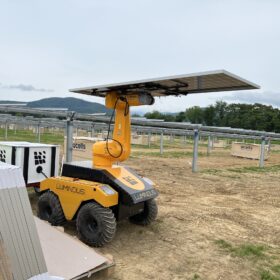
Robotics company lands federal funds to scale up solar construction
Robotics company Luminous has secured almost $5 million in federal government funding to support the deployment of a fleet of AI-powered robots designed to accelerate the construction of utility-scale solar farms.
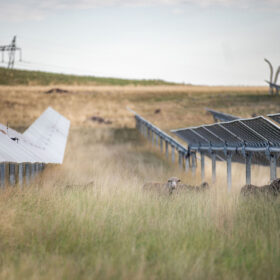
Report reveals renewable energy potential of Aboriginal land holdings in NSW
A new report highlights the potential for Aboriginal land holdings in New South Wales to accelerate the state’s renewable energy transition, suggesting that strategic support could unlock more than 11 GW of solar energy or 1.6 GW of wind energy.

NSW green bank backs energy projects with $1 billion purse
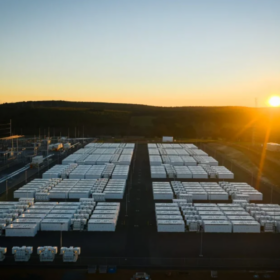
The New South Wales government’s new green bank is now open for business with an initial $1 billion In funding available to accelerate key energy projects to support the state’s shift from coal-fired power generation to renewables.

How albedo interacts with rooftop PV system patterns
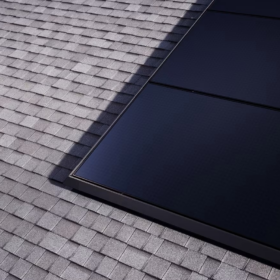
Researchers have simulated 160 cases of PV rooftop installation in southern and northern Italy. Among changing parameters were size and type of the panels, as well as their roof cover rate. The considered albedos were 20%, 40%, 60%, and 80%, representing different types of roof materials.
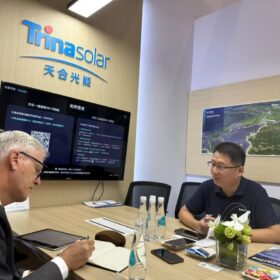
Trinasolar targeting ‘high-value’ markets
Yang Bao, Trinasolar’s president of global sales and marketing, recently spoke with pv magazine about the company’s strategy for the solar and energy storage business.
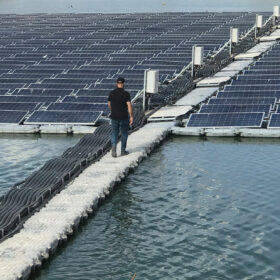
Project to test floating PV on farm dams to save water, generate electricity
The feasibility of deploying floating solar systems on farm-based water storages to optimise water retention and generate renewable energy that could serve as an alternative income stream for landholders will be investigated as part of an Australian-first research project.
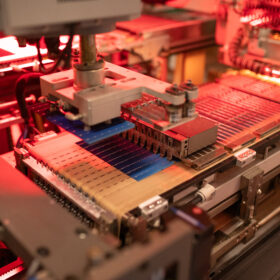
30 MW of home-grown Tindo solar panels to power major water project
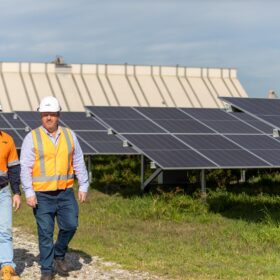
Adelaide-based solar panel maker Tindo will supply 30 MW of its Australian-made solar panels to power Queenland’s large-scale, 182 kilometre underground Bowen Water Pipeline project.
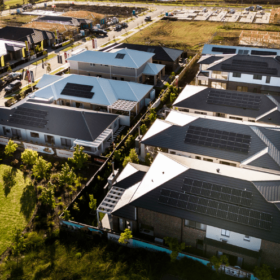
The solar battery rebate scheme must not become ‘Pink Batts 2.0’
The Albanese Government’s $2.3 billion solar battery rebate scheme is one of the most exciting developments Australia’s energy sector has seen in years but if we don’t get the rollout right from day one, we risk undermining everything this scheme stands for and repeating the disastrous mistakes of the Pink Batts program.
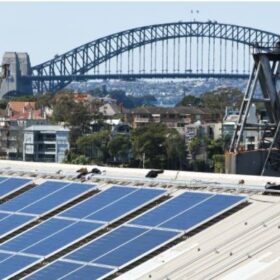
New South Wales councils not waiting for government to mandate electrification
With just 54 months until New South Wales reaches its 2030 50% emissions reduction target, five councils are taking matters into their own hands to mandate the electrification of all new buildings, except industrial.