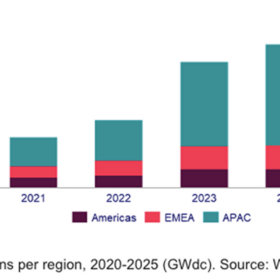
Wood Mackenzie tips solar growth to stagnate in 2025
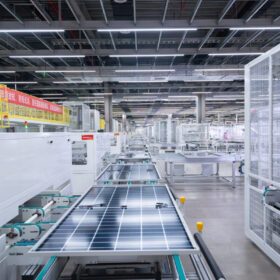
Wood Mackenzie’s latest report forecasts that 493 GW (DC) of solar will be added throughout the world this year, compared to 495 GW in 2024. Solar module prices are expected to rise this year as manufacturers aim to recover profit losses from the past two years.
Ecovoltaics research aims to balance grid scale solar with wildlife and livestock
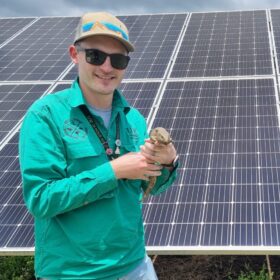
Ecovoltaics research being done at the University of New England aligns with global efforts to balance the need of large-scale solar with conservation of wildlife and combatibility to the needs of farming livestock.
Maximising rooftop solar energy potential rests on battery rollout
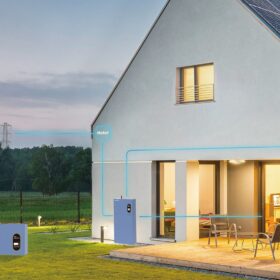
Sydney-headquartered residential battery storage solutions company VoltX Energy is expanding into Adelaide, South Australia with 10,000 Neovolt units to meet a surging demand.
Pairing pumped hydro storage with floating solar is good economics: study
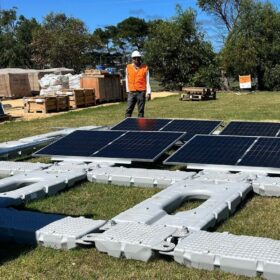
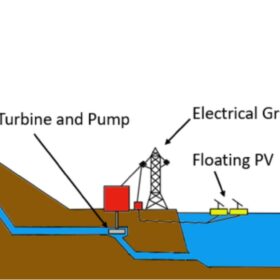
Researchers in Italy have analysed the techno-economic viability of enhancing three pumped hydro plants in Italy with floating solar on the lower basin. They say that, with their wide results, consequences could be extrapolated to similar regions.
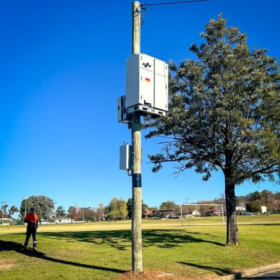
Powerco trials power pole mounted batteries in first for New Zealand
Aotearoa New Zealand distributor Powerco is trialling five low-voltage pole-mounted battery energy storage systems on power poles in the North Island city of Tauranga.
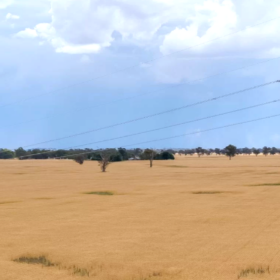
Green bank gets $2 billion windfall to boost further investment in clean energy
A $2 billion allocation from the Australian government to its ‘green bank’ Clean Energy Finance Corporation will boost investment commitments in renewable energy generation and storage, electric vehicles, infrastructure and natural capital.
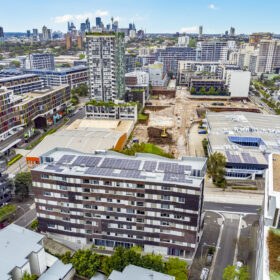
Allume’s upscaled manufacturing of SolShare to stay in Australia
Victoria-headquartered technology solutions company Allume Energy is choosing to scale up the domestic manufacture of its apartment building energy management system SolShare in Australia, saying the benefits far outweighs moving offshore.
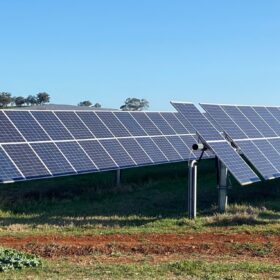
X-Elio seeks green light for 720 MW solar and battery project
X-Elio has lodged an application with the federal government seeking approval to build a 720 MW / 2,880 MWh solar-plus-storage project in Queensland’s North Burnett region.

GridBeyond launches price forecasting service in NEM
Ireland-headquartered smart grid technology company GridBeyond has announced the launch of its frequency control ancillary services price forecasting service in the Australian National Electricity Market.
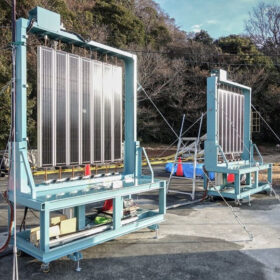
BIPV concept integrates louvres to enhance power production
Scientists have proposed a building-integrated PV system that integrates airflow to cool the panels and control room temperature. The system, which also acts as a shading device, can reportedly mitigate drops in power generation efficiency without additional energy consumption.