Renolit showcases reflecting cool roof membrane for bifacial rooftop PV
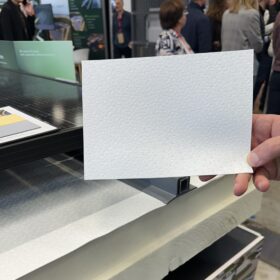
Renolit France has introduced the Alkor Bright reflective membrane for bifacial rooftop PV systems, offering high solar reflectivity and durability for flat or pitched roofs. The membrane helps keep buildings cooler while boosting the energy output of bifacial solar modules.
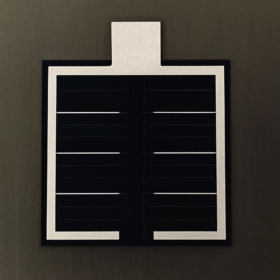
Perovskite-silicon tandem solar cell with steric complementary design achieves 32.3% efficiency
Researchers in China developed a monolithic perovskite-silicon tandem solar cell using a steric-complementary interface design, achieving a certified efficiency of 32.12% and enhanced long-term stability. This strategy optimises molecular fit in the perovskite lattice, improving both charge transport and device longevity.
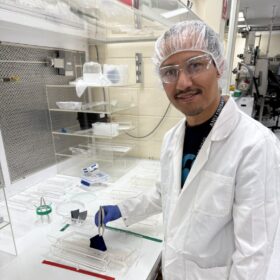
ANU teams with Longi to explore doping options in solar wafer manufacturing
An international research team led by the Australian National University and Chinese module manufacturer Longi has investigated antimony-doped Czochralski-grown silicon ingots as an alternative to phosphorous-doped ingots in the manufacturing of PV wafers and has found they exhibit slightly higher mechanical strength.
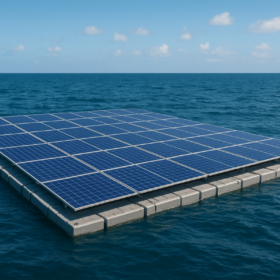
Research provides cost benchmarking for offshore floating solar
An international team of researchers led by engineering consultancy RINA Australia has completed a preliminary techno-economic study on the global potential for offshore floating PV. The results provide project cost benchmarking, country-specific economic assumptions, and a global assessment of offshore solar’s levelised cost of electricity.
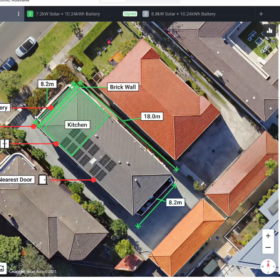
GreenSketch 3.0 fast tracks solar and battery install design and business
Australian solar distributor OSW Group has enhanced its free solar, battery design and installation business tool, GreenSketch version 3.0 with new AI-powered features, that simplify and accelerate workflows.

Japan launches call for road-surface solar technologies
Japan’s Ministry of Land, Infrastructure, Transport and Tourism has started accepting submissions for new road-surface PV technologies, with field verification planned in pedestrian areas at roadside stations to test performance and electricity use ahead of societal implementation.
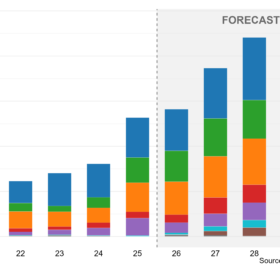
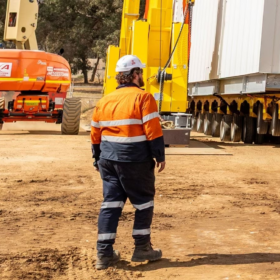
FY2029 renewable energy construction spending to peak at $23 billion: report
New industry forecasting company Macromonitor analysis has found renewable energy construction tripled since 2021 and is on track to increase to a peak level of $23 billion in FY2029.
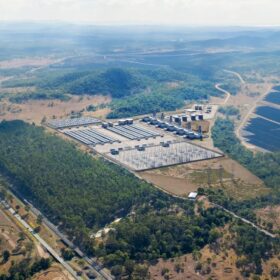
6 GWh CATL battery in Australia: Stanwell locks in massive gas-plus-storage hybrid plant with Quinbrook
Two Memorandum of Understanding signed within a month of each other are set to see a massive CATL battery delivered to the Queensland state of Australia for Quinbrook and Stanwell.

Panasonic glass-based perovskite solar panels tested in office windows
Japanese electronics manufacturer Panasonic is testing its glass-based perovskite solar PV technology in office windows made by YKK AP, a construction and building materials company.
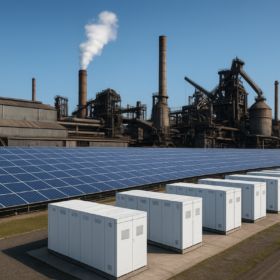
Study shows optimal solar-plus-storage sizing for heavy industry operation
Australian researchers developed a high-resolution energy modeling framework to assess how PV and batteries can supply 24/7 electricity to heavy industries, considering cost, grid interaction, and load flexibility. They found that while technology cost reductions help, smart grid integration and flexible industrial operations are far more effective in lowering electricity costs and enabling 100% renewable energy use.