Weekend read: Hype and hope for solid-state batteries
Hype and hope for solid-state batteries (SSBs) continues to grow as industries from automotive to storage bet big on the technology. Leading battery manufacturers and a roll call of start-ups are jostling to get from lab to fab. The reality of SSBs is in question though. As Marija Maisch reports, the window of opportunity for the decades-old technology to make the next big step toward commercialisation is now.
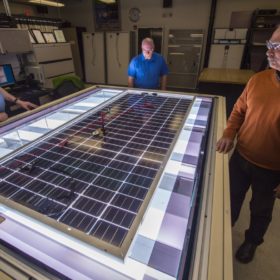
Results of long-term study of module degradation released
In a study that began in 2016, scientists in the United States purchased 834 PV modules, representing seven manufacturers and 13 module types, and installed them in various climate conditions to observe their performance over time. The results show that, while plenty of opportunities still exist to extend module lifetimes and reduce performance loss in the field, reductions in the manufacturing cost of PV have not come with an increase in their degradation rate.
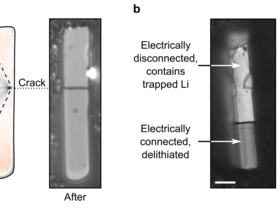
Optical microscopy technique to study prevention of battery failure
Researchers at the University of Cambridge have examined one of the fastest-charging anode materials by using a low-cost, lab-based optical microscopy technique. Their findings showed that particle fracture, which can reduce the storage capacity of a battery, is more common with higher rates of delithiation and in longer particles.
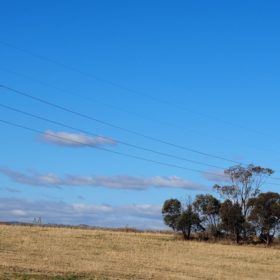
Regulator approves costs for HumeLink early works
The Australian Energy Regulator has approved more than $300 million of funding to support early works on the HumeLink project which is expected to boost overall transmission capacity in New South Wales, paving the way for gigawatts of new wind, solar PV and storage projects.
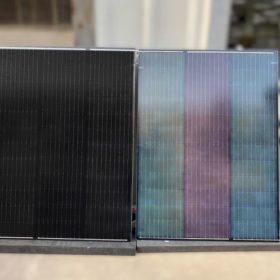
Research team unveils high-efficiency coloured BIPV panels
Researchers in China have reported a colourisation strategy for solar based on photonic glass. They created solar panels that took on blue, green, and purple hues, while only dropping the efficiency of power generation from 22.6% to 21.5%.
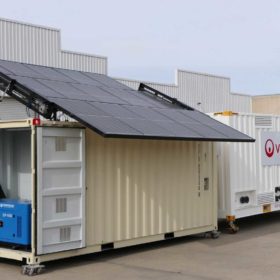
The growing demand for off-grid leads to compact, pre-wired systems
With headlines dominated by spiking electricity prices and energy security, the demand for off grid solutions in Australia is booming. “It’s starting to make financial sense, that’s significant,” Matt Miller, the marketing manager for Victorian company Commodore tells pv magazine Australia.
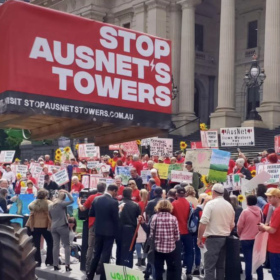
‘Likely to further dilute trust’: misunderstanding community opposition to transmission lines
As community opposition to overhead transmission line grows, the Victoria-based Energy Grid Alliance has released a report imploring the energy industry to better understand why the phenomenon is gaining momentum – positing the ‘talk to them early and pay them more’ approach will only further decay the situation. Instead, the group says real attention needs to be paid to social license and ensuring environmental and socioeconomic impacts of chosen transmission corridors are considered from the get-go.

Universal method to improve lifespan of lithium-ion batteries
Researchers at the Gwangju Institute of Science and Technology (GIST) have developed a broadly applicable and versatile post-electrode-engineering process. It can be applied to a range of conventional anodes to improve their stability.
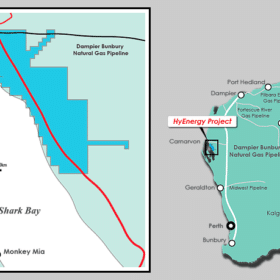
8 GW HyEnergy Project in WA clears another milestone
A study into exporting green hydrogen from the 8 GW HyEnergy hydrogen Project in Western Australia’s Gascoyne region without an onshore port has found it to be both commercially and technically feasible.
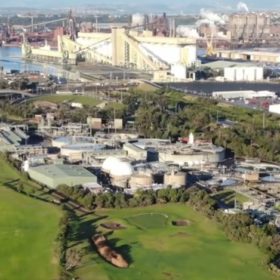
Shell pulls back from Port Kembla hydrogen hub
Less than a year after agreeing to work with Australian steel company BlueScope, Shell is now stepping back from the plan develop a pilot-scale 10 MW green hydrogen electrolyser at the Port Kembla Steelworks and further the vision for a hydrogen hub in the Illawarra.