ClearVue BIPV solution achieves 2.6-year payback in Hong Kong trial
ClearVue Technologies says its solar facade solutions, that combine the company’s solar glazing units into a fully integrated energy generating building envelope, have achieved a payback period of less than three years in a Hong Kong government trial.
Kardinia lands state funding to progress printed solar production facility
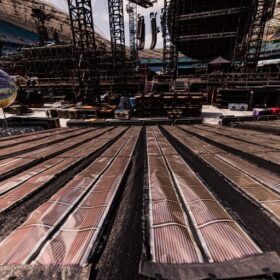
Printed solar technology startup Kardinia Energy, photoluminescence imaging specialist BT Imaging, and modular solar array manufacturer 5B are among 13 companies awarded more than $26 million in funding by the New South Wales government to support the commercial development of their clean energy tech.
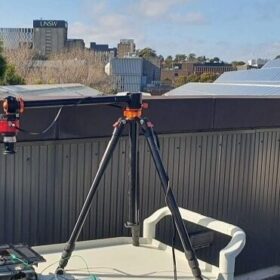
Using photoluminescence, implied open-circuit voltage imaging for perovskite solar cell field testing
To evaluate the outdoor performance and stability of perovskite solar cells using contactless and noninvasive methods, an Australian and Chinese research team found a way to use photoluminescence imaging as well as demonstrating a proof of concept for implied open-circuit voltage imaging. Their research relied on cost-effective equipment that operates under direct sunlight.

BHP inks deals to explore battery tech opportunities
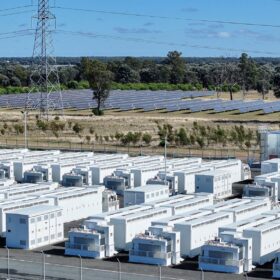
Mining giant BHP has struck early-stage agreements with two of the world’s largest battery manufacturers to explore the application of battery technology and electrification across its global operations.
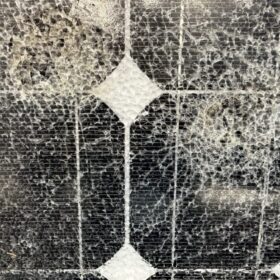
Upcycling solar glass waste to use in solid-state lithium batteries
Researchers in Singapore have milled solar panel glass waste for use in cathodes in solid-state lithium metal batteries. When used as a functional filler in solid polymer electrolyte (SPE) material, the resulting battery performance was maintained over 80 charge cycles with an 8.3 % improvement over the reference device.
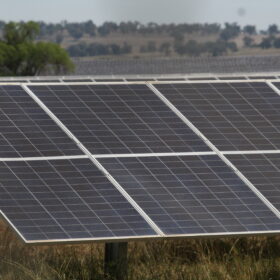
AEMO forecasts increased solar curtailment in NEM
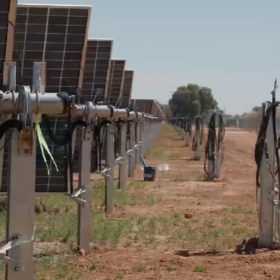
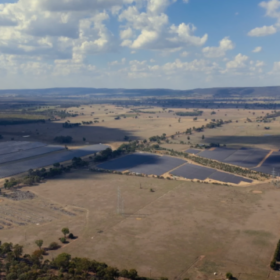
New large-scale solar farms in Australia’s southeast could be forced to curtail up to two thirds of their power generation by 2027 due to delays in energy transmission infrastructure projects, according to new analysis from the Australian Energy Market Operator.
Li-S achieves Australian first with lithium metal foils
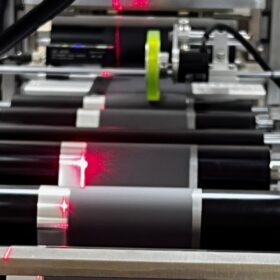
Li-S Energy has produced Australia’s first lithium metal foils at its cell production facility in Victoria, a milestone the company says supports its broader mission to commercialise high-performance lithium-sulfur and lithium metal batteries.
Huawei leads global inverter market as shipments hit 589 GW in 2024
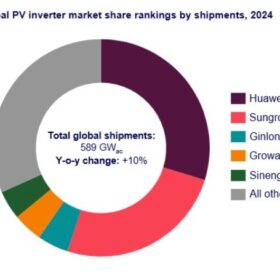
Chinese companies made up nine of the 10 largest global inverter suppliers in 2024, with total inverter shipments reaching 589 GW (AC), according to Wood Mackenzie.
NREL, CubicPV achieve 24% efficiency for perovskite mini solar module
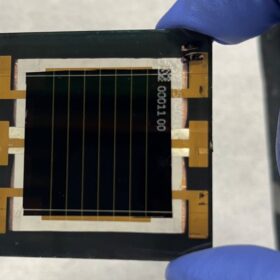
A United States-based collaboration between the National Renewable Energy Laboratory and CubicPV has yielded a perovskite minimodule with certified efficiency of 24.0%. The two noted that it is the first time a U.S. effort has set a record in the perovskite mini module category.
First Nations wisdom improves AI solar power prediction model by 14.6%
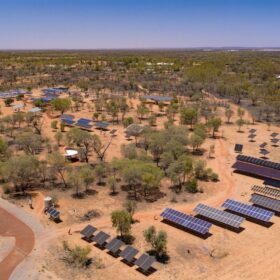
Researchers have combining advanced AI techniques with First Nations seasonal data and discovered a 14.6% more accurate way to predict solar power generation, with potential to improve renewable energy planning.