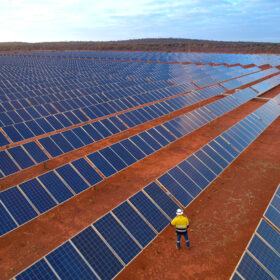
DeGrussa solar and battery hub labelled ‘brilliant success’ as decommissioning begins
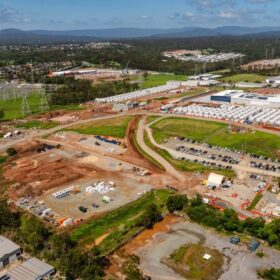
The largest integrated off-grid solar and battery storage facility in Australia when it was deployed, the DeGrussa solar and battery hub in remote Western Australia has reached end of life with asset owner Neoen confirming it is now planning to remove the more than 34,000 solar panels and rehabilitate the site.
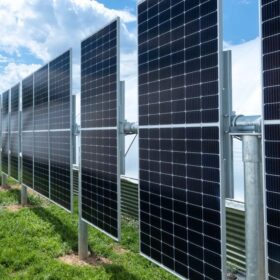
Solar fence stands out in Gridcog simulation
Solar fences are beginning to gain traction in European and North American markets and now data provided by energy software service provider Gridcog suggests that vertical bifacial solar could be technically and economically viable in Australia.
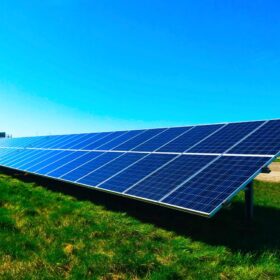
Machine learning algorithm for inverter fault monitoring, prediction
The new algorithm monitors the inverter subsystems and sends alarms when maximum and minimum values are reached. It analyses data and categorises variables according to historic values.
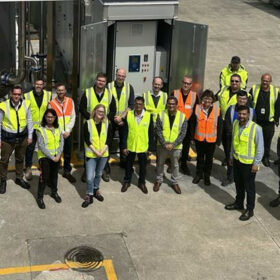
Fonterra reveals high-temp industrial heat pump
New Zealand-based dairy producer Fonterra has started operating a new heat pump in combination with a solar thermal facility. The hybrid project transforms excess heat from chillers and compressors into a heat source for industrial use.

ClearVue scores commercial first with solar glass tech
Western Australian solar window company ClearVue Technologies has launched its commercial campaign in Australia with an order to provide its clear solar glass technology for a $12 million, six-storey building being built in Victorian state capital Melbourne.
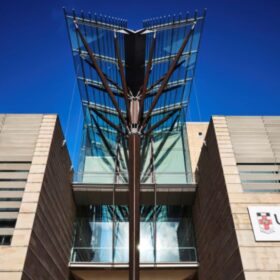
UNSW researchers solve aqueous rechargeable zinc battery challenge
Researchers from The University of New South Wales have developed a “scalable solution” they say overcomes the rechargeability challenges associated with aqueous zinc battery technology, potentially redefining energy storage for homes and grids.
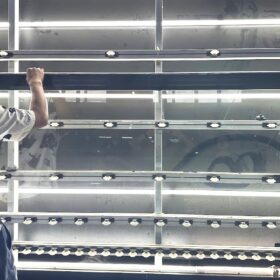
ClearVue inks Australian manufacturing and distribution deal
Solar glass manufacturer ClearVue Technologies will look to ramp up the commercialisation of its power-generating solar windows in Australia after finalising its first manufacturing and distribution agreement in the country.
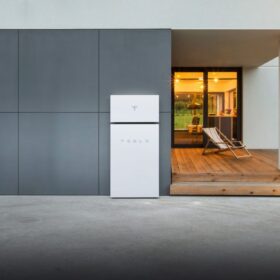
Tesla releases API for solar, Powerwall, EV charger
The company released an application programming interface to enable third-party developers to interact with Tesla home energy products.
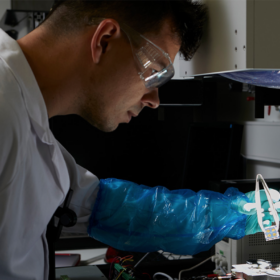
Breakthrough for producing perovskite solar cells with AI
Researchers at RMIT University’s School of Science, Monash University and Australia’s national science agency, the CSIRO, have harnessed artificial intelligence to accelerate the design and production of perovskite solar cells.
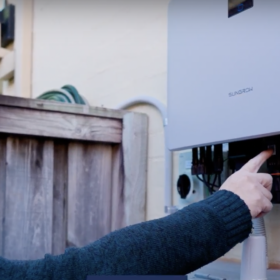
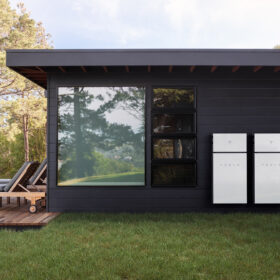
Free home solar and battery rollout begins with Diamond partnership – here’s how NRN’s value model works
Australian startup NRN is rolling out its proposition to fit households with solar and batteries at no cost to consumers. Announcing its partnership with retailer Diamond Energy and the completion of a $13.5 million (USD 9.18 million) capital raise, the company believes it’s found the trick to successfully deploying free household renewables by focussing on retailer value. Pv magazine Australia spoke to NRN and experts about how exactly the model works and where the value comes from.