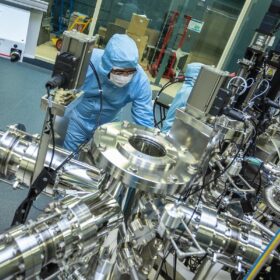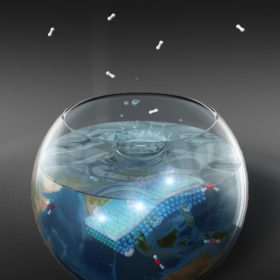
Dye-sensitised photocatalyst promises most efficient solar water splitting to date
Japanese researchers have developed a new way to improve water splitting, while South Korea has completed its largest hydrogen production complex. Scotland and England have announced new hydrogen investments, and Uzbekistan and Saudi Arabia’s ACWA Power have agreed to collaborate on hydrogen projects.
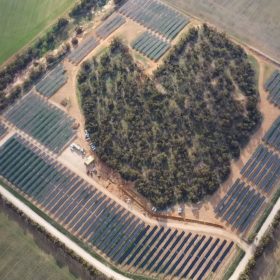
Hearts for the newly energised SA solar farm
The 4.95 MW Kerta Solar farm in South Australia has this week been energised, with owners Green Gold Energy saying its commissioning is “coming soon.”
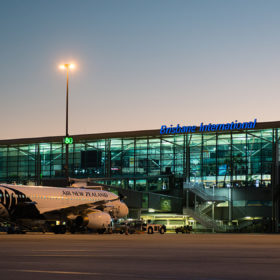
Brisbane Airport expands AI program to help meet sustainability goals in airport first
Brisbane Airport Corporation is set to expand its use of artificial intelligence (AI) energy optimisation technology across the international airport following a successful six month trial.
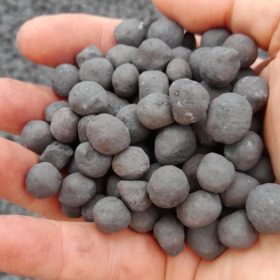
SA’s Whyalla steelworks hits green steel milestone with first batch of premium magnetite
South Australia’s Whyalla, the site of the state’s government-backed hydrogen hub, has begun producing a vital component used to make green steel: magnetite concentrate. The steelworks is owned by billionaire steel tycoon Sanjeev Gupta through his global company GFG Alliance. Gupta has described magnetite concentrate as “a critical enabler of our global green steel strategy.”
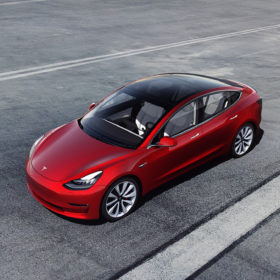
The road to new fuel efficiency rules is filled with potholes. Here’s how Australia can avoid them
Last week, federal Climate and Energy Minister Chris Bowen officially put fuel efficiency standards on the national agenda, saying the measure would reduce transport emissions and encourage electric vehicle uptake.
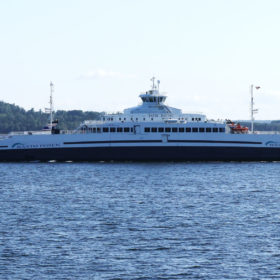
EV shipping is set to blow internal combustion engines out of the water
Modelling 5 to 10 GWh electrified containerships, researchers find that 40% of routes today could be electrified in an economically viable manner, before considering environmental costs.
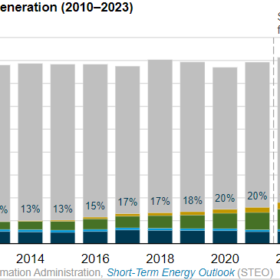
Renewables expected to generate 22% of US electricity this year
The Energy Information Administration projects renewable energy to reach a record share of generation mix this year.
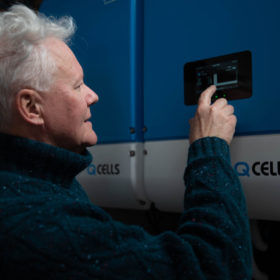
Qcells Australia reports 194% jump in battery sales in July
South Korean solar and battery manufacturer Qcells says its Australian arm has seen 194% growth in energy storage system (ESS) sales in July 2022 compared to the first quarter of the calendar year.
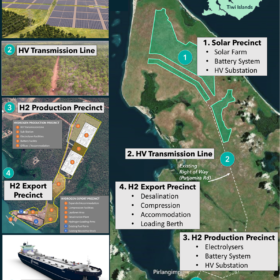
2.8 GW Tiwi Island green hydrogen proposal granted Major Project Status
Australia’s Provaris Energy, formerly known as Global Energy Ventures, has had its 2.8 GW Tiwi Island’s green hydrogen project awarded Major Project Status by the Northern Territory government.

New Zealand hydrogen R&D blossoms with German backing
New Zealand and Germany have partnered up to provide NZ$2 million (AU$1.8m) each to three green hydrogen research projects, including one to develop more efficient anion exchange membrane electrolysers which promise to be cheaper and more sustainable to manufacture.