$1 billion Chinese investment in Nauru includes renewable energy projects
The Pacific Island nation of Nauru has signed a $1 billion investment project proposal with a Chinese revitalisation and development corporation, which includes developing renewable energy and green transport sectors.
Scientists build 42.01%-efficient indoor PV cell for self-powered devices
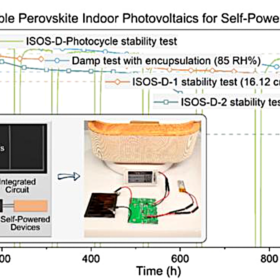
International researchers have included an interlocked self-assembled monolayer in perovskite indoor PV to enhance its stability and durability, testing the novel structure through fabricating cells, mini modules, and a prototype device of an electronic price tag, and which was found to exhibit a lifetime approaching 6,000 hours.
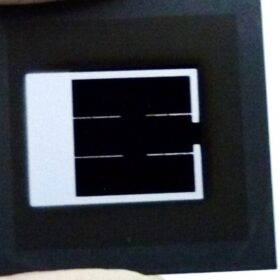
Tongwei achieves 31.4% efficiency for perovskite-silicon tandem solar cell
Chinese researchers, led by a research team from PV Technology Centre of Tongwei Co., Ltd, used a sequential annealing process in the fabrication of tandem solar cells, featuring a wide bandgap perovskite top cell on a fully-textured commercial crystalline silicon heterojunction bottom cell. The resulting device had a certified power conversion efficiency of 31.4%, outperforming a 29.43%-efficient control cell.
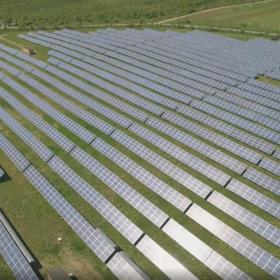
Macquarie-backed Blueleaf progresses 3 GW solar and storage plan for Malaysia
Macquarie-owned renewables platform Blueleaf Energy will explore the potential development of 3 GW of solar PV and battery energy storage projects in Malaysia after striking a deal with a local advisory firm.
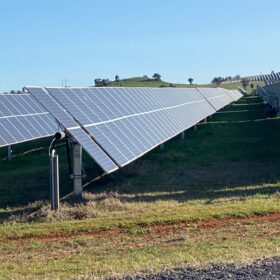
Seasonally optimised PV panel tilt can boost yield by up to 9%: study
In the Indian state of Rajasthan, a new study investigates the seasonal optimisation of PV module tilt angles to optimise the energy efficiency, revealing that dynamic tilt adjustments can significantly boost annual solar yield across diverse climatic zones.
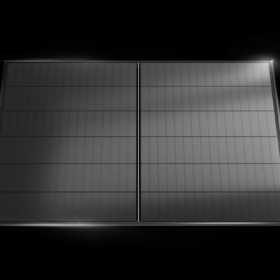
JinkoSolar presents 475 W TOPCon dual-glass solar panel with 23.77% efficiency
The Chinese manufacturer said its new IEC 61215-certified rooftop PV module relies on a 30 mm aluminum frame and dual-glass construction that reportedly help it withstand extreme snow loads and wind pressure.
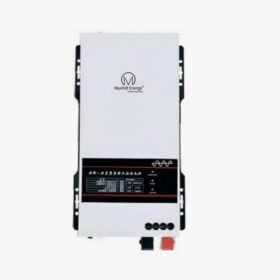
MaxVolt launches smart inverter with inbuilt lithium battery
The Indian battery manufacturer has launched a wall-mountable, high-efficiency inverter with inbuilt lithium battery for residential and commercial solar applications.

Indonesia announces 100 GW solar, storage minigrid plan
The new initiative features plans for 1 MW solar minigrids tied with 4 MWh of accompanying battery energy storage, to be deployed across 80,000 villages, alongside 20 GW of centralised solar power plants.
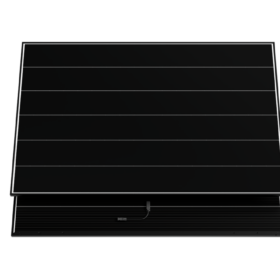
Aiko offers 500 W all-back contact solar modules for C&I applications
The Chinese manufacturer has upgraded its Infinite ABC solar module series with four new product versions. It claims the new modules are the world’s first 500 W panels measuring less than 2 m2.
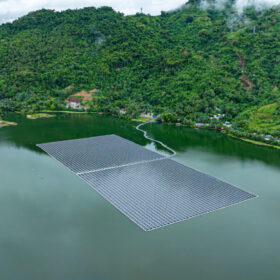
Philippines completes first MW-scale floating solar array
The Philippines has completed its first megawatt-scale floating solar array, a 4.99 MW installation on the Malubog reservoir, with plans to expand to 50 MW to power a copper mine. In Mindanao, work has begun on a 99 MW solar plant backed by about $120 million in green financing from HSBC.