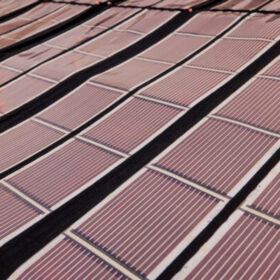
Printed solar manufacturer lands $2.15 million grant
Kardinia Energy has received a federal grant worth $2.15 million to help scale production of its Newcastle-based printed solar technology.
CER projects up to 12 GWh capacity from 520,000 home batteries in 2026
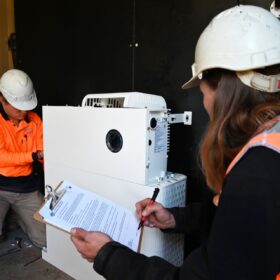
In 2026, the Clean Energy Regulator forecasts that up to 12 GWh of storage from a potential 520,000 residential battery installations will occur, and rooftop solar will rebound from 2.8 GW in 2025 to between 3-3.7 GW.
Software cuts C&I scale rooftop solar MV connection quotes to 15-minutes
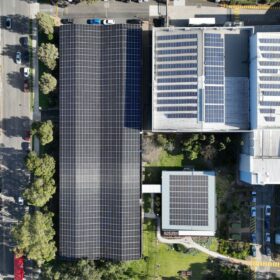
An automated tool enables commercial and industrial scale rooftop solar owners to determine if their medium voltage connection requests can be approved online by their distributed network service providers in 15 minutes.
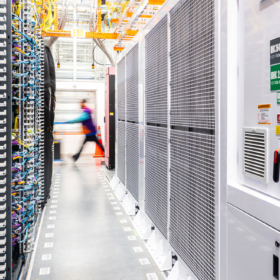
Mandate 100% clean energy for data centre approvals proposed
An alliance of 11 major industry, environment and union groups have delivered a plan to the federal government that proposes data centre operators invest in 100% new renewable energy to power their operation, and also fund new energy workforce training.
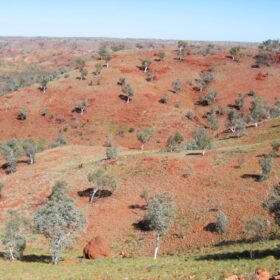
Yindjibarndi launches EOI for Pilbara clean energy offtake
The Yindjibarndi Energy Corporation has opened an expression of interest process for commercial and industrial customers seeking renewable energy offtake from its expanding portfolio of large-scale clean energy projects.
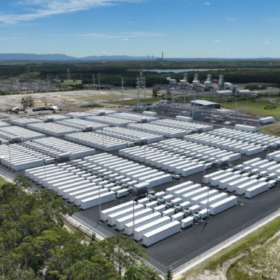
Waratah Super Battery transformer swap gets green light
The Australian manufacturer of a high voltage transformer deployed at the Waratah Super battery, which failed in 2025, has started production of its replacement with delivery scheduled for Q3 2026.

Smart Energy Council head to lead APAC energy transition role
Smart Energy Council Chief Executive John Grimes has been appointed head of the Renewable Energy Council Asia-Pacific where he aims to step up clean energy deployment across the APAC region.
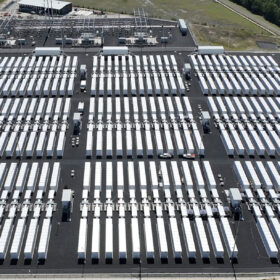
The state of charge: NEM’s battery fleet crosses the chasm
In the past 12 to 18 months, the NEM’s battery fleet has well and truly crossed the chasm from early adoption to mainstream acceptance, and is slowly becoming a key force in shaping dynamics in the physical market. The build-out is large, the pace of development has been relatively rapid, and — as we saw in AGL and Origin’s half-year results two weeks ago — battery earnings are becoming more of a focal point in company updates and strategy.
NSW backs pumped hydro to deliver long-duration storage
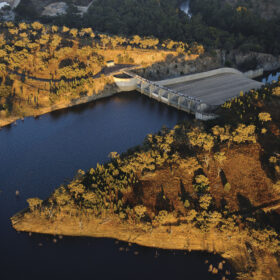
Pumped hydro continues to push for a place in Australia’s energy transition with the New South Wales government recently declaring two multi-billion-dollar projects Critical State Significant Infrastructure.
Ausgrid launches new community battery to support solar
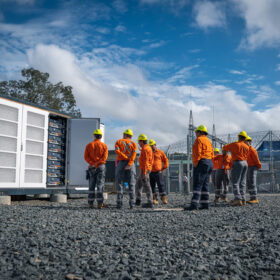
New South Wales electricity distributor Ausgrid has added another centralised community battery to its portfolio, powering up a combined 10 MW energy storage system in the southwest Sydney suburb of Bankstown.