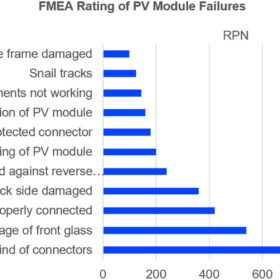
Quantitative methodologies to assess technical risks in PV
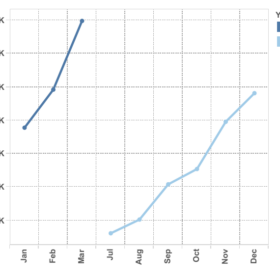
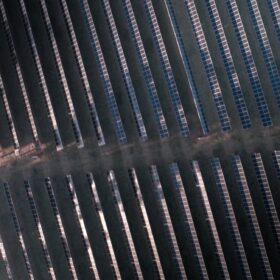
Researchers led by Germany’s TÜV Rheinland have created a database of technical risks and mitigation measures for PV installations. Their broad overview of quantification methods has shown that further standardization is required.
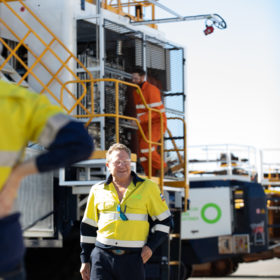
FFI teams up with European heavyweight on green hydrogen for Australia, Latin America
Australian green hydrogen developer Fortescue Future Industries and Italian gas and electricity giant Enel are set to partner on making green hydrogen cost-competitive with fossil fuel alternatives this decade.
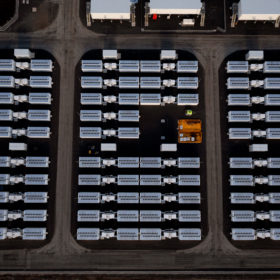
Australian big battery near triples Neoen’s storage revenue
French renewables developer Neoen has credited the Victorian Big Battery with almost tripling its storage revenues in the first nine months of 2022. To September, the company’s revenues totalled $547 million (USD 347.4 million), with growth in solar and wind revenues paling beside the massive surge from battery storage.
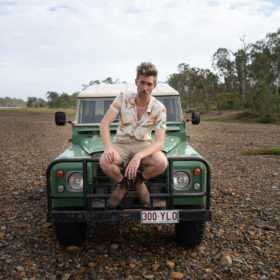
Melbourne startup converting classic cars into EVs scales bolt-in manufacturing with UK merger
Bolt-in electric vehicle kits in Australia have just got a leg up, with Melbourne startup Jaunt Motors joining forces with UK company Zero EV to operate a new, larger scale business to have production facilities and operations across Australia, the UK and, “very soon,” the US.
优睿科.jpg-280x265.png)
Latest advances in sodium-ion battery research
Qingdao University researchers have synthesised high-performance titanium dioxide-based anode materials with excellent cycling stability, while German scientists have used operando techniques to observe how solvated sodium ions embed themselves in electrodes.

Report finds sustainability skills gap in Australian financial sector
The University of Technology Sydney’s (UTS) Institute for Sustainable Futures (ISF), in collaboration with the Commonwealth Scientific and Industrial Research Organisation (CSIRO) Climate Science Centre, has published the findings of its national “Climate Skills Survey” of financial professionals.
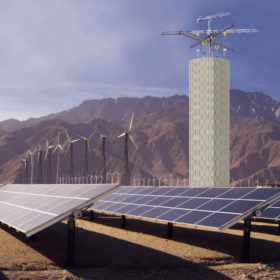
Proposed 330 MW Victorian solar farm opts for 500 MWh Swiss battery
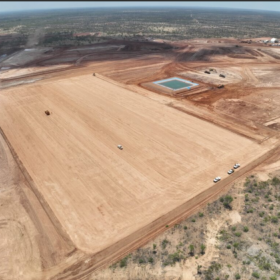
Swiss energy storage company Energy Vault has been awarded the contract to supply the in development 330 MW Meadow Creek Solar Farm in Victoria with a 250 MW/500 MWh battery energy storage system.
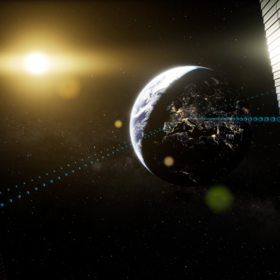
Space-based solar power for terrestrial energy needs
The Cassiopeia solar project aims to use the sunlight collected by a space satellite for terrestrial energy needs. The electricity generated would be converted to radio frequency microwave radiation transmitted to an antenna on Earth. The initial LCOE would be $73.4 (USD 47.8)/MWh, according to a UK study.
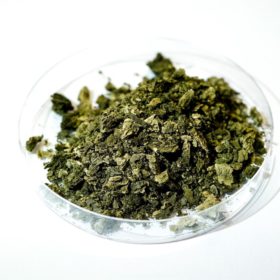
Algae could boost solar panel efficiency by 4%
A Swedish team has inaugurated a pilot facility to mass produce algae material that can potentially boost silicon solar module efficiency by 4% and thin film by 36%. The algae are added to the encapsulant in silicon-based modules or to the anti-reflective coating on the glass of thin film modules. The team estimates the resulting modules would be 3.9% cheaper.
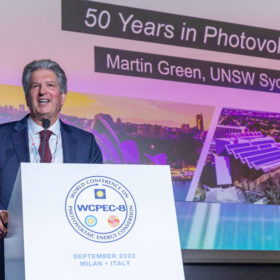
UNSW’s Martin Green picks up $1.5 million Millennium Technology Prize
Australian research that has seen crystalline silicon (c-Si) PV technology takes its place in the mainstream of the global energy industry has been recognised by picking up Finland’s top technology award. The €1 million (AUD 1.55 million) Millennium Technology Prize has been awarded to UNSW Scientia Professor Martin Green, in recognition for his work in developing passivated emitter rear contact (PERC) technology – the mainstay cell of the modern solar industry.