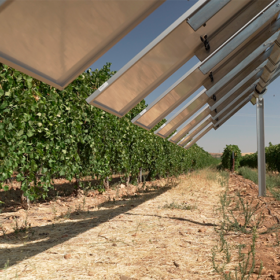
Agrivoltaics for vineyards
Developers recently commissioned two different wine-related agrivoltaic projects in Europe.
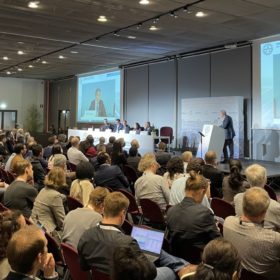
‘The first terawatt of solar PV installed globally took some 70 years to achieve, while the second will likely take only three’
Leading solar researchers from around the world are meeting for the first time in four years in Milan, Italy, for the 8th World Conference on Photovoltaic Energy Conversion (WCPEC-8). The first morning has seen prestigious awards bestowed on two scientific leaders and inspirational discussions as to how the “second terawatt” of solar can be installed globally in just a handful of years.
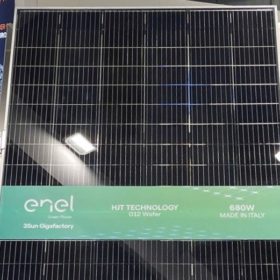
Enel unveils 680 W n-type heterojunction solar panel for utility-scale applications
Enel Green Power’s new solar panel has average efficiencies ranging from 22.6% to 22.9% and a temperature coefficient of -0.24% per degree Celsius. It is based on an n-type solar cell with G12 format and a power conversion efficiency of 24.6%.
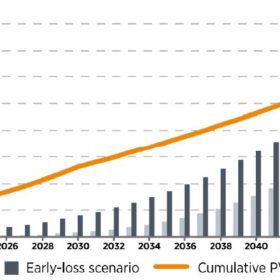
IEA PVSP predicts high-cost, low-revenue scenario for solar recycling
A recent report by the International Energy Agency Photovoltaic Power Systems Programme (IEA PVSP) reviews the current regulatory and industrial landscape for end-of-life PV management in Germany, France, Italy, Spain, Japan, South Korea, China, Australia, and the United States.
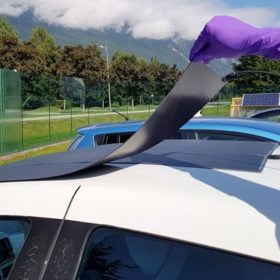
Vehicle-integrated solar kit may reduce frequency of recharging by 14%
Developed by the French research institute Liten, the prototype kit consists of a 145 W PV panel, a magnetic rear panel, and an MPPT charge controller. It also includes a battery and a micro-inverter that can be used to inject the stored energy into the grid when the vehicle is recharged.
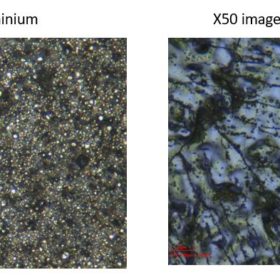
Novel tech to recycle silver, aluminum from end-of-life solar panels
Researchers in the United Kingdom have developed a new method of extracting silver and aluminium from end-of-life PV cells using iron chloride and aluminium chloride dissolved in brines. According to the research team, the cheap solvents retrieve up to 95% of the metals within 10 minutes, achieving a 98% purity of silver chloride.
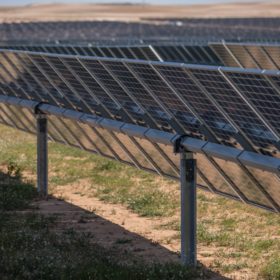
UK investment firm makes $36 million move into NSW solar market
United Kingdom-headquartered investment firm Global Sustainable Energy Opportunities has increased its Australian solar PV portfolio, committing $36 million (£21.2 million) to acquire three more solar projects with a combined capacity of 15 MW.
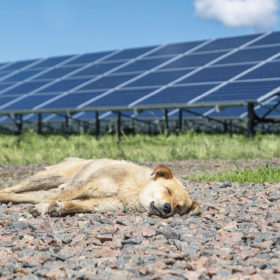
Weekend read: Darkest hour before Ukraine’s solar dawn
Ukraine is still facing dire circumstances, with war continuing to claim lives and Russian invaders occupying large parts of the country. Solar plant owners also face serious challenges, including collateral damage, looting, destruction of communication infrastructure, and payment shortfalls. However, a bold vision for recovery has been set out with a key role for solar, as Ian Skarytovsky reports.

UK startup unveils solar trees for commercial, industrial areas
United Kingdom-based SolarBotanic Trees will begin offering its solar trees in early 2023. The systems will use monocrystalline cells with an efficiency of up to 24%, encapsulated in a 3D shape.
German investor buys up Australian battery energy storage portfolio
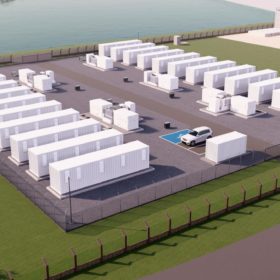
German investment management company Aquila Capital has expanded its Antipodean asset base, inking a deal to buy a 220 MW/440 MWh portfolio of battery energy storage projects in South Australia from Spanish renewables developed Gransolar Group.