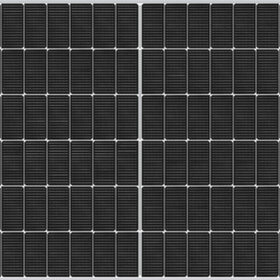
Sharp unveils 570 W TOPCon solar panel with 22.07% efficiency
Sharp’s new IEC61215- and IEC61730-certified solar panel offers a power conversion efficiency of 22.07% and a bifaciality of more than 80%. The operating temperature coefficient is -0.30% per C and its power tolerance is 5%.
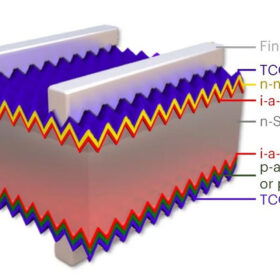
A closer look at Longi’s world record-breaking, 26.81%-efficient heterojunction solar cell
An international research group led by Longi Central R&D Institute has published a paper describing Longi’s heterojunction solar cell based on a full-size silicon wafer that made a sensation in November, as it beat the long-lasting efficiency record held by Japanese manufacturer Kaneka for years. The researchers attributed the cell efficiency improvement to the implementation of a p-type amorphous silicon hydrogenated layer together with a modified transparent conductive oxides contact, which they said greatly reduced the cell contact resistivity.
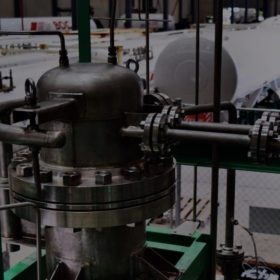
Perth-company with UWA hydrogen technology signs deal with Japan
Seeking to commercialise hydrogen technology developed by the University of Western Australia, Perth-based Hazer Group has entered into a somewhat vague agreement with Japan’s Chubu Electric Power Company and engineering firm Chiyoda Corporation.

PV Expo 2023: Japanese solar’s struggle for space
PV Expo and the wider Smart Energy Week wrapped up in Tokyo last week. It revealed ambitious plans for solar and energy storage installations in Japan, including creative approaches to dealing with a severe lack of space for new installations, which should bring plenty of opportunities for domestic and international players.
Australia singled out as key investment market for Asian majors
Executives from Gentari, the clean energy subsidiary of Malaysia’s state-owned oil company Petronas, and Japan’s biggest steelmaker, Nippon Steel, are eying Australia for future investments in renewables projects and green-steel manufacturing.
Relectrify seeks to scale up operations with backing of Toyota Ventures
Australian startup Relectrify aims to scale up the adoption of its highly efficient and cost-effective battery storage technology after attracting financial backing from a group of international heavyweights including Japanese car giant Toyota’s venture capital firm.
Evergen to test DER optimisation technology in Japanese setting
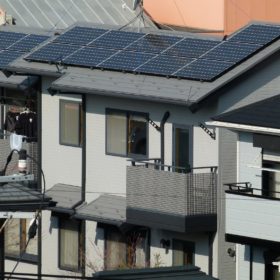
Australian energy software provider Evergen will take its solar and battery optimisation technology to Japan after teaming with Japanese companies Sharing Energy and Sassor on a pilot project to explore how to best commercialise distributed energy resources, including rooftop solar and residential battery energy storage systems, in Japan.

Panasonic unveils vehicle-to-home system for PV-powered homes
Panasonic claims that its new vehicle-to-home system can increase the self-consumption rate of residential solar and storage capacity to 90%.
Roadmap to achieve CIGS solar modules with efficiencies above 20%
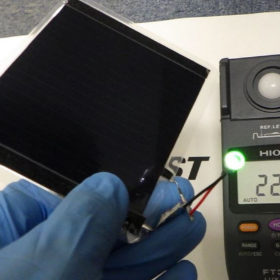
Japanese scientists have described the steps that need to be taken to improve the average efficiency of CIGS solar modules, from around 18.5% at present to more than 20%. They presented all of the critical technical factors that are currently holding the tech back from broader market adoption.
Dye-sensitised photocatalyst promises most efficient solar water splitting to date
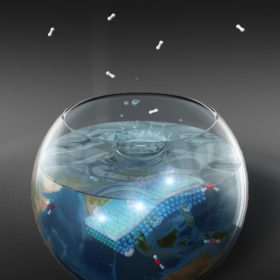
Japanese researchers have developed a new way to improve water splitting, while South Korea has completed its largest hydrogen production complex. Scotland and England have announced new hydrogen investments, and Uzbekistan and Saudi Arabia’s ACWA Power have agreed to collaborate on hydrogen projects.