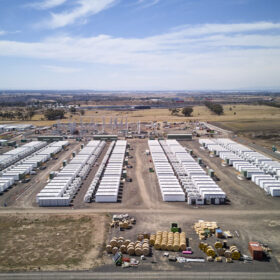
Batteries boom as report reveals challenging times for solar and wind investment
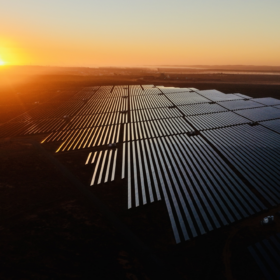
Renewable energy generated close to 43% of Australia’s electricity in 2025 with the country’s rooftop and utility-scale solar installations accounting for more than 21% of that total.
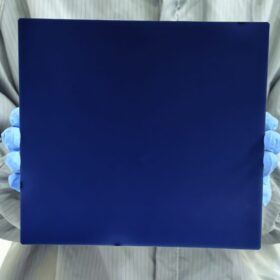
UNSW, DAS Solar build tunnel back-contact solar cell with 27% efficiency, lower silver content
Researchers from UNSW and DAS Solar developed a zero-busbar metal grid optimisation approach for tunnel oxide passivated back-contact (TBC) silicon solar cells, enabling more efficient current collection at the rear surface while reducing silver consumption by 3–4 mg/W. The first TBC cells produced in mass manufacturing using this technique have demonstrated efficiencies exceeding 27%.
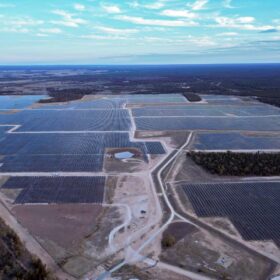
Australia seeks 5 GW renewable generation in new CIS tender
The Australian government has officially launched the latest tender in its Capacity Investment Scheme initiative, a competitive round targeting 5 GW of renewable energy generation capacity in the National Electricity Market.

CleanPeak officially flicks switch on Wangaratta solar farm
Australian renewables developer and operator CleanPeak Energy has added another utility-scale PV power plant to its operational portfolio with the official opening of the Wangaratta Solar Farm in northeast Victoria.
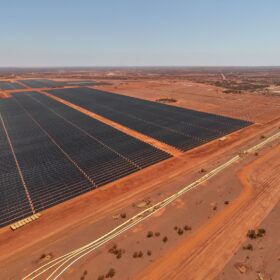
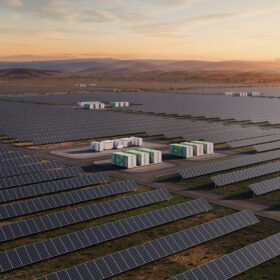
Fortescue begins building 690 MW solar farm and 650 MWh battery system
One of Australia’s biggest miners has commenced construction of a 690 MW solar farm and 650 MWh battery energy storage system in Western Australia as part of plans to eliminate diesel and gas from its iron ore operations.
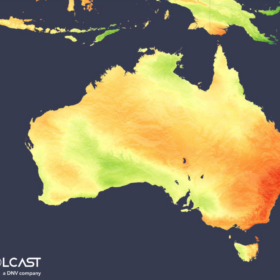
Record-dry April lifts irradiance across Eastern Australia
Solcast, a DNV company, reports that April 2026 was one of Australia’s driest Aprils in recent years, with widespread rainfall deficits driven by persistent high pressure and ENSO returning to neutral, leading to mostly clear skies and above-normal solar irradiance across much of the continent. New South Wales and Victoria saw the strongest sunshine surpluses, while remnants of ex-Tropical Cyclone Maila brought cloud and rain to the north, creating regional contrasts in rainfall and solar conditions.
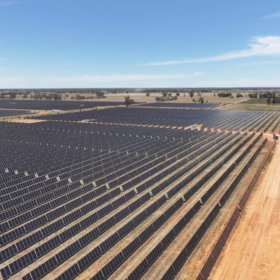
Solar and battery hybrid projects prominent in latest CIS tender
The results of the latest tender under the federal government’s Capacity Investment Scheme have been released with 19 projects successful, aiming to provide a combined 7.8 GW of renewable generation capacity and 7.9 GWh of storage by the end of 2030.

Data | Power: Navigating policy, regulation and networks
Australia is at a pivotal moment in its energy and digital transformation. The energy transition is driving electricity demand growth through electrification and unprecedented levels of investment in renewable generation.
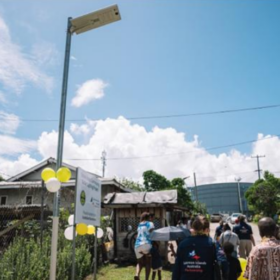
22 solar projects share $1.9 million funding round for Solomon Islands communities
The Australian government has partnered with communities across the Solomon Islands to develop 22 solar powered streetlight and solar energy projects, through an inaugural program’s $1.9 million funding round.
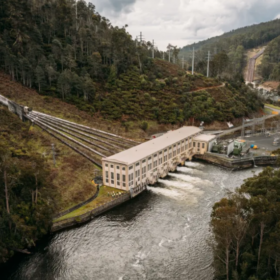
Tasmania commits $1.8 billion for energy generation and asset upgrades
The 2026-27 Tasmania Budget and Forward Estimates has committed $1.8 billion for energy generation and network asset upgrades to future proof the state’s electricity supply and Marinus Link connection.