CIP plans 7 GW of electrolysis hub in Australia
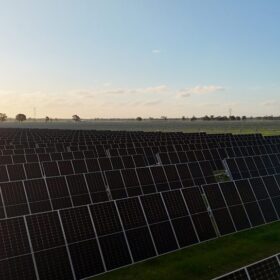
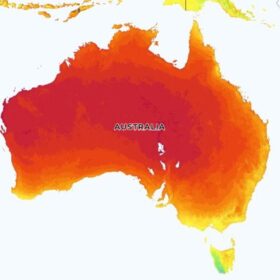
Copenhagen Infrastructure Partners (CIP) has announced plans to develop an $30 billion (USD 19,95 billion) green hydrogen production hub on South Australia’s Eyre Peninsula, while a new research study shows the feasibility of gas-to-hydrogen pipeline conversion in Western Australia.
Qcells builds pilot line for perovskite-silicon tandem PV cells in South Korea
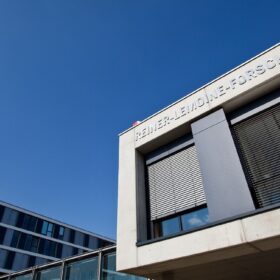
Qcells says it is building a pilot line for perovskite-silicon tandem solar cells that will start operations later this year in South Korea. It is working closely with its team in Germany, where it has already established another pilot line for tandem cells.
Major union proposes ‘punitive’ tax on export of raw critical minerals from Australia
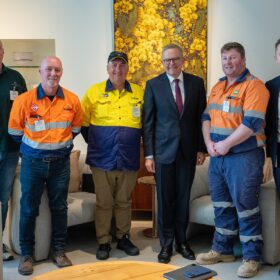
An influential Australian union will propose a “significant, punitive tax” on the export of raw critical minerals as a means of promoting more value-adding onshore. The news comes as longstanding trade allies voice criticism over Australia’s growing momentum towards domestic manufacturing.
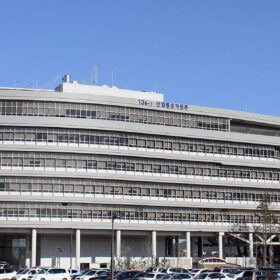
South Korea cuts capacity allocations from 4 GW to 2 GW in solar tenders
South Korea has cut its 2030 renewable energy target from 30.2% to just 21.6%, as it seeks to reduce support for solar and other clean energy sources, while preparing the ground for more nuclear power and liquefied natural gas. A lobby group is now challenging the plan in the Seoul Administrative Court.
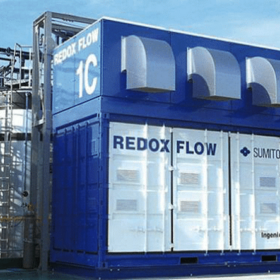
Vanadium flow batteries to be deployed at WA mine ahead of manufacturing push
Western Australia-based AVESS is set to deploy demonstration batteries at a WA mine site in the second half of the year. The deployment is about proving the company’s technology, as it plans to move towards manufacturing the flow batteries in Australia from 2024.
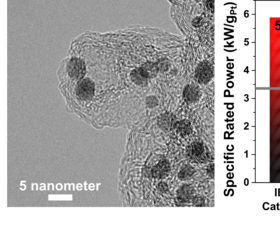
Novel design for high-power PEM fuel cells
UNSW Sydney researchers have developed an algorithm to enhance images of PEM fuel cells, meanwhile South Korean researchers have revealed a scalable production method for platinum-based fuel cell catalysts. Germany has moved forward on its hydrogen strategy by signing agreements with Australia, Belgium, and the Netherlands.
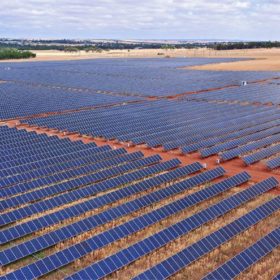
Samsung signs on for Western Australian green hydrogen project
Western Australian clean energy developer Infinite Green Energy will partner with South Korean industrial conglomerate Samsung C&T to develop and build a commercial-scale green hydrogen project that will leverage the existing 11 MW Northam Solar Farm east of Perth.
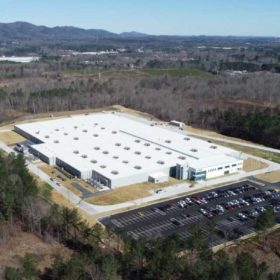
Q Cells announces $3.6 billion investment in solar supply chain
Q Cells plans to manufacture 3.3 GW of solar ingots, wafers, cells, and finished modules in a new facility in the US state of Georgia.
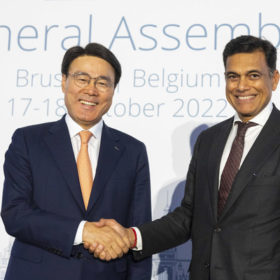
South Korean steelmaker to invest $60 billion in Australian green steel ventures
South Korean steel producer Posco Group will invest $60 billion (USD 40b) in Australia by 2040 across the green steel supply chain, including in renewable generation, electrolysis and steel making processes.
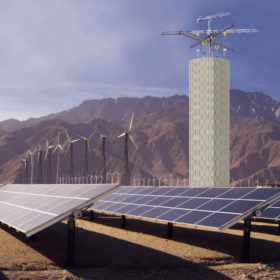
Proposed 330 MW Victorian solar farm opts for 500 MWh Swiss battery
Swiss energy storage company Energy Vault has been awarded the contract to supply the in development 330 MW Meadow Creek Solar Farm in Victoria with a 250 MW/500 MWh battery energy storage system.