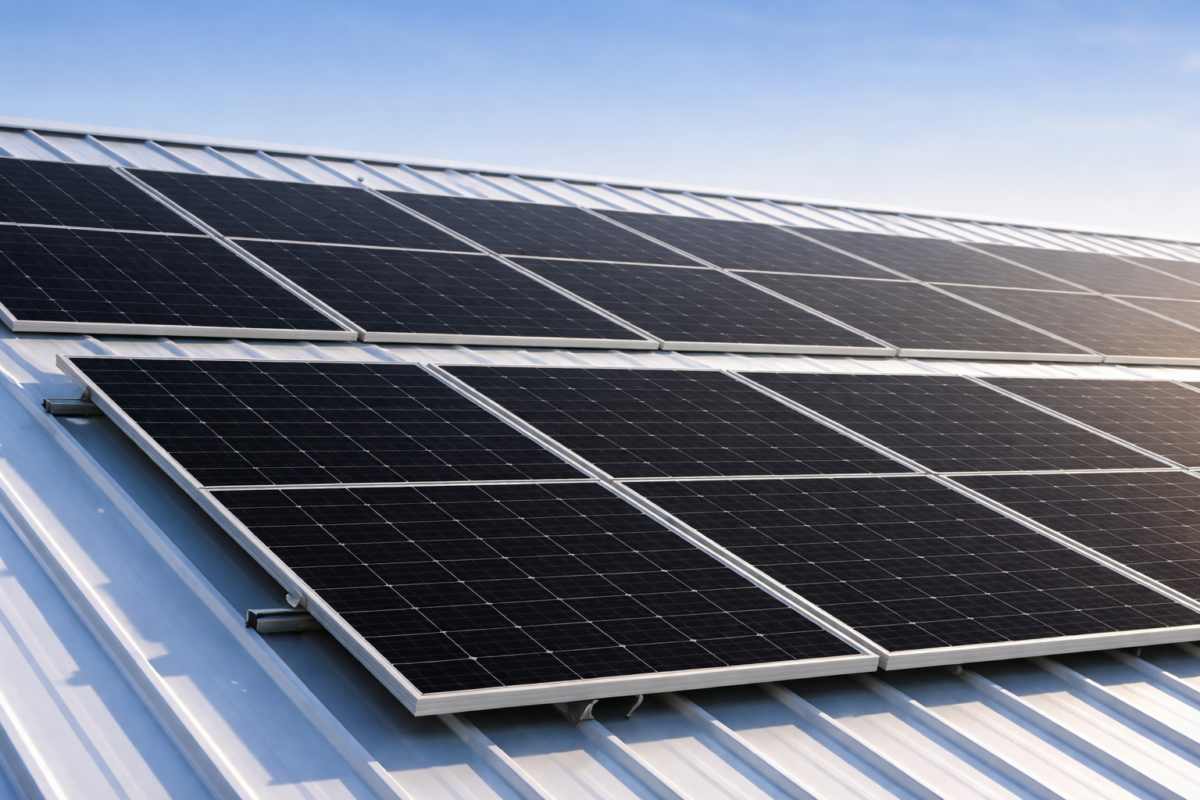





Chinese solar panel maker JinkoSolar has launched a new lightweight TOPCon solar module for use in residential and commercial applications in buildings with limited load-bearing capacity.
“JinkoSolar’s ‘Light Diamond’ lightweight, high-strength modules weigh only 7 kg per square metre, representing a weight reduction of more than 40% compared to conventional double-glass modules,” the company said in a statement. “The total module weight for a 1 MW project is only 28.6 tons, a reduction of approximately 20 tons compared to BC double-glass modules. This means that a large number of roofs that previously required reinforcement or were unsuitable for installation can now be directly fitted with solar panels without any structural modifications.”
The new product is based on the company’s Tiger Neo 3.0 technology platform. It measures 1,980 mm × 1,134 mm × 30 mm and weighs 16.2 kg. It can achieved an output of 560 W and a power conversion efficiency of 24.94%. The temperature coefficient is -0.26%/C.
The module also features 1.6 mm lightweight glass and a frame featuring “reinforced” channel design with increased thickness.
“In terms of load certification, the maximum front-side load capacity is 3,600 Pa—equivalent to withstanding 3.6 meters of snow accumulation—and the module can withstand impacts from 25mm hailstones without damage,” the manufacturer said. “The maximum back-side load capacity is 2,400 Pa, equivalent to withstanding Category 12 winds.”
The new product comes with a 15-year product warranty and a 30-year performance warranty, with the first-year degradation staying under 1%, and the yearly decline being limited to 0.35%, according to the company.
JinkoSolar claims that its new module can cut reinforcement costs by about CNY 0.5 ($0.10)/W or CNY 500,000 per MW.
“The construction period is reduced from over 40 days to 8–10 days, a 75% reduction,” it addedd. “There is no need to halt production, thereby avoiding operational losses, and the approval process is simplified, eliminating the need for structural modification approvals.”
No other technical details about the new panel were released.
This content is protected by copyright and may not be reused. If you want to cooperate with us and would like to reuse some of our content, please contact: editors@pv-magazine.com.



By submitting this form you agree to pv magazine using your data for the purposes of publishing your comment.
Your personal data will only be disclosed or otherwise transmitted to third parties for the purposes of spam filtering or if this is necessary for technical maintenance of the website. Any other transfer to third parties will not take place unless this is justified on the basis of applicable data protection regulations or if pv magazine is legally obliged to do so.
You may revoke this consent at any time with effect for the future, in which case your personal data will be deleted immediately. Otherwise, your data will be deleted if pv magazine has processed your request or the purpose of data storage is fulfilled.
Further information on data privacy can be found in our Data Protection Policy.