David Carroll

Anker Solix unveils all-in-one residential energy storage solution
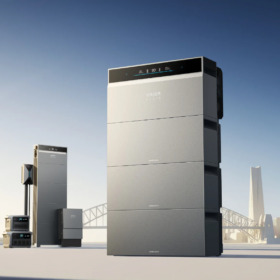
Anker Solix has launched a residential energy storage solution featuring a 7 kWh modular battery with 5 kW bidirectional inverter.
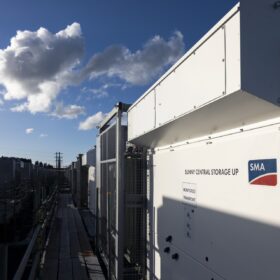
SMA shifts Australian focus to large-scale sector
German inverter and battery manufacturer SMA Solar Technology has confirmed its withdrawal from the Australian residential and commercial market, with CEO Jürgen Reinert declaring the company will instead focus on large-scale infrastructure, grid-forming technology and hybrid integration.
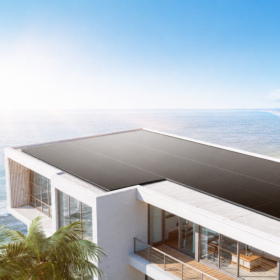
Trina launches Australia-specific solar module for rooftop market
Chinese PV technology manufacturer Trina Solar has launched an “Australia specific” variant of its Vertex S+ modules featuring a power output of 515 W and a maximum efficiency of 24.65%.
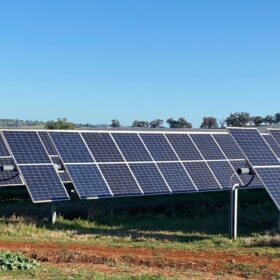
NSW to prioritise critical renewable energy projects under new law
New South Wales will introduce new legislation designed to accelerate the delivery of critical solar, wind, battery energy storage, and network projects to support the state’s transition from coal-fired power to renewable energy.

Rooftop solar surges to new high on back of battery boom
Australia’s rooftop solar market climbed by 31% in the past month with the latest data revealing that a record 442 MW of small-scale PV capacity was installed across the country in April 2026.
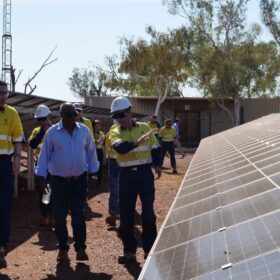
Pilbara mining operation plugs into renewable energy
Chinese miner Citic Pacific has flicked the switch on a new solar and battery microgrid that is now helping power its Fortescue River mining accommodation precinct in Western Australia’s northwest.
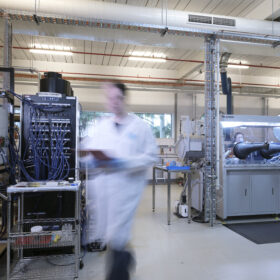
Australia’s climate tech potential only realised when research finds its way to market
Australia has no shortage of brilliant researchers or world-class science. Across energy storage, grid reliability, green hydrogen and beyond, our institutions are producing discoveries with real potential to reshape how we power our country and our economy. Yet too often, having worked across research translation for nearly a decade, I’ve seen that potential stall before it reaches the people and industries that need it most.
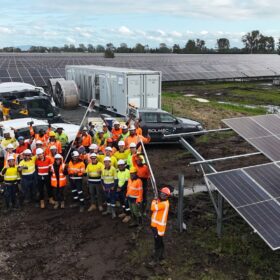
Elecnor confirms construction milestone for NZ’s biggest yet solar farm
The last of 330,000 PV panels has been installed at the Tauhei Solar Farm in New Zealand, marking a key milestone in the construction of what is set to be that country’s largest operational solar farm when it comes online later this year.
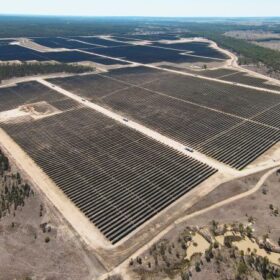
Edenvale project tops Rystad’s utility PV performance table
The 204 MW Edenvale Solar Park in Queensland’s Western Downs region has been identified by energy consultancy Rystad Energy as the best performing large-scale PV asset in Australia last month.

Energy for AI, AI for energy: designing AI-ready data centres
With data centre demand creating new challenges for network operators, Schneider Electric’s Farokh Ghadially outlines why the next phase of the transition isn’t just about adding more renewables, but managing a system that is more distributed, more data-heavy and less predictable.