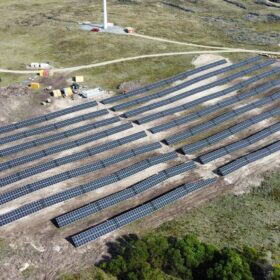
Solar farm adds to King Island’s renewables solution
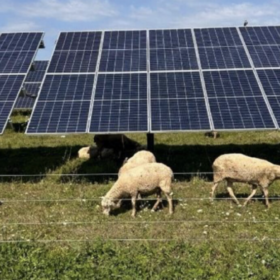
A permanent shift towards 100% renewable energy supply on Tasmania’s King Island is a step closer to realisation with the completion of a new 1.5 MW solar farm adding to the existing hybrid off-grid power system that services the island.
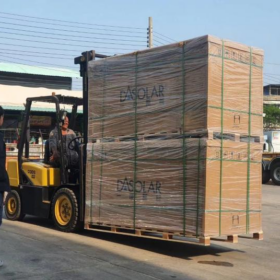
DAS Solar establishes Australian subsidiary
Chinese module manufacturer DAS Solar has launched an Australian subsidiary, an investment the company says reflects its confidence in the region’s solar market.
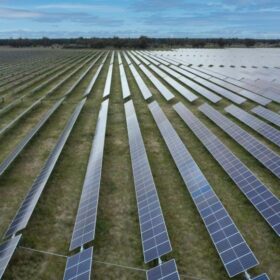
350 MW solar and storage project gets state tick of approval
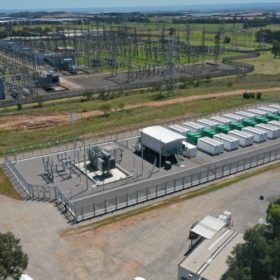
Construction of the 350 MW Blind Creek solar farm and large-scale battery energy storage project planned for southeast New South Wales is set to begin next year with renewables developer Octopus Australia announcing the state government has now granted planning approval.
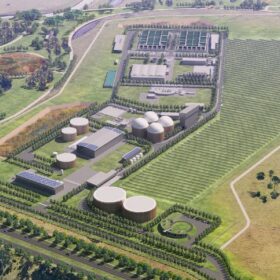
Sydney Water plans 4 MW solar farm to power new recycling plant
A 4 MW solar farm to be constructed at Kemps Creek in Western Sydney will be used to power a high-tech water recycling facility that will provide a water system to approximately 400,000 homes and businesses in the growth area.
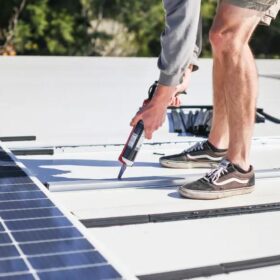
Lightweight solar panel provides solution for rooftop install
Queensland installer UV Solar has for the first time rolled out a new frameless solar panel that manufacturer GoodWe says is 60% lighter than conventional modules, making it ideal for rooftops that are unable to support traditional PV and racking.
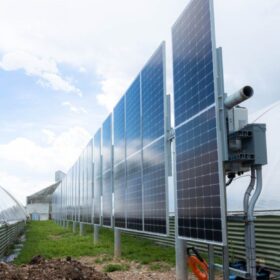
Vertical bifacial solar seeking greenhouse albedo and deployment space
A farmer in the United States has installed vertical bifacial solar, leveraging greenhouse albedo to increase output. The installation demonstrates promising generation during winter months, while maximising limited land space.
Provaris plans 2.6 GW solar farm for NT green hydrogen project
Western Australian renewables company Provaris Energy has advanced its Tiwi H2 green hydrogen export project planned for the Tiwi Islands in the Northern Territory with the design feasibility report for the proposed solar farm and transmission system now complete.
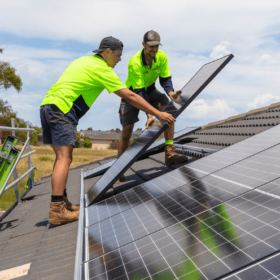
Victoria pushes switch from gas to all electric
The Victorian government has announced a new $10 million (USD 6.7 million) grants program to provide bulk rebates for the installation of solar panels, solar hot water systems and heat pumps as part of plans for all new homes in the state to be 100% electric from 2024.
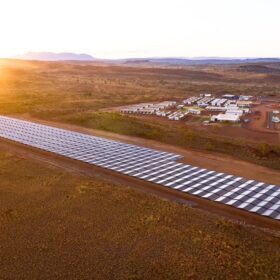
PV meets miner expectations to power Mineral Resources’ WA site
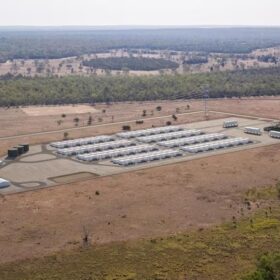
Mineral Resources has become the latest Australian miner to incorporate solar into its energy strategy after installing a solar-plus-storage system at its Wonmunna iron ore mine in Western Australia. The clean energy system will provide about one-third of the mine’s energy.
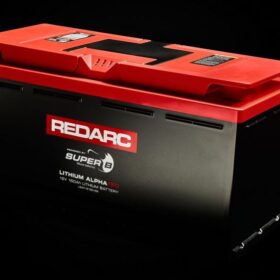
Redarc unveils 150 Ah lithium battery
The Alpha 150 battery, produced in the Netherlands by Adelaide-headquarted electronics manufacturer Redarc, has a lifespan of more than 5,000 cycles and a continuous discharge rating of 200 A.