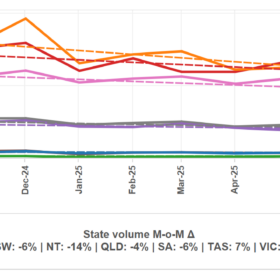
Rooftop solar installation rates trending down
Australia’s rooftop solar market continues to ease with the latest data from market intelligence outfit SunWiz revealing that national installation volumes dropped off by 12% in August compared to the previous month.
Rooftop solar reaches record high in Queensland
The growing influence of rooftop PV and its impact on demand dynamics has been clearly illustrated on the final day of winter with the technology helping deliver a set of renewable energy records in Queensland.
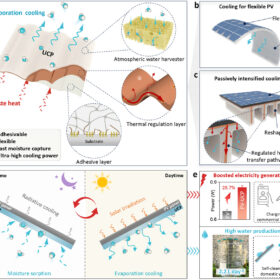
Researchers develop ultra-cooling patch to reduce PV module temperature
Scientists in Hong Kong have developed a patch that effectively cools down PV panels and utilises waste heat for freshwater production and reportedly increasing maximum power density by over 28% in a folded version of the ultra-cooling patch.
Rooftop solar reshaping Australia’s energy mix
The rise of rooftop solar is rapidly reshaping Australia’s energy landscape with a new report revealing that PV systems mounted atop the nation’s buildings contributed 14.7% of the National Electricity Market’s total generation in the first quarter of 2025.

Longi unveils lightweight module for low-load rooftops
Chinese PV manufacturer Longi has launched a lightweight back-contact solar module for low-load commercial and industrial rooftops with limited structural load capacity.

Waaree introduces flexible lightweight solar modules
Waaree Energies has launched flexible solar modules up to 70% lighter and under 3.5 mm thick. The panels can be bonded directly to surfaces without mounting penetrations, suitable for sites where drilling or heavy support structures are impractical.
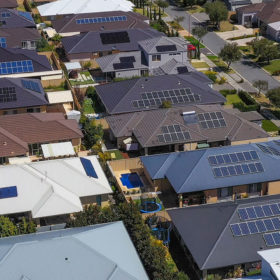
Sydney solar wholesaler and distributor lands $8.5 million windfall
Sydney-headquartered solar wholesaler and distributor OSW has secured $8.5 million in strategic funding from China-headquartered clean energy venture capital firm SparkEdge Capital.

Peer-to-peer energy sharing generates mates rates and grid stability
South Australian and Victorian researchers have found households could sell their surplus solar power to neighbours using peer-to-peer energy sharing, helping stabilise the grid and improve on retail market feed-in tariffs.

Clean energy investment boom buoys decade-long grid reliability forecast
The Australian Energy Market Operator’s 2025 electricity statement of opportunities 10-year report finds investments needed to maintain reliability in the national electricity market are well on track.
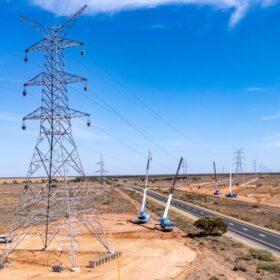
NSW enters ‘deep transition’ phase in energy shift, says Transgrid
New South Wales grid operator Transgrid expects renewable energy to expand from 40% of the state’s electricity supply today to 90% in 2035, when it anticipates almost all coal-fired power plants will have closed.