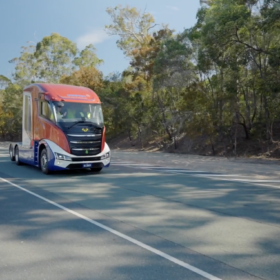
First hydrogen-powered prime mover truck hits Australia’s commercial market
Australian company Pure Hydrogen has announced that its ‘Taurus’ hydrogen fuel cell prime mover is now available for sale.
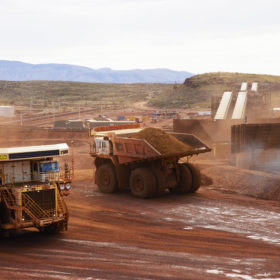
Fortescue applied for vast land tenements in WA Pilbara just after scrapping Uaroo
Fortescue has applied for land tenements spanning 150,000 hectares, an area twice the size of Singapore, to build renewable projects to supply its operations in the Pilbara region of Western Australia.
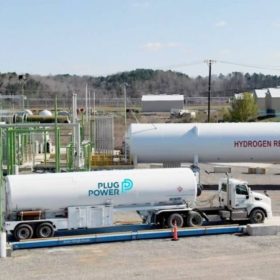
Plug Power shares collapse
Plug Power has issued a warning about its 2023 financial performance due to supply challenges in North America, while Air Products says it is cementing its collaboration with Chengzhi in China.
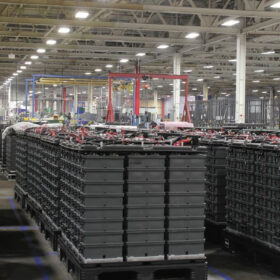
Weekend read: BESS lessons learned
Taking a rigorous approach to inspection is crucial across the energy storage supply chain. Chi Zhang and George Touloupas, of Clean Energy Associates, explore common manufacturing defects in battery energy storage systems (BESS) and how quality-assurance regimes can detect them.
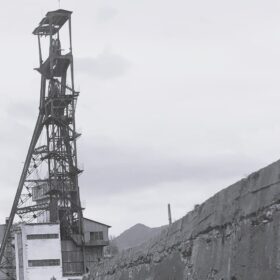
Green Gravity signs deal to roll out energy storage tech in Romania
Australian energy storage startup Green Gravity will explore opportunities to deploy its gravitational energy storage technology in Europe after inking an agreement with the Romanian state-owned energy company Complexul Energetic Valea Jiului SA.
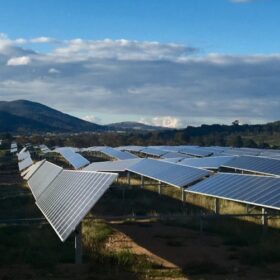
CleanPeak continues growth in utility scale solar sector
Australian commercial solar outfit CleanPeak Energy has expanded its utility-scale PV portfolio with the acquisition of three operating solar farms with a combined capacity of 14.3 MW in Western Australia and the Australian Capital Territory.
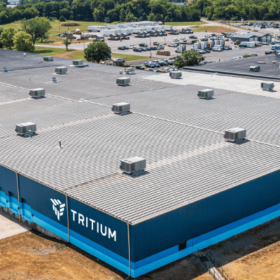
Tritium to take EV charger manufacturing operations offshore
Australian electric vehicle charger manufacturer Tritium will close its Brisbane manufacturing facility and move production to the United States in a bid to ensure its financial survival.
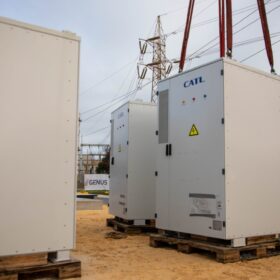
Quinbrook targets 10 GWh battery rollout after inking CATL supply deal
Australian-owned renewable energy investor and developer Quinbrook Infrastructure Partners has signed a supply deal with Chinese battery manufacturer CATL that is expected to support the deployment of more than 10 GWh of energy storage systems over the next five years.
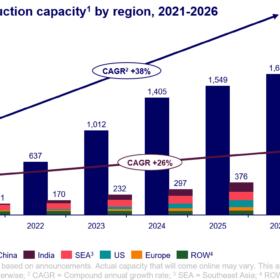
China expected to dominate solar manufacturing through 2026
A Wood Mackenzie report forecasts that China will hold more than 80% of poly, wafer, cell and module manufacturing capacity for the next three years.
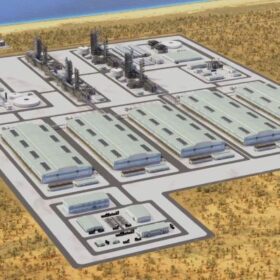
New land, water licenses granted for 8 GW green hydrogen project in WA’s Gascoyne
Province Resources, a Perth-based company developing an 8 GW green hydrogen project in the state’s Gascoyne region, has had additional licences granted by the WA government covering an area over 600,000 hectares, including over 864 hectares of the seabed near Carnarvon needed for export.