JinkoSolar achieves 34.76% efficiency for perovskite-silicon tandem solar cell
JinkoSolar says it has increased the efficiency rating for its perovskite-silicon tandem solar cells from 34.22% to 34.76%, confirmed by China’s National PV Metric and Testing Centre.
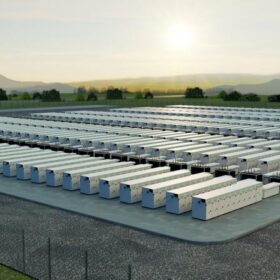
NEM dispatchable capacity CIS Tender 8 opens, targets 16 GWh
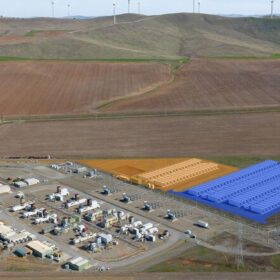
Undertaking a fast tracked, single stage application process the Capacity Investment Scheme Tender 8 – NEM Dispatchable Capacity has opened for registrations and is targeting 4 GW of 4-hour equivalent.

Connected and islandable microgrid project launched in New South Wales
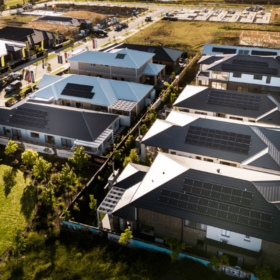
A collaborative project focussing on the development of connected and islandable microgrids within the Australian distribution network has been launched in New South Wales.
Tindo’s road ahead paved with funds, challenges and future-proofed growth
pv magazine spoke with Australian solar panel manufacturer Tindo Chief Executive Officer Richard Petterson about the company’s future expansion on the back of Solar Sunshot funding, and how it plans to tackle current market and manufacturing challenges to stay on course for future growth.
JinkoSolar achieves world record efficiency of 27.79% for TOPCon solar cell
The Chinese manufacturer says Germany’s Institute for Solar Energy Research Hamelin (ISFH) has independently verified the result.
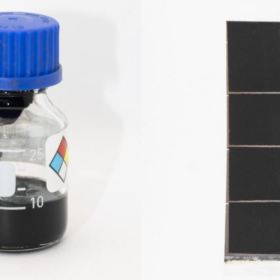
First Graphene and Halocell seal deal on graphene-based carbon paste
Graphene producer First Graphene has secured exclusive global graphene carbon paste production and sales rights with perovskite cell developer and manufacturer Halocell Australia.
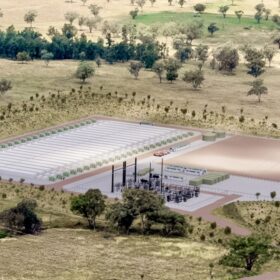
Ampyr inks $300 million long term agreement for Bulabul BESS
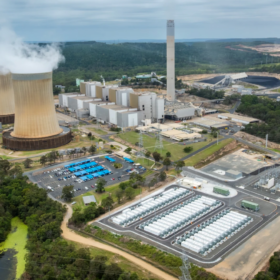
Ampyr Australia has signed a 15-year agreement for its Bulabul battery energy storage system near Wellington, New South Wales, in the Central West Orana renewable energy zone with Danish energy trading company InCommodoties.
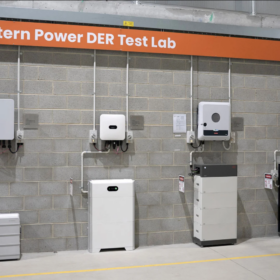
Distributed energy resources test lab opens in Western Australia
Western Power has launched Western Australia’s first distributed energy resources text lab at it’s South Metro Depot to trial how rooftop solar, batteries, electric vehicles and smart appliances can connect, communicate and interact.
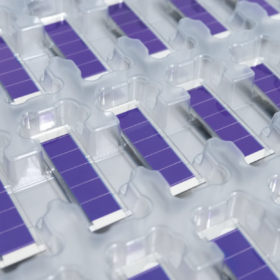
ChasingLight Technology launches indoor organic PV modules
The China-based organic photovoltaics manufacturer has launched a line of indoor PV modules suitable for integration into digital office products and electronic devices.
UNSW team tests current solar cell architectures for space applications
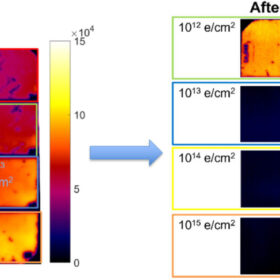
UNSW researchers investigating the impact of electron irradiation on PERC and TOPCon solar cell performance have identified bulk lifetime degradation as main power loss cause. Their work stresses the need for increasing radiation tolerance in commercial space silicon solar cells.