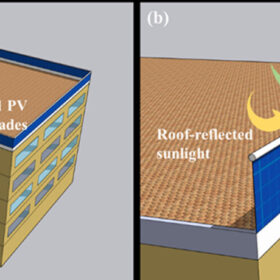
Vertical bifacial photovoltaic balustrade for building edges
Conceived by scientists in Hong Kong, the solar balustrade integrates bifacial PV panels and is considered an ideal solution for “cool roofs.” Roof albedo and module orientation are critical drivers of system performance.
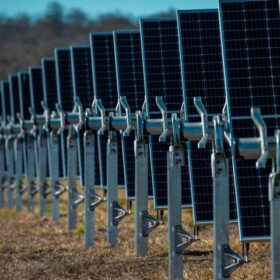
Solar module fault diagnosis uses convolutional neural network
Researchers in China have created a dataset of various PV faults and normalised it to accommodate different array sizes and typologies. After testing the new approach in combination with the 1D-CNN machine learning technique under different conditions, they found an accuracy of more than 99%.
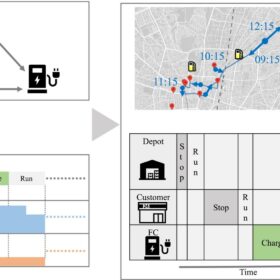
Electric vehicle fleet delivery routes optimised to find local surplus solar
Scientists in Japan have developed a model that predicts surplus solar generation and creates a route for optimised charging of electric delivery vehicles, defining their work as a practical blueprint for logistics operators.
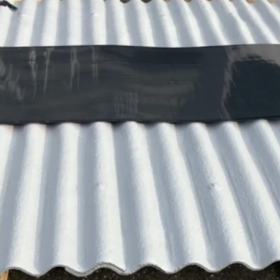
Japanese projects to pilot solar on low load-bearing roofs, BIPV windows
A partnership between PXP Inc and Tokyo Gas Co is working on developing film-type chalcopyrite solar cells for industrial roofs with low load-bearing capacity. Elsewhere, a coalition of partners is installing inner windows featuring perovskite solar cells at Tokyo’s Telecom Center Building.
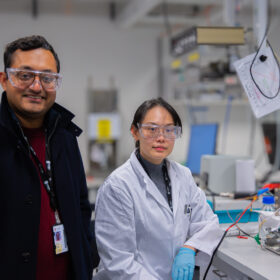
Sustainable aviation fuel research stays the course with $4.2 million jackpot
UNSW researchers are set to scale up a next-generation electrolyser system that helps produce sustainable aviation fuel using renewable energy, thanks to a $1.2 million government grant and $3 million in industry support.
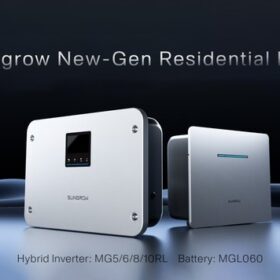
Sungrow launches next-gen hybrid residential energy storage system
Sungrow Power has revealed its newest hybrid next-gen residential energy storage system, with upgrades to its MG Series inverters and a battery solution to be launched in Q42025.
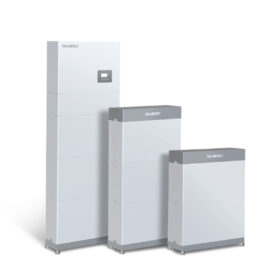
DMEGC releases new series of residential all-in-one storage systems
The Chinese company stated that its new H02 product line is available in either single-phase or three-phase configurations. It comes with a different number of 5.12 kWh batteries.
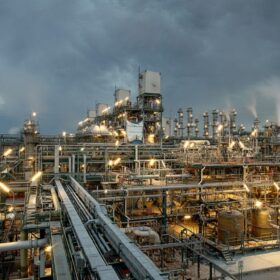
Construction begins on 10,000 MT polysilicon factory in Malaysia
Japanese chemical company Tokuyama Corporation and South Korea-based polysilicon producer OCI have begun construction of a 10,000 metric tons polysilicon factory in Malaysia.
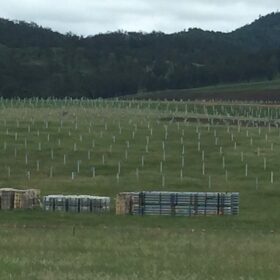
‘Mid-scale’ solar forms key part of new JV’s $500 million strategy
Melbourne-headquartered infrastructure and energy investment firm Kai Global and South Korea’s Wide Creek Asset Management have launched a $500 million joint venture dedicated to solar and battery energy storage projects in Australia.
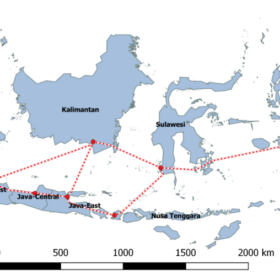
Solar to drive Indonesia’s transition away from coal, biofuels
The role of solar PV in Indonesia will extend beyond replacing coal-based electricity generation; it will also include the production of e-fuels for hard-to-abate segments, offering an alternative to land-intensive biofuel production. A recent study explores, through various scenarios, the cost-competitiveness of solar PV-based electrification in supporting Indonesia’s renewable energy transition.