NeoSol unveils 550 W mono PERC solar modules
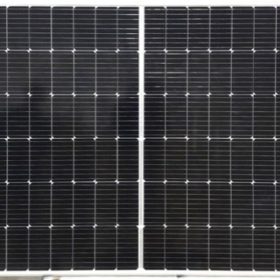
Indian solar manufacturer NeoSol has unveiled its Black Pearls series of mono PERC modules. The power outputs range from 535 W to 550 W, with power conversion efficiency ratings between 20.7% and 21.33%.
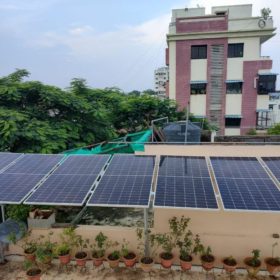
Residential rooftop solar capacity in India tipped to rise by 60% this fiscal year
India’s cumulative residential rooftop solar capacity may rise by 60% to reach 3.2 GW by March 31, 2023 driven by rising consumer demand coupled with strong government support.
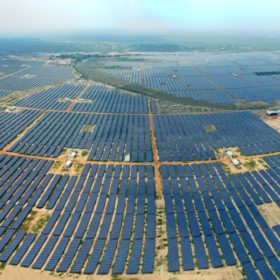
Adani Green commissions world’s largest wind-solar hybrid plant in India
Adani Green’s newest project includes 600 MW of solar and 150 MW of wind capacity in the Indian state of Rajasthan. It will sell the electricity to Solar Energy Corp. of India under a 25-year power purchase agreement at a rate of INR 2.69/kWh (AU$0.051/kWh)
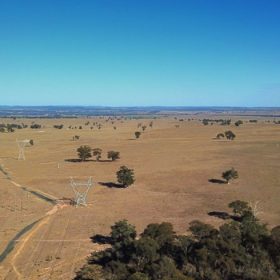
ACEN commits $800 million for 600 MW solar and storage project
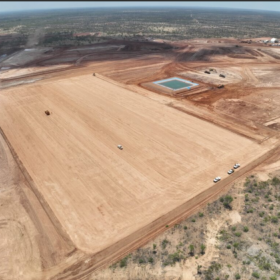
A solar PV and battery energy storage project planned for the New South Wales Central West tablelands has achieved a major milestone with project developer ACEN Corporation approving $800 million for the construction of the 400 MW Stubbo Solar Farm.

Indian player reveals expansion plans, including manufacturing solar cells, electrolysers
India’s Jakson Green will expand its solar module and cell manufacturing capacity to 2 GW by the end of 2024, CEO Bikesh Ogra told pv magazine this week at the Renewable Energy India Expo 2022. He said the company also has aggressive plans for green hydrogen and ammonia, with a specific focus on distributed generation.
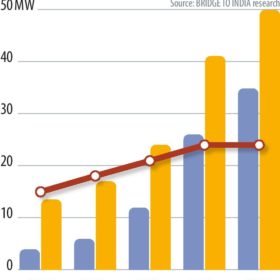
Weekend read: strong prospects to ‘Make in India’
India’s renewable energy sector, having so far focused almost solely on adding more generation capacity with ever lower tariffs, is undergoing a drastic change, as policy pivots toward domestic manufacturing. Vinay Rustagi, managing director of Bridge to India, looks at how the border conflict with China and endless supply side disruptions in the wake of Covid-19 have together strengthened the Indian government’s resolve to support the establishment of a more localised supply chain.
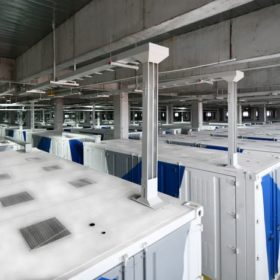
China connects world’s largest redox flow battery system to grid
Dalian Rongke Power has connected a 100 MW redox flow battery storage system to the grid in Dalian, China. It will start operating in mid-October and will eventually be scaled up to 200 MW. The vanadium redox flow battery technology was developed by a division of the Chinese Academy of Sciences.
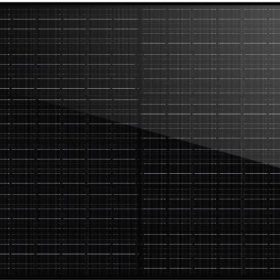
Longi announces new 415 W solar panel for residential, commercial applications
Longi unveiled a new 54-cell module at RE+ Anaheim last week, with outputs ranging up to 415 W, and an efficiency rating of 21.3%.
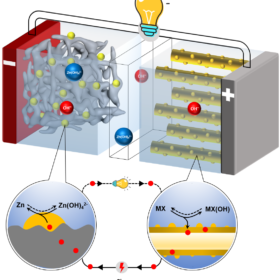
Super-fast, long-life aqueous rechargeable zinc battery
An international group of researchers has demonstrated an aqueous zinc battery with excellent performance in terms of capacity, rate capability, specific energy, and output voltage. The supercapacitor-battery hybrid device has also shown unprecedented cycling stability 99.2% capacity retention after 17,000 cycles at 100% depth of discharge.
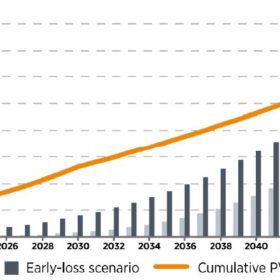
IEA PVSP predicts high-cost, low-revenue scenario for solar recycling
A recent report by the International Energy Agency Photovoltaic Power Systems Programme (IEA PVSP) reviews the current regulatory and industrial landscape for end-of-life PV management in Germany, France, Italy, Spain, Japan, South Korea, China, Australia, and the United States.