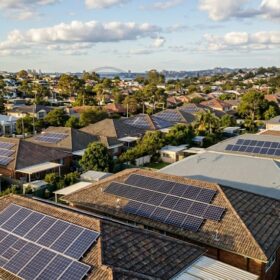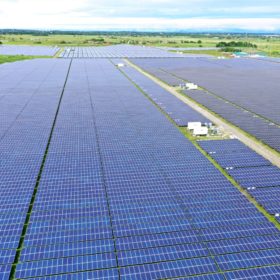
Philippines launches 2 GW renewables auction
The Philippines’ Department of Energy hopes to allocate 1,260 MW of solar through the procurement exercise.
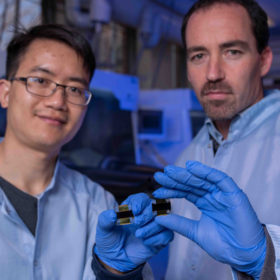
Australian researchers claim solar cell efficiency record
Researchers at the Australian National University say they have set a perovskite solar cell efficiency record at 22.6%. This efficiency, however, appears to be lower than that achieved in January by a group of Swiss and Korean researchers who used quantum dots to achieve an efficiency of 25.7% in an area of 0.08cm2 and 23.3% in 1cm2.

Perth ocean energy company gets funding boost from Japanese shipping giant
Western Australian ocean energy company Bombora Wave Power has received an investment of $6.74 million to deliver its pilot projects and commercialise its technology from one of the world’s largest shipping companies, Japan’s Mitsui O.S.K. Lines.
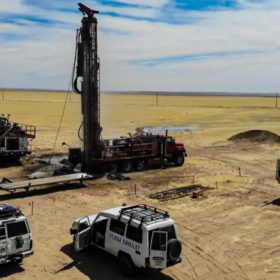
Australian firm targets Mongolia for green hydrogen project
Australian oil and gas exploration and development company Elixir Energy has signed a memorandum of understanding with the Mongolia Green Finance Corporate to support financing for the first phase of a proposed green hydrogen project planned for the South Gobi region of the East Asia nation.
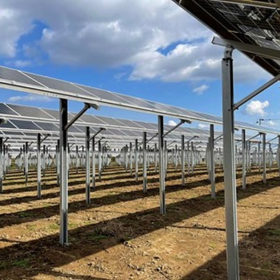
Mounting system for agrivoltaics
Designed by Chinese provider Mibet, the mounting structure can be used for different crop types. The system offers a tilt angle of up to 30 degrees and can host either framed or frameless solar modules.

Philippines’ first utility scale battery for grid stabilisation
The first 20MW/20MWh battery energy storage system in the 470MW/470MWh portfolio Fluence is deploying for Filipino conglomerate San Miguel Corp has started serving the island nation’s electricity network.
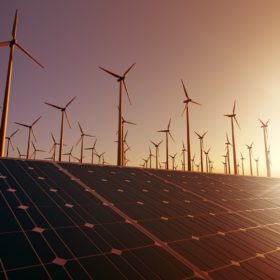
Singapore secures stake in Australian green hydrogen projects
Singapore’s trillion-dollar sovereign wealth fund GIC has made a “strategic” investment in renewables developer InterContinental Energy, one of the major players behind mega solar and wind-powered green hydrogen projects planned for Western Australia’s Pilbara and southeast regions.

India deal to drive Australian hydrogen startup H2X’s global expansion
Hydrogen vehicle and fuel cell startup H2X has partnered with Indian automotive parts manufacturer and developer Advik Hi-Tech in a deal which will see the Australian company’s products delivered into India and the wider international market.
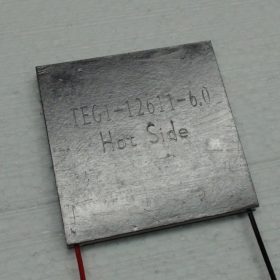
Coupling photovoltaics with thermoelectric cooling
An international research team has investigated how solar could be combined with thermoelectric coolers (TECs), which are small solid-state heat pumps used either for heating or for cooling. A system was built with six solar panels, an air duct system, four batteries, a charge controller, TECs, an inverter, heat sinks, a test chamber, and condenser fans.
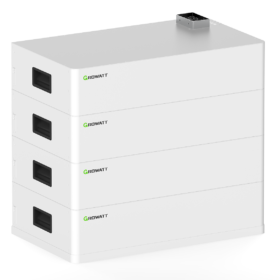
Growatt releases battery for off-grid solar
Growatt’s new AXE LV battery covers a wide range of capacities, from 5kWh to 400kWh, and can support off-grid systems with power outputs of 3kW to 30kW.