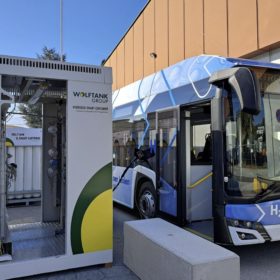
Mobile hydrogen refuelling stations set for remote mines and industrial sectors
A distribution agreement between Europe-based Enermech and Wolftank Group will see mobile hydrogen refuelling stations installed at remote mine sites and industrial sectors across Australia and New Zealand.
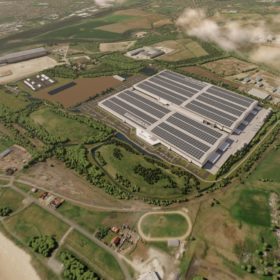
Recharge Industries looks to revive British battery gigafactory
Just weeks after announcing its intent to build a $300 million (USD 210 million) lithium-ion battery manufacturing facility in Victoria, Australia-based Recharge Industries is reportedly considering a bid for the collapsed UK battery company Britishvolt that could revive plans to construct a battery cell gigafactory in northern England.
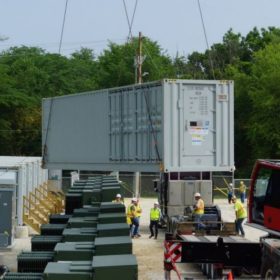
RES plans 600 MWh big battery as coal-fired plants exit system
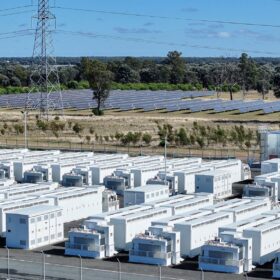
UK-based developer Renewable Energy Systems Group is planning to build a 250 MW/600 MWh battery energy storage system in the New South Wales Hunter region that is says would provide critical grid services and support Australia’s renewable energy transition.
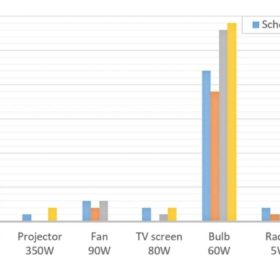
Second-life batteries might beat new ones on solar LCOE in remote locations
UK scientists have discovered that second-life batteries could provide a lower levelised cost of electricity (LCOE) than conventional batteries in school buildings equipped with PV in East African schools. They said the cheapest system configuration uses either 7.5 kW or 10 kW of solar with 20 kWh of storage.
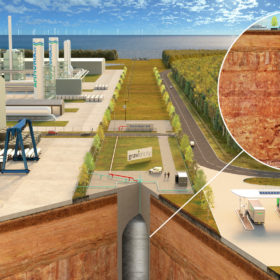
Gravitricity to deploy prototype underground hydrogen storage system
Gravitricity, an Edinburgh-based storage specialist, aims to develop the first full-scale demonstration of its underground hydrogen storage solution by working with structural engineering contractor VSL Systems UK.
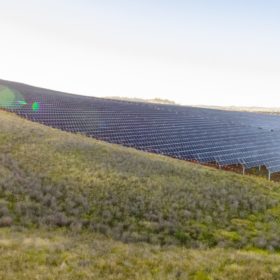
Lightsource bp lands finance for Australian solar farms
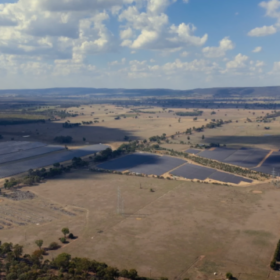
Renewable energy developer Lightsource bp will begin full construction activities on two large-scale solar projects with a combined installed capacity of 515 MWdc in Australia after successfully closing a $540 million (USD 365 million) financing package.
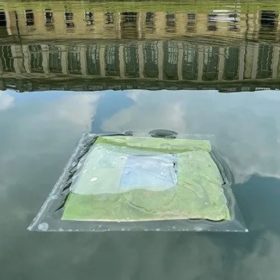
Floating ‘artificial leaf’ for solar-to-hydrogen production
A team of scientists from the University of Cambridge have developed lightweight floating photocatalyst devices that produce green hydrogen and syngas. The leaf-like photoelectrochemical devices show potential for scalability.

Melbourne startup converting classic cars into EVs scales bolt-in manufacturing with UK merger
Bolt-in electric vehicle kits in Australia have just got a leg up, with Melbourne startup Jaunt Motors joining forces with UK company Zero EV to operate a new, larger scale business to have production facilities and operations across Australia, the UK and, “very soon,” the US.

Report finds sustainability skills gap in Australian financial sector
The University of Technology Sydney’s (UTS) Institute for Sustainable Futures (ISF), in collaboration with the Commonwealth Scientific and Industrial Research Organisation (CSIRO) Climate Science Centre, has published the findings of its national “Climate Skills Survey” of financial professionals.

Space-based solar power for terrestrial energy needs
The Cassiopeia solar project aims to use the sunlight collected by a space satellite for terrestrial energy needs. The electricity generated would be converted to radio frequency microwave radiation transmitted to an antenna on Earth. The initial LCOE would be $73.4 (USD 47.8)/MWh, according to a UK study.