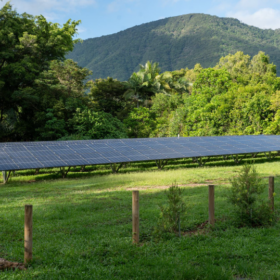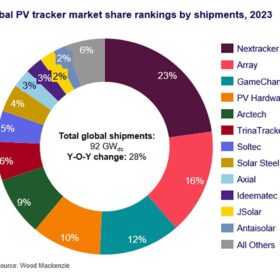
WoodMac says global solar tracker shipments grew by 28% in 2023
Global tracker shipments reached 92 GWdc last year, according to WoodMackenzies’ latest report, with three United States-based manufacturers, Nextracker, Array Technologies and GameChange Solar, ranking as the three largest shippers in the world.
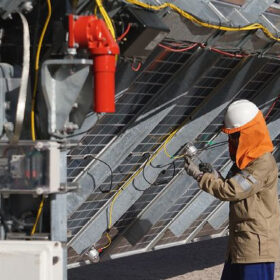
Long-term look at albedo tipped to pay off over project lifetime
As bifacial modules proliferate, estimations of albedo are becoming more important and with developers not prepared to install weather stations to assess solar resource, a popular option has become third-party, on-site measurements over periods as short as a day. Is this an acceptable compromise between costly on-site measuring and less accurate satellite data? Everoze’s Stefan Mau discusses the potential benefits and limitations of this approach.

Sinovoltaics shuffles PV module manufacturer financial stability rankings
The third edition of the Sinovoltaics financial stability report ranking lists India-based Abhishek Corp, Insolartion Energy, Waaree Renewable Technologies, and Solex Energy, all based in India, followed by United States-headquartered First Solar as the top five. Six additional manufacturers entered the global ranking.
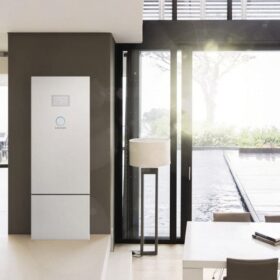
How long do residential solar batteries last?
Multiple factors affect lifespan of a residential battery energy storage system. We examine the life of batteries in Part 3 of our series.

China’s solar dominance not an issue
In a new monthly column for pv magazine, the International Solar Energy Society (ISES) explains why potential trade disruptions in the global PV supply chain are substantially different from those related to coal, oil and gas.
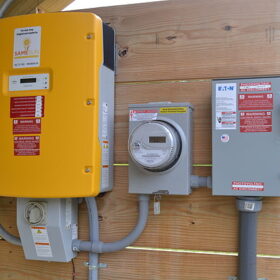
How long do residential solar inverters last?
Multiple factors affect the productive lifespan of a residential solar inverter. In Part 2 of our series, we look at solar inverters.
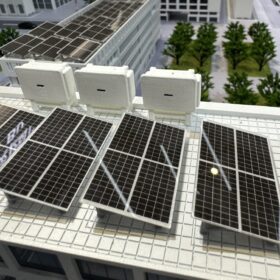
How long do residential solar panels last?
Multiple factors affect the productive lifespan of a residential solar panel. In the first part of this series, we look at the solar panels themselves.
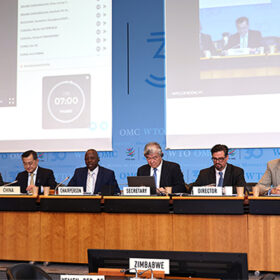
WTO accuses China of low transparency on state subsidies, including solar
The World Trade Organisation Secretariat has criticised China for an alleged lack of transparency in its state support framework and has urged the nation to improve its subsidy notification process.
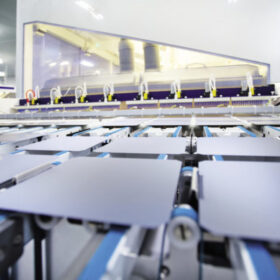
Bigger is better as module makers power ahead
Larger wafer and module sizes have had a profound influence on module power output in recent years but standardisation appears to have taken hold, with no further increases evident in module data, according to Molly Morgan, a senior research analyst at Exawatt, which is now part of the CRU Group.
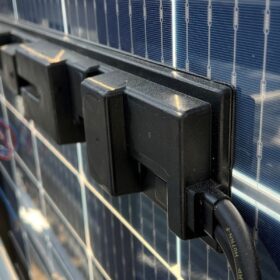
Researchers develop ‘communicative’ PV panels
A German research team is conducting practical tests to see how solar modules with integrated radio technology can be linked to form an overall network. The “communicative” panels should represent a simple and cost-effective solution for monitoring and controlling small-scale photovoltaic systems.