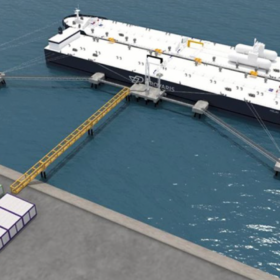
Floating hydrogen storage solution unveiled by WA company
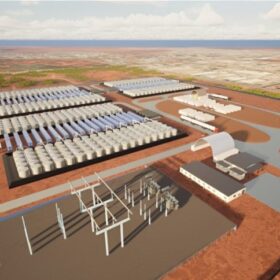
Western Australian hydrogen company Provaris has unveiled a floating hydrogen gas storage solution, which it says will provide the industry with “energy efficient and cost-effective storage.”
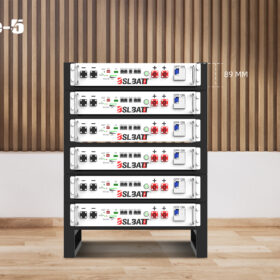
Bslbatt unveils 89mm-thick battery for residential solar
China’s Bslbatt has added a rack-mounted battery to its ultra-sim range. It has a storage capacity of 5.12 kWh and a nominal voltage of 51.2 V. It measures 670 mm x 475 mm and is 89 mm thick.
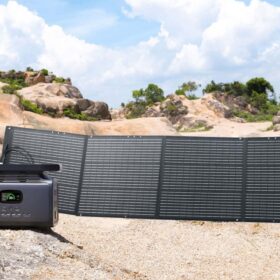
Growatt introduces LFP solar generator for portable, off-grid use
Growatt is taking pre-sale orders for the Infinity 1300, a lithium iron phosphate battery with 3,000-plus cycle life.
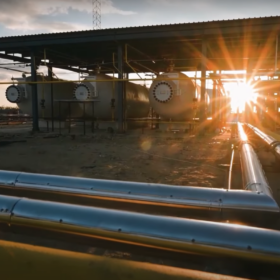
Australia tries to boost hydrogen competitiveness
Finance consultancy explains in a new report that the levelised cost of green hydrogen (LCOH) is well below USD 2/kg with subsidies. Using either PEM and alkaline electrolysers, green hydrogen normally has a lower levelised cost than pink hydrogen. Meanwhile, Australian authorities are trying to increase the competitiveness of the local hydrogen sector, and car companies are updating their fuel cell plans.

G7 targets 1 TW of solar to speed up renewable energy transition
Energy and environment ministers from the Group of Seven nations have announced new targets for solar power and offshore wind capacity after vowing to drastically increase renewable energy development and accelerate the phase out of “unabated” fossil fuel use.
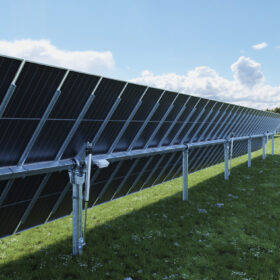
Trina Tracker unveils 2P tracker solution with new features
Trina Solar’s tracker subsidiary has launched a new version of its Vanguard single-axis two-in-portrait (2P) tracker. It uses multiple motors on one tracker row, reportedly allowing it to withstand higher wind loads and reduce tilt angle misalignment. The new solution is compatible with large modules up to 685 W.
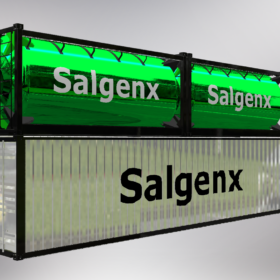
Saltwater flow battery produces graphene while charging
Salgenx has developed a way to produce graphene on demand from its saltwater flow battery. The tech exploits the electrochemical properties of the battery’s cathode to exfoliate graphite into individual layers of graphene. The company says it can produce graphene for less than USD 1.25 ($1.85) per gram, providing storage businesses with an additional revenue stream.
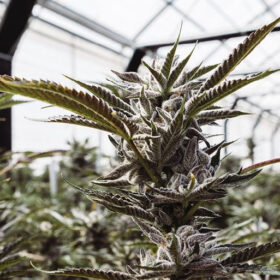
Weekend read: High time for solar
Cannabis prohibition drove a culture of clandestine production in the past and solar helped growers to cultivate it at remote, off-grid sites. Now, as a global commercial cannabis market emerges, solar has an even bigger role to play, reports Blake Matich.
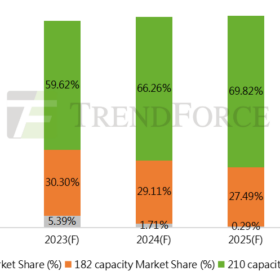
Top PV module manufacturers by shipment volume in 2022
TrendForce has ranked the top six module manufacturers by shipment volume in 2022, with Longi topping the list, followed by Trina Solar and JinkoSolar. JA Solar, Canadian Solar, and Risen Energy rounded out the top six, in a year dominated by large-format modules.
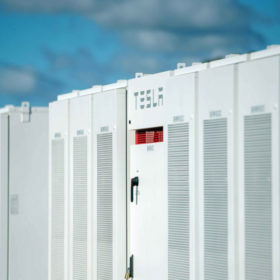
Tesla to build new Megapack factory in China
Tesla has revealed plans to build a new Megapack battery factory in Shanghai, according to the Xinhua news agency.