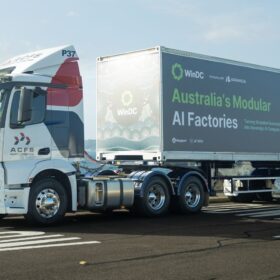
BP progresses 10 GW green hydrogen project with land purchase
British-headquartered oil and gas giant BP is a step closer to establishing a large-scale integrated renewables and green hydrogen project on Western Australia’s mid-west coast after outlaying $23 million for an almost 23,000-hectare property.
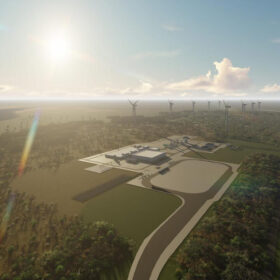
IGE does deal with Samsung to progress Arrowsmith green hydrogen project
Australian renewable hydrogen company Infinite Green Energy has expanded its relationship with Samsung C&T, teaming with the South Korean industrial conglomerate to progress its flagship Arrowsmith project which is anticipated will produce more than 300 tonnes of renewable hydrogen per day using wind and solar energy.
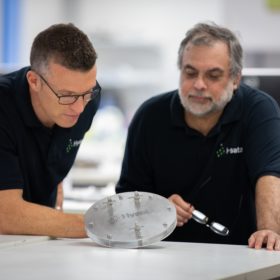
Hydrogen breakthrough sees Professor awarded $3.7 million to commercialise technology
A prestigious award, along with $3.7 million (USD 2.5 million) has been awarded to University of Wollongong electrochemist Professor Gerhard Swiegers for his efficiency breakthrough for hydrogen electrolysers, which are currently being commercialised by startup Hysata.
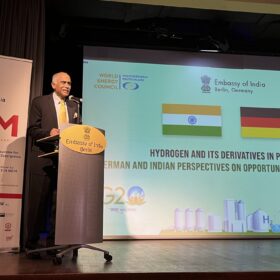
India to join Germany’s green hydrogen strategy update
India will use its internal market to scale up hydrogen projects, with Germany as a possible export destination. As part of a broader strategy, the countries will collaborate on a financial and technological level on energy transition projects.
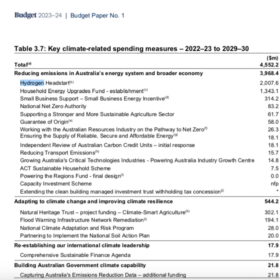
Australia to invest $2 billion in hydrogen
The Australian government has presented its 2023-2024 budget, with $2 billion (USD 1.35 billion) to be invested in hydrogen, while Austria, Germany, and Italy said they have started moving forward on a southern hydrogen corridor from North Africa to Northern Europe.

India’s green hydrogen demand to reach 2.85 MMT/year by 2030, says USAID
A new report from the South Asia Regional Energy Partnership (SAREP) of the United States Agency for International Development, better known as USAID, says India’s green hydrogen demand will reach 2.85 million metric tonnes (MMT) per year by 2030.
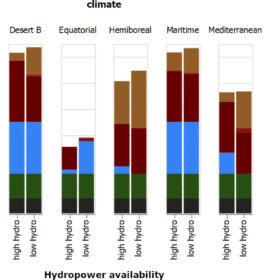
Electrolysis cost-efficient in all climates, says Finnish team
Researchers at the VTT Technical Research Centre of Finland said that chemical energy storages were needed for short and long-term balancing in every climate region, especially in the northern climates. Meanwhile, companies are moving forward with their plans to produce hydrogen in Namibia and Morocco.
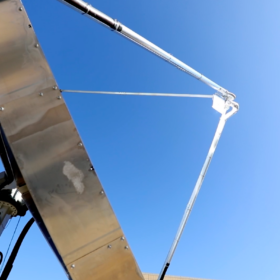
Swiss team sets record solar-to-hydrogen rate
Researchers from Switzerland’s École Polytechnique Fédérale de Lausanne have unveiled a new solar dish plant design, while Plug Power has delivered its first electrolyser system to Europe.
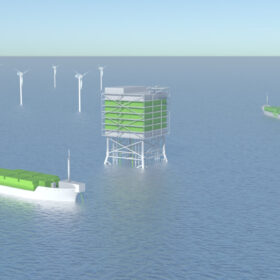
Fraunhofer ISE produces hydrogen via PEM electrolyser with seawater
Fraunhofer ISE scientists have optimised a technical concept for a hydrogen plant at sea. They claim that their design is “technically and economically viable.”
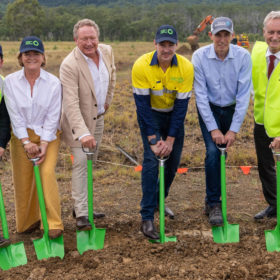
FFI unveils ‘in house’ electrolyser prototype shortly after Plug Power partnership collapse
Fortescue Future Industries has unveiled its in-house PEM electrolyser prototype just months after US company Plug Power pulled the plug on its FFI partnership.