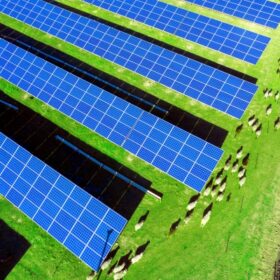
202 MW New Zealand agrisolar project reaches financial close
The Harmony Energy and First Renewables joint venture have approved the final investment and successfully completed financial close on the 202 MW Tauhei Solar Farm on Aotearoa New Zealand’s North Island.
Planets align for Australia’s first live DER integration into wholesale markets
Manager of Western Australia’s South West Interconnected System Western Power has been allocated $20.8 million from the Australian Renewable Energy Agency for its Project Jupiter, which for the first time in Australia will integrate a live distributed energy resources marketplace with wholesale markets.
Distributed solar on a roll breaking output records nationwide in Q4
Like a gift that keeps on giving across Australia’s electricity markets, distributed solar has punched yet again above its weight to break records in the close out of 2024, according to a new report from the Australian Energy Market Operator.

Testing shows BIPV using patterned glass performs better than expected
Scientists have compared conventional PV modules to self-made BIPV panels with thicker, patterned glass. They tested them both under standard conditions and outdoors under Korean summer conditions. Yield was found to be only 0.5% lower in the textured BIPV module.
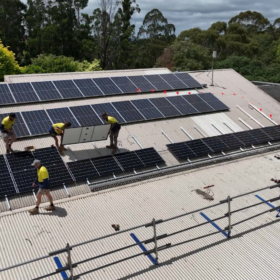
Communities hit by outages get solar powered energy hubs for backup
Solar powered energy hubs are ready to help keep the lights on for 24 Victorian communities as part of a $7.5 million state government program to build energy resilience when faced with prolonged outage.
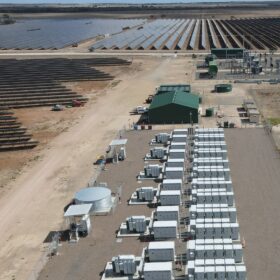
Vena flicks switch on ‘benchmark’ solar and storage facility
Vena Energy is claiming a milestone for the Australian power market with the successful commissioning of a 41.5 MW battery energy storage system as part its Tailem Bend 2 solar-plus-storage project in South Australia.
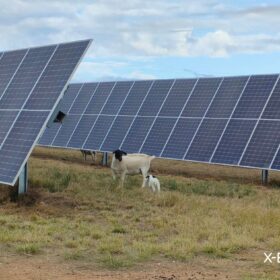
Large-scale solar delivers generation high
Large-scale solar farms across Australia generated a record 16.2 TWh of clean energy in 2024, delivering a near 7% increase on the previous year and taking the contribution from renewables to a new record high.
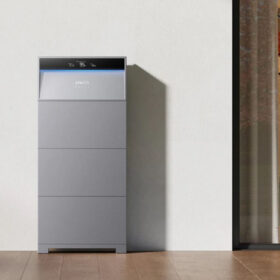
Anker backs Solix energy storage system for Australian conditions
Chinese electronics manufacturer Anker has declared its Solix X1 AC-couple energy storage system perfectly suited for Australia’s diverse geography and climate conditions.

ARENA directed to consider suburb-wide solar and storage projects
The Australian Renewable Energy Agency has been directed to consider more funding for residential solar and battery energy storage systems as the federal government examines how best to expand household electrification projects around the country.
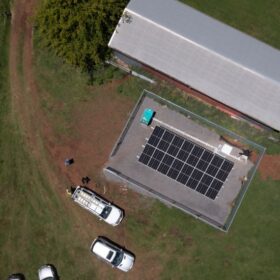
AusNet invests in solar and storage to support energy security
Victorian electricity and gas network company AusNet Services is turning to solar and battery energy storage systems to improve energy reliability in communities serviced by its electricity distribution network.