Tongwei drops plan to acquire Runergy
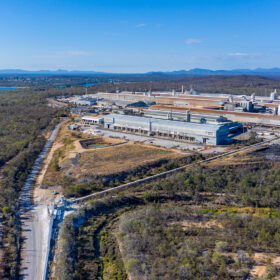
Chinese PV company Tongwei originally intended to invest CNY 5 billion ($1.8 billion) to buy a 51% stake in Runergy.
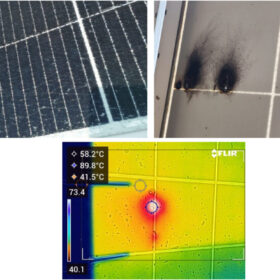
Study shows reducing number of solar modules per string reduces hotspots risk
Scientists in Indonesia have investigated early operational defects in a 24.9 MW solar PV system in Sumatra and have identified hotspot formation as the dominant defect. They also detected 282 cases of glass cracking, 350 cases of junction box failures and shading effects linked to module defects.
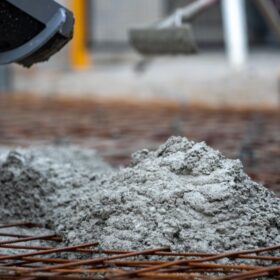
Boral trials recycled solar panels as sand alternative in concrete mix
Construction materials company Boral is trialling the use of crushed glass sourced from end-of-life and damaged solar panels as a partial replacement for natural sand in concrete production.

Back contact solar module manufacturing capacity may reach 1 TW by 2030, says tech expert
Radovan Kopecek, an expert on back-contacted (BC) solar cell and module technologies, spoke with pv magazine about BC manufacturing costs, efficiency and technical challenges. He believes that global BC solar module manufacturing capacity could reach 1 TW by 2030, potentially making BC products the industry’s mainstream technology. Kopecek added that 2028 will be a crucial year for its development, as most of the critical patents associated with this module tech will expire.
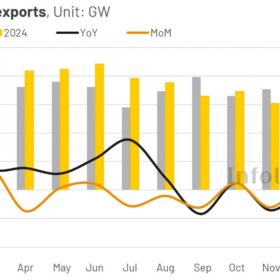
China exports 235.9 GW of solar panels in 2024
China exported 235.93 GW of PV panels in 2024, a 13% increase over the previous year. Of this, 68.11 GW of modules were shipped to the Aisa-Pacific region, up 26% from 2023.
Jinko exceeds 1 GW milestone in Australian distribution market
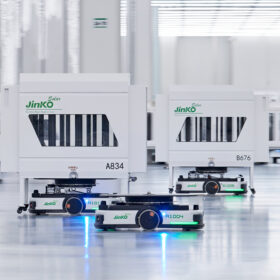
JinkoSolar has achieved an historic milestone by becoming the first company to exceed 1GW in distribution shipments in Australia for 2024 on the back of its popular Tiger Neo modules.
Swedish startup launches n-type conductive inks for perovskite cells
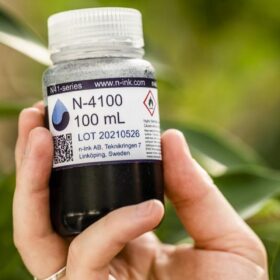
N-ink, a spinoff of the Linköping University, has developed conductive inks that can be used in the charge extracting layer of organic solar cells and in transport layers of perovskite solar cells.
JinkoSolar sues Longi in Australia in third patent case this year
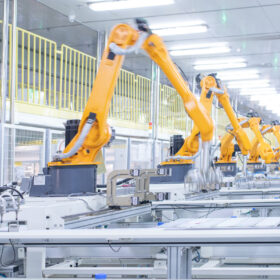
JinkoSolar has sued Longi for patent infringement in Australia, its third legal action against the company this year, following filings in China and Japan. The lawsuit, filed in the Federal Court of Australia, claims that Longi used an unspecified solar cell technology.
China exports 235.9 GW of solar panels in 2024
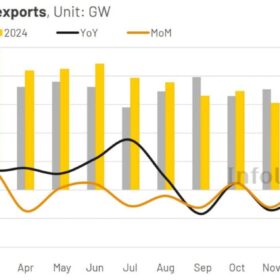
China exported 235.93 GW of PV panels in 2024, a 13% increase over the previous year. Of this, 94.4 GW were shipped to Europe, down 7% from 2023.
Aiko launches new rooftop solar panel with 24.3% efficiency
Aiko has launched what it claims is the highest-efficiency residential rooftop solar panel available in Australia, a 480 W panel featuring a power conversion efficiency of 24.3%.