South Korean battery breakthrough using hybrid anode material
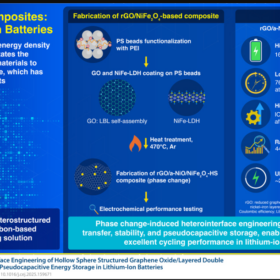
Researchers at two South Korean universities have collaborated to achieve a breakthrough in lithium-ion battery technology by developing a novel hybrid anode material.
Sungrow releases modular inverter for utility-scale solar
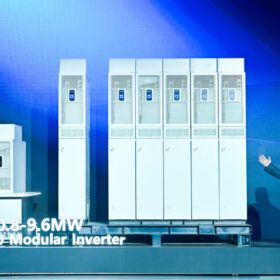
The Chinese manufacturer said its new product uses inverter units with an output of 800 kW, of which 12 can be connected in parallel. It can work in weather of up to 52 C.
Thornova offers solar module composite frames
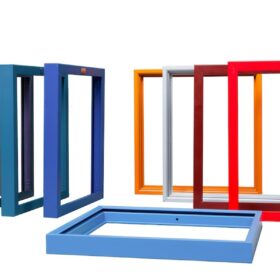
Chinese manufacturer Thornova says that its new composite frames offers advantages in terms of stability, corrosion, and chemical resistance. Installation is also easier because no grounding is required.
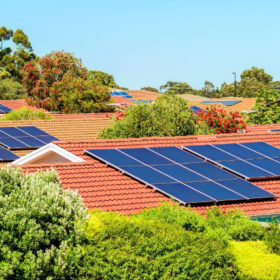
Engie trial flips fears of solar tax to help customers earn from solar curtailment
Uptake of an ENGIE and SA Power Networks trial offer to help manage periodic oversupply of household rooftop solar energy – by rewarding customers – has seen its cap of 50 households double to 100.
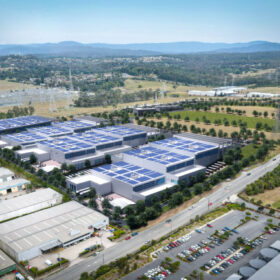
Stanwell contracts for 1,010 MWh Stage 3 offtake from Supernode BESS
Australian energy infrastructure investor Quinbrook’s $1.4 billion Supernode battery project in Queensland will expand by 250 MW through an offtake agreement with state-owned Stanwell Corporation bringing the energy collosus to a total 750 MW / 2,540 MWh capacity.
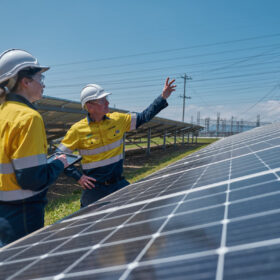
AusNet advances connection works for FRV hybrid projects
The path for Fotowatio Renewable Ventures to build two hybrid solar and energy storage projects in central Victoria has been smoothed with electricity distribution company AusNet revealing it is “unconditionally” progressing the connection works for the hybrid installations.
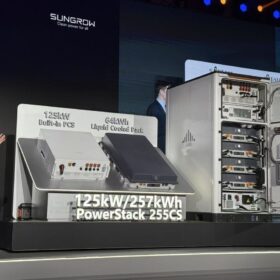
Sungrow launches fully integrated C&I battery
With a fully integrated power conversion system, battery management system, and energy management system, PowerStack 255CS aims to streamline energy storage operations while reducing installation complexity.

Gridsight to power up grid orchestration platform
Wollongong-based software company Gridsight has raised $7.5 million to support the growth of its AI-powered platform that is designed to help electricity network operators integrate and maximise the use of new distributed renewable energy resources such as solar and batteries.
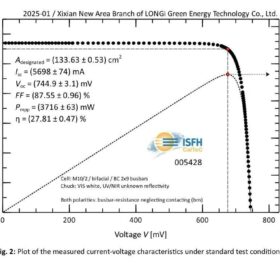
Longi claims world’s highest efficiency for silicon solar cells
Longi said it has achieved a 27.81% efficiency rating for a hybrid interdigitated back contact, a result confirmed by Germany’s Institute for Solar Energy Research Hamelin.
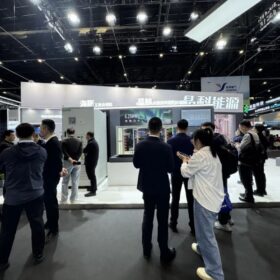
Jinko unveils 6.25 MWh battery
The Chinese manufacturer has unveiled its latest utility-scale battery energy storage system and announced that global deliveries will begin in the fourth quarter of 2025.