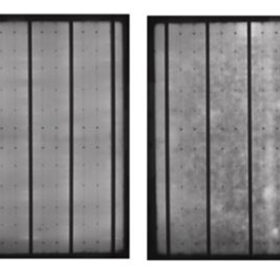
Research reveals impact of laser-assisted firing on TOPCon solar cell performance
A group of researchers from the University of New South Wales and Chinese module manufacturer Jolywood has conducted a comprehensive assessment of how laser-assisted firing processes influence the behaviour of TOPCon cells under the thermal conditions encountered during soldering, lamination, and high-temperature stress.
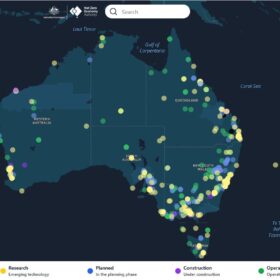
New tool tracks Australian government renewable energy investments
The agency tasked with helping manage Australia’s move to a net-zero economy has launched an interactive map featuring more than 800 Commonwealth-supported utility scale renewable energy and net-zero projects, transmission lines, and industrial projects.
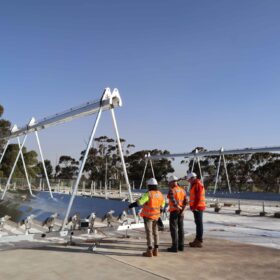
Sparc achieves production milestone at hydrogen pilot plant
Fortescue-backed startup Sparc Hydrogen has begun producing green hydrogen directly from water using concentrated solar at what it describes as a “first-of-its-kind” pilot plant in South Australia.
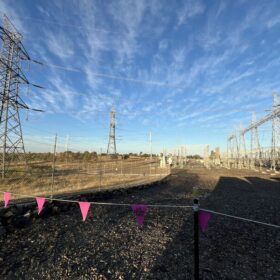
Iberdrola achieves connection milestone for Broadsound solar and battery build
The Australian arm of Spanish energy giant Iberdrola Iberdrola is poised to begin early testing of its Broadsound Solar Farm after Queensland transmission network operator Powerlink energised the grid connection to the 377 MWdc facility ahead of schedule.
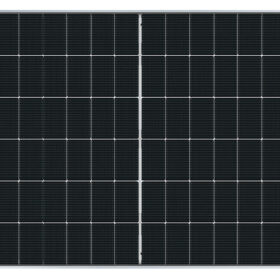
Astronergy launches 750 W anti-dust TOPCon solar module
The Chinese manufacturer said its new Astro 7 TOPCon module features an innovative self-cleaning frame and a power conversion efficiency of 23.2%.
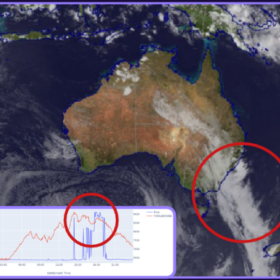
Bad weather forecasts cost Australian solar energy sector $100 million: report
Solar energy forecasting company Solstice AI research has found a 10% improvement in weather / solar forecasting accuracy would generate an extra $38 million per year in profit for Australia’s utility solar, and worldwide, $9.5 billion.
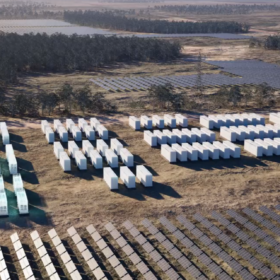
CIMIC’s UGL to deliver Stage 3 of Neoen’s Western Downs battery
UGL, a member of the CIMIC Group, has been selected by Neoen and Tesla to construct Stage 3 of Neoen’s Western Downs 305 MW / 1,220 MWh battery in Queensland.

Indonesian 50 MW thin-film solar factory pilot aims for 1 GW per year
Pertamina Power has teamed up with HyET Solaris to validate the commercial feasibility of producing and marketing HyET’s lightweight and flexible solar products in Indonesia, by developing a 50 MW per year factory pilot.
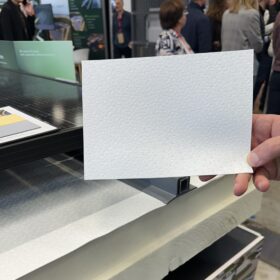
Renolit showcases reflecting cool roof membrane for bifacial rooftop PV
Renolit France has introduced the Alkor Bright reflective membrane for bifacial rooftop PV systems, offering high solar reflectivity and durability for flat or pitched roofs. The membrane helps keep buildings cooler while boosting the energy output of bifacial solar modules.
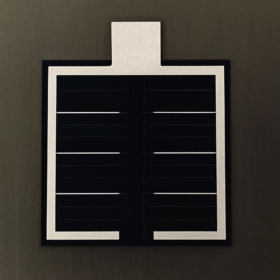
Perovskite-silicon tandem solar cell with steric complementary design achieves 32.3% efficiency
Researchers in China developed a monolithic perovskite-silicon tandem solar cell using a steric-complementary interface design, achieving a certified efficiency of 32.12% and enhanced long-term stability. This strategy optimises molecular fit in the perovskite lattice, improving both charge transport and device longevity.