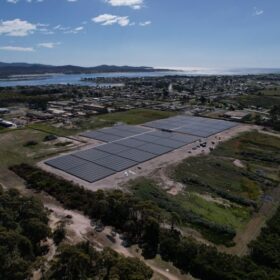
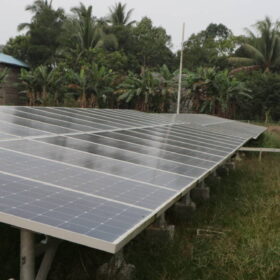
Pacific green transformation project lights up Timor-Leste villages with solar
Through the Pacific Green Transformation Project, the Japanese government has partnered with the United Nations Development Program to install solar panels and solar lights in Timor-Leste villages, which are not connected to an electricity grid.
Indonesian think tank says nation at crossroads with energy transition
Indonesian clean energy policy think tank, the Institute for Essential Services Reform (IESR), said 2025 will be a pivotal year for Indonesia’s energy transition, as the nation has fallen behind targets in recent years.
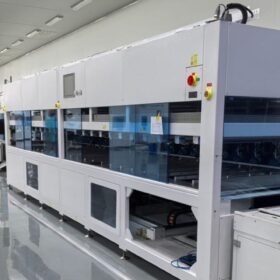
EliTe Solar opens solar cell production facility in Indonesia
Just a few months after beginning construction on a cell manufacturing factory in Egypt, Singapore’s EliTe Solar has opened a cell manufacturing facility in Indonesia, which took around eight months to complete from site selection to opening.
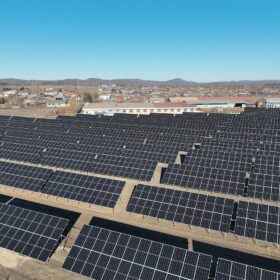
Raystech inks exclusive distributor deal with Chinese solar module giant Longi
Australian solar panel distributor Raystech has signed an exclusive deal with Chinese solar module giant Longi to distribute their products in Australia in a partnership set to ride the wave of Australia’s ongoing growth in rooftop installations.
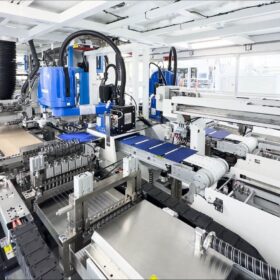
Homegrown solar sector strides forward with SunDrive’s proof of concept revealed
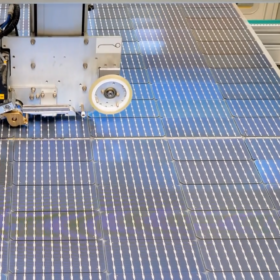
Australian solar module manufacturing at scale is close to reality after SunDrive achieved an above 99% copper plating production yield in the same week as signing an MoU with Capral Aluminium, driving certainty into Australia’s manufacturing capability.
Indian solar manufacturer giant makes moves to enter Australian market
Indian module manufacturer giant Waaree Energies has incorporated a wholly owned subsidiary in Australia called Waaree Renewable Energies Australia Pty Limited, but it yet to disclose specifics.
World’s largest 3.5 GW Terra solar project breaks ground in the Philippines
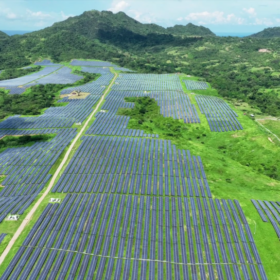
Phillippines renewable energy companies have broken ground on the 3.5 GW Terra Solar and 4.5 GWh battery storage project, tipped to be the world’s largest integrated solar and battery facility.
Sunways unveils three-phase inverters for rooftop PV
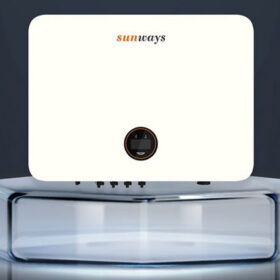
Sunways’ new three-phase inverters have efficiency ratings of up to 98.6% and European efficiency ratings of 98.2%. They are available in five versions, with power outputs ranging from 15 kW to 30 kW.
China export tax rebate cut tipped to send PV prices up
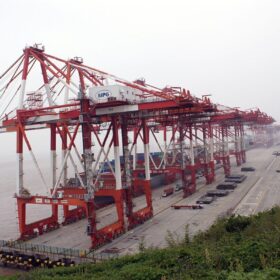
China has reduced the export tax rebate for solar products, lowering refunded taxes for Chinese PV exporters and eating into their profit margins. The move might force some companies to increase export prices to mitigate potential financial losses.
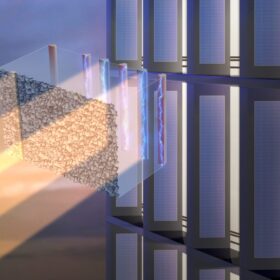
Longi unveils heterojunction BC solar cells with 27.3% efficiency
The Chinese manufacturer said the device is based on dense passivating contacts that reduce parasitic light absorption and improve passivation. It used a streamlined manufacturing technique that is reportedly about one-third more effective than TOPCon mainstream technology.